
📊 Full opportunity report: How Felony Prosecutions At US Borders Affect Global Supply Chains on IdeaNavigator AI — validation score, market gap, and execution plan.

Prime made for students and young adults
- Fast, free delivery for dorm and study essentials
- Prime Video and Amazon Music included
- Member-only deals
TL;DR
US authorities have initiated felony prosecutions against individuals deleting phone data at the border, raising concerns among global supply chain managers. This development could influence border security practices and international trade flows.
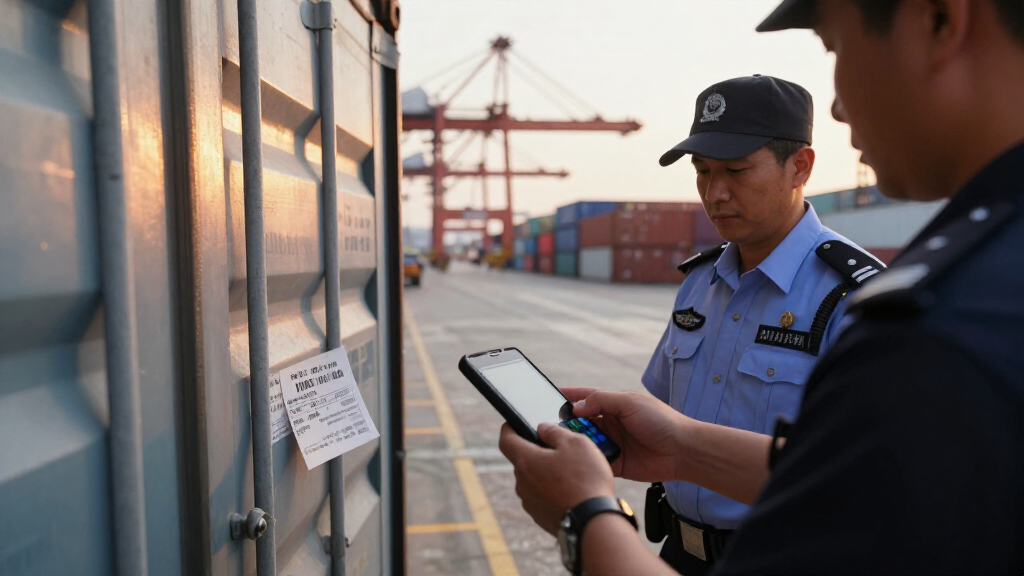
US border authorities are now pursuing felony charges against individuals for deleting phone data at the border, a move that is raising concerns among global supply chain managers about potential disruptions and security protocols. This legal development directly affects international trade operations, as companies and logistics providers monitor border enforcement practices closely.
Recent cases indicate that US Customs and Border Protection (CBP) has begun charging individuals with felonies for deleting phone data during border crossings. These charges are based on allegations that such actions obstruct border enforcement and security efforts. Industry sources suggest that this legal shift could lead to stricter inspection procedures and increased scrutiny of digital devices at borders, potentially delaying shipments and complicating customs processes.
Trade and supply chain professionals are concerned that heightened enforcement may result in longer border crossing times, increased compliance costs, and uncertainty about legal risks for travelers and freight operators. While official statements from CBP emphasize security, the broader impact on international logistics remains uncertain, with some experts warning of possible ripple effects on global supply flows.
How Felony Prosecutions at US Borders Affect Global Supply Chains
Reported felony prosecutions involving the deletion of phone data at US borders introduce a new layer of legal and operational uncertainty. For global supply-chain teams, the immediate concern is not cargo alone—it is how device scrutiny, traveler conduct, and evolving enforcement practices could affect border speed, compliance costs, and business continuity.
Potential criminal exposure, not merely an administrative inconvenience.
Reported allegations center on obstructing border-enforcement efforts.
More scrutiny can extend traveler, vehicle, and shipment processing.
The breadth, consistency, and duration of enforcement remain unsettled.
One digital act can create three layers of disruption
The reported legal shift connects personal device handling to corporate trade operations. Even a case involving an individual can create consequences for employers, carriers, customers, and time-sensitive inventory.
Traveler exposure
Employees, drivers, executives, and contractors may face greater scrutiny over how business data is stored, retained, accessed, or deleted during a crossing.
Border friction
Device examinations and related questioning can extend inspection time, complicate handoffs, and disrupt tightly scheduled freight movements.
Supply ripple
A delayed traveler or vehicle can affect customs clearance, production slots, warehouse labor, onward transport, and customer delivery promises.
How enforcement pressure can move through a supply chain
A prosecution does not need to halt all trade to matter. Operational impact can emerge through accumulated inspection time, cautious corporate behavior, and greater compliance overhead.
Device action
Data is deleted, altered, inaccessible, or questioned during a crossing.
Enforcement review
Officials examine intent, device contents, and possible obstruction.
Longer processing
The traveler, driver, vehicle, or associated movement may be delayed.
Schedule slippage
Customs, warehouse, production, and transport windows become misaligned.
Network cost
Expediting, detention, legal review, and inventory buffers increase.
The emerging compliance difference
The central change is the perceived severity of the risk. Practices once treated primarily as privacy, policy, or inspection issues may now require criminal-law awareness.
| Operational area | Earlier assumption | Emerging concern | Supply-chain implication |
|---|---|---|---|
| Device preparation | ~Mostly an IT and privacy task | !Deletion timing or intent may face legal scrutiny | Policies need legal, security, and operational alignment |
| Border inspection | ~Physical cargo and documents dominate | !Digital evidence may become a central issue | Inspection duration becomes harder to forecast |
| Traveler conduct | ~Handled through general travel guidance | !Individual actions can create criminal exposure | Training and escalation protocols become more important |
| Shipment planning | ~Transit estimates rely on normal variability | !Digital-device inquiries add a new delay source | Critical lanes may require contingency time |
| Corporate governance | ~Teams manage data and trade risks separately | !Legal, IT, HR, security, and logistics risks converge | Cross-functional ownership becomes essential |
The reported cases do not by themselves establish a universal or permanent enforcement standard.
Where managers may feel the pressure first
These indicators are a qualitative planning view, not measured forecasts. They show where stricter digital scrutiny could create the most immediate operational concern.
New federal cases and charging theories
CBP guidance on device examination
Court rulings and legal challenges
Lane-specific crossing-time changes
A practical readiness framework
Preparation should be coordinated and lawful. Companies need clear policies that address legitimate data protection without encouraging deletion, concealment, or obstruction at the border.
Map exposed roles
Identify employees, drivers, contractors, and executives who regularly cross US borders with business devices or sensitive information.
Review device policies
Have qualified counsel assess retention, access, remote management, travel-device, and incident-response procedures.
Train for the crossing
Give travelers plain instructions on lawful cooperation, company contacts, documentation, and escalation steps.
Build operational buffers
Protect high-value or time-critical lanes with alternate staffing, routing options, schedule tolerance, and inventory contingencies.
Connect the owners
Create a shared protocol across legal, trade compliance, IT security, HR, travel security, and logistics teams.
Monitor and update
Track official guidance, court developments, enforcement patterns, and actual border-delay data by route and role.
The traceability chain
Digital conduct at the border can travel quickly from an individual legal event to a global service-level problem.
What remains unresolved?
The long-term effect depends on future prosecutions, official policy clarification, judicial review, and how consistently enforcement is applied across people, ports, and circumstances.
What do the reported felony charges allege?
They reportedly treat phone-data deletion as conduct that obstructs border-enforcement or security efforts, creating the possibility of serious criminal penalties.
Will this become standard practice?
That is not yet clear. Reported cases indicate escalation, but they do not prove that the same approach will be used broadly or consistently.
How could supply chains be affected?
Possible effects include longer inspections, unpredictable crossing times, higher compliance costs, missed transport windows, and more legal uncertainty.
What should companies do now?
Review lawful device-handling policies with counsel, train border-crossing personnel, improve escalation procedures, and prepare critical lanes for delay.
When will the picture become clearer?
Clarity should improve as authorities issue guidance, courts address challenges, and companies gather more evidence about real-world enforcement patterns.
Legal Changes at US Borders Impact Global Supply Chains
This development is significant because it introduces a new legal risk for individuals and companies involved in international trade. Felony charges for deleting phone data could lead to stricter border checks, delays, and increased costs for global supply chains. As US border enforcement policies evolve, companies must adapt their compliance strategies to avoid disruptions and legal liabilities.
As an affiliate, we earn on qualifying purchases.
Recent US Border Enforcement and Digital Data Policies
Over the past year, US border authorities have increased their focus on digital device searches, especially amid heightened concerns over security and illegal crossings. The recent felony charges for deleting phone data represent a notable escalation, signaling a more aggressive stance on digital evidence. Industry analysts note that this aligns with broader trends of tightening border security and expanding legal authorities for enforcement agencies.
Previously, border searches were mostly limited to physical inspections, but recent policy shifts have emphasized digital data scrutiny, leading to legal battles and policy debates. The new felony charges are part of this evolving landscape, with implications for international travelers, freight operators, and legal compliance frameworks.
“Charging individuals with felonies for deleting phone data marks a significant escalation in border security tactics.”
— an anonymous border enforcement expert
portable phone data encryption device
As an affiliate, we earn on qualifying purchases.
As an affiliate, we earn on qualifying purchases.
Unclear Long-Term Impact on Border and Trade Policies
It is not yet clear how widespread or sustained these felony charges will become and whether they will lead to broader changes in border enforcement practices. The long-term impact on international trade flows and supply chain resilience remains uncertain, pending further policy developments and legal clarifications.
travel security phone data blocker
As an affiliate, we earn on qualifying purchases.
As an affiliate, we earn on qualifying purchases.
Monitoring Policy Developments and Supply Chain Responses
Trade and logistics companies will need to closely monitor US border enforcement policies and legal actions. Future steps may include adapting compliance procedures, engaging with legal experts, and preparing for potential delays. Authorities are expected to clarify enforcement priorities and legal standards in the coming months, which could shape the trajectory of border security and international trade.
digital device inspection kit for travelers
As an affiliate, we earn on qualifying purchases.
As an affiliate, we earn on qualifying purchases.
Key Questions
What are felony charges for deleting phone data at the US border?
Felony charges are legal accusations against individuals who delete phone data during border crossings, alleging obstruction of border enforcement efforts. These charges can lead to serious criminal penalties.
How might these charges affect international supply chains?
Stricter border enforcement and legal risks could cause delays, increase compliance costs, and create uncertainty for logistics providers and exporters involved in US trade.
Are these policies likely to become standard practice?
It is unclear whether felony charges for deleting phone data will become a widespread enforcement practice or remain limited to specific cases. Further policy clarification is expected.
What should companies do to prepare?
Companies should review their border compliance procedures, consult legal experts on digital data handling, and stay informed about evolving enforcement policies to mitigate risks.
When will more clarity be available?
Further legal and policy clarifications are anticipated in the coming months, which will help define the scope and impact of these enforcement actions.
Source: IdeaNavigator AI
Halloween Picks
halloween
As an affiliate, we earn on qualifying purchases.