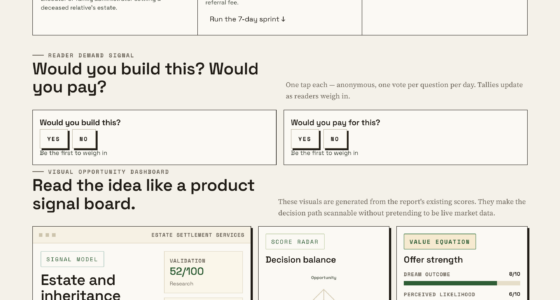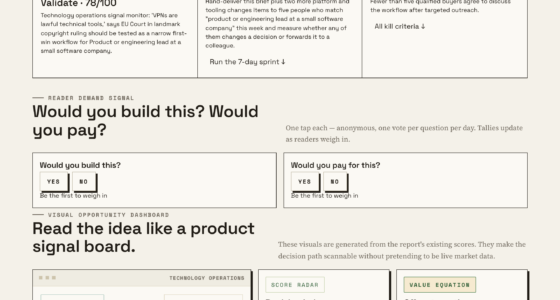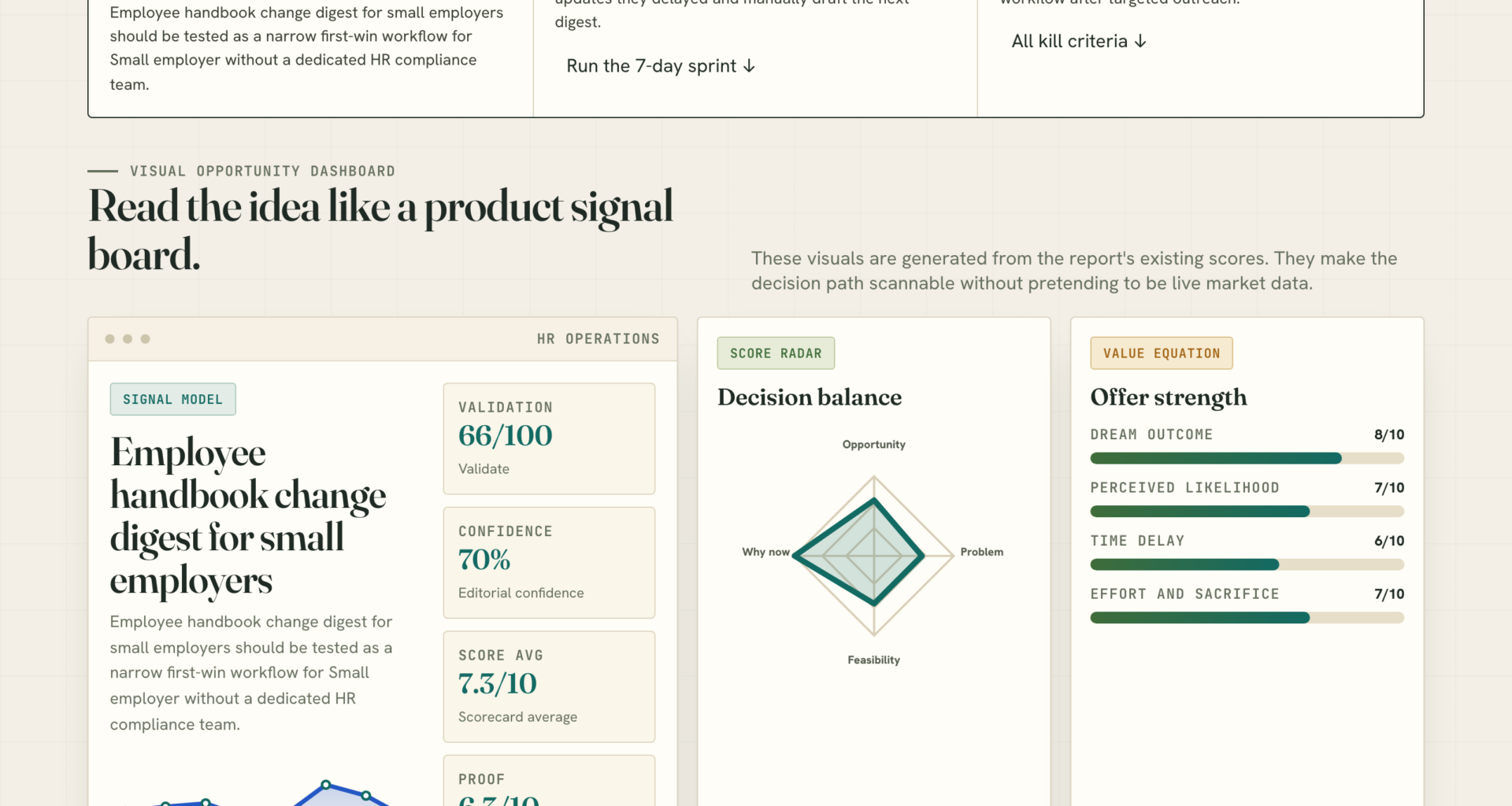

📊 Full opportunity report: Employee handbook change digest for small employers on IdeaNavigator AI — validation score, market gap, and execution plan.

Prime made for students and young adults
- Fast, free delivery for dorm and study essentials
- Prime Video and Amazon Music included
- Member-only deals
TL;DR
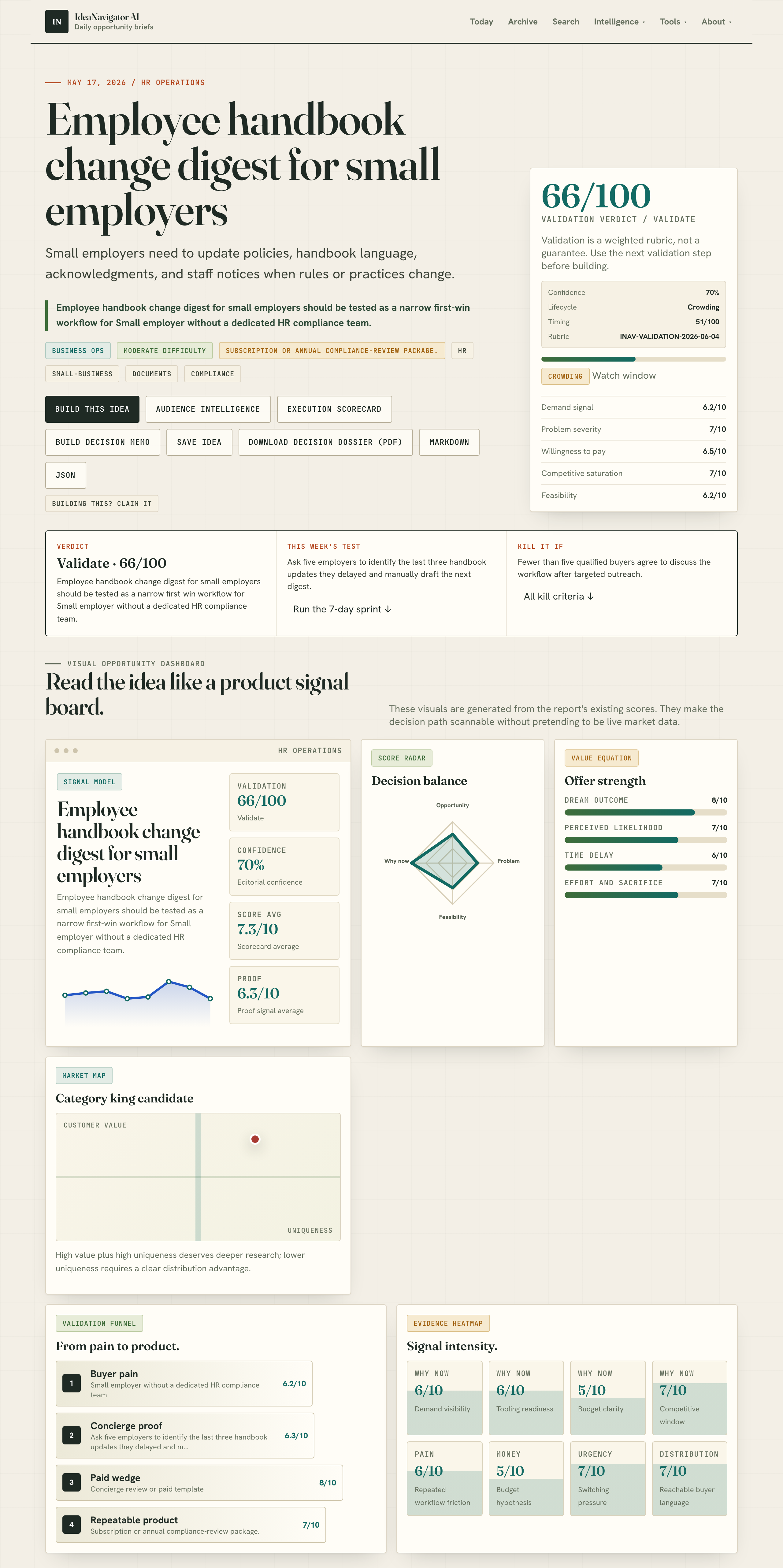
A new workflow for small employers to manage employee handbook updates is being tested, aiming to streamline policy changes and acknowledgments. This initiative targets small teams lacking dedicated HR compliance resources.
Small employers without dedicated HR compliance teams are testing a new employee handbook change digest workflow designed to streamline policy updates and acknowledgment tracking, addressing increased policy drift caused by remote work and evolving regulations.
The initiative, developed by IdeaNavigator AI, aims to help small businesses log policy topics, draft change notes, and track employee acknowledgments efficiently. The workflow is intended as a minimal viable product (MVP) that could become a subscription-based service offering annual compliance reviews.
This approach responds to the growing need for small employers to stay compliant amid frequent policy changes driven by remote work, AI tools, and state-level employment law updates. Currently, the workflow is being validated by asking five small employers to identify recent handbook updates they delayed and to manually draft upcoming digest notes, serving as a test of its practicality and usefulness.
Why Small Employers Need a Handbook Change Digest
This development matters because small employers often lack dedicated HR teams, making it difficult to keep employee handbooks current and compliant. An efficient digest workflow could reduce legal and compliance risks, improve employee communication, and save time and resources. As policies evolve rapidly due to external factors like remote work and legal changes, small businesses need accessible tools to manage these updates proactively.
employee handbook management software
As an affiliate, we earn on qualifying purchases.
As an affiliate, we earn on qualifying purchases.
Growing Complexity in Small Employer Policy Management
Small businesses have historically struggled with keeping employee handbooks up-to-date, especially without dedicated HR staff. The rise of remote work, AI-enabled tools, and frequent legal updates at the state level have increased the frequency and complexity of policy changes. Currently, many small employers delay or overlook updates, risking non-compliance or employee confusion. The proposed digest workflow aims to address these challenges by providing a simple, trackable process for managing handbook revisions.
“A streamlined digest workflow could be a game-changer for small employers managing compliance amid rapid policy changes.”
— an anonymous researcher
As an affiliate, we earn on qualifying purchases.
Uncertainties About Workflow Adoption and Effectiveness
It is not yet clear how widely small employers will adopt this digest workflow or how effective it will be in reducing policy drift. The validation process is still ongoing, and there is no data on its impact on compliance outcomes or employee acknowledgment rates. Further testing and feedback are needed to determine scalability and integration with existing HR systems.
employee acknowledgment tracking system
As an affiliate, we earn on qualifying purchases.
As an affiliate, we earn on qualifying purchases.
Next Steps in Validating and Scaling the Digest Workflow
The next phase involves collecting feedback from the initial five employers, refining the workflow based on their experiences, and potentially expanding testing to a broader group. If successful, the developers plan to package the workflow as a subscription service, offering annual compliance reviews and support for small businesses without dedicated HR teams. Monitoring user adoption and measuring compliance improvements will be key milestones.
small business policy update tools
As an affiliate, we earn on qualifying purchases.
As an affiliate, we earn on qualifying purchases.
Key Questions
How will this workflow help small employers manage policies?
The workflow provides a structured process to log policy changes, draft change notes, and track employee acknowledgments, making policy management more organized and less time-consuming.
Is this tool suitable for all small employers?
It is designed primarily for small employers without dedicated HR compliance teams, but its effectiveness will depend on individual business needs and the complexity of their policies.
When will this workflow be available commercially?
The workflow is currently in testing. If validated successfully, a subscription-based service could be launched within the next year.
What are the main challenges in implementing this workflow?
Challenges include encouraging adoption among small employers, integrating with existing HR processes, and demonstrating measurable improvements in compliance and acknowledgment rates.
Will this replace existing HR compliance tools?
It is intended as a lightweight, targeted solution for small employers rather than a comprehensive HR system, complementing or replacing manual processes rather than existing tools.
Source: IdeaNavigator AI
Halloween Picks
halloween
As an affiliate, we earn on qualifying purchases.