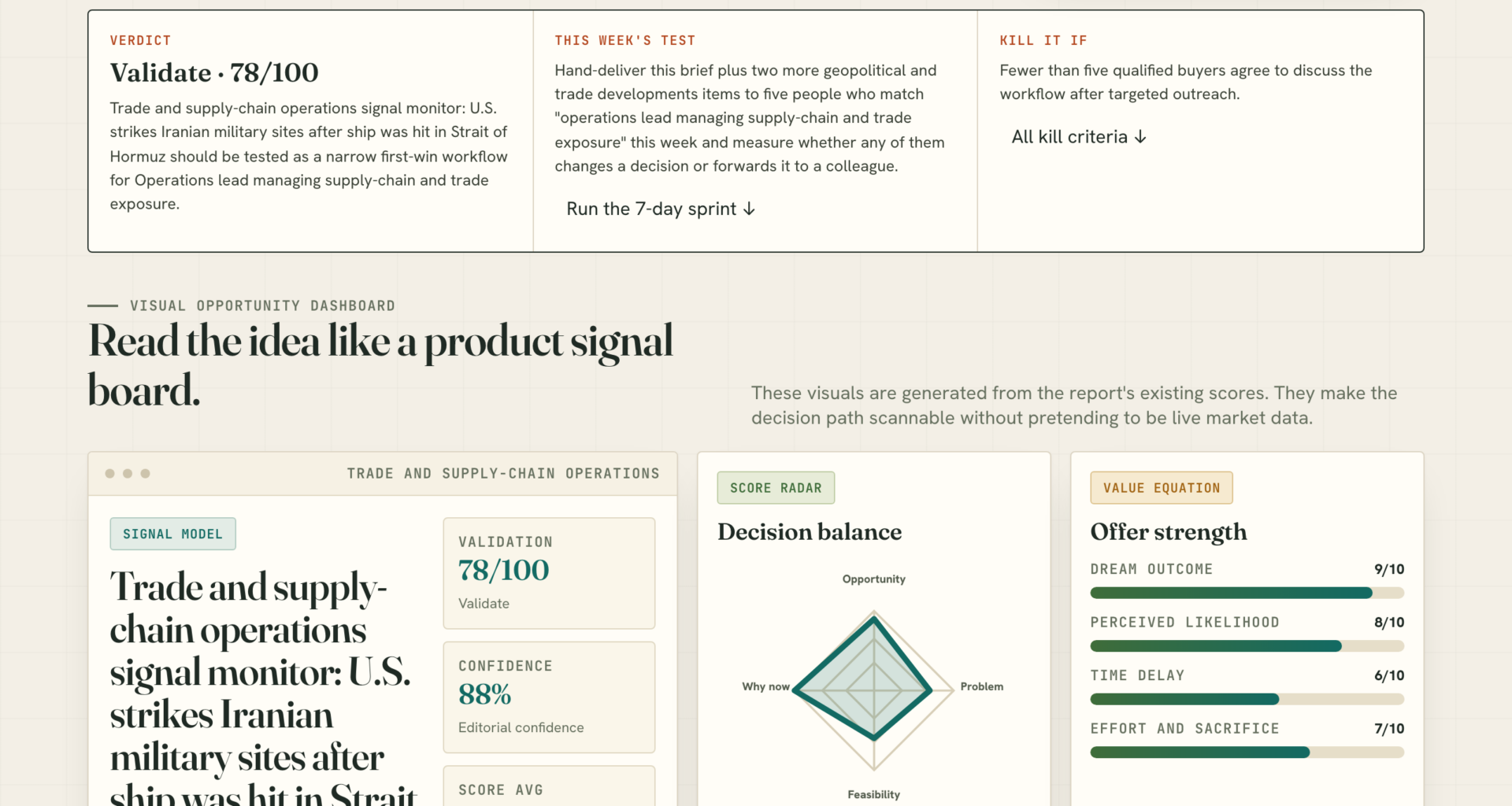

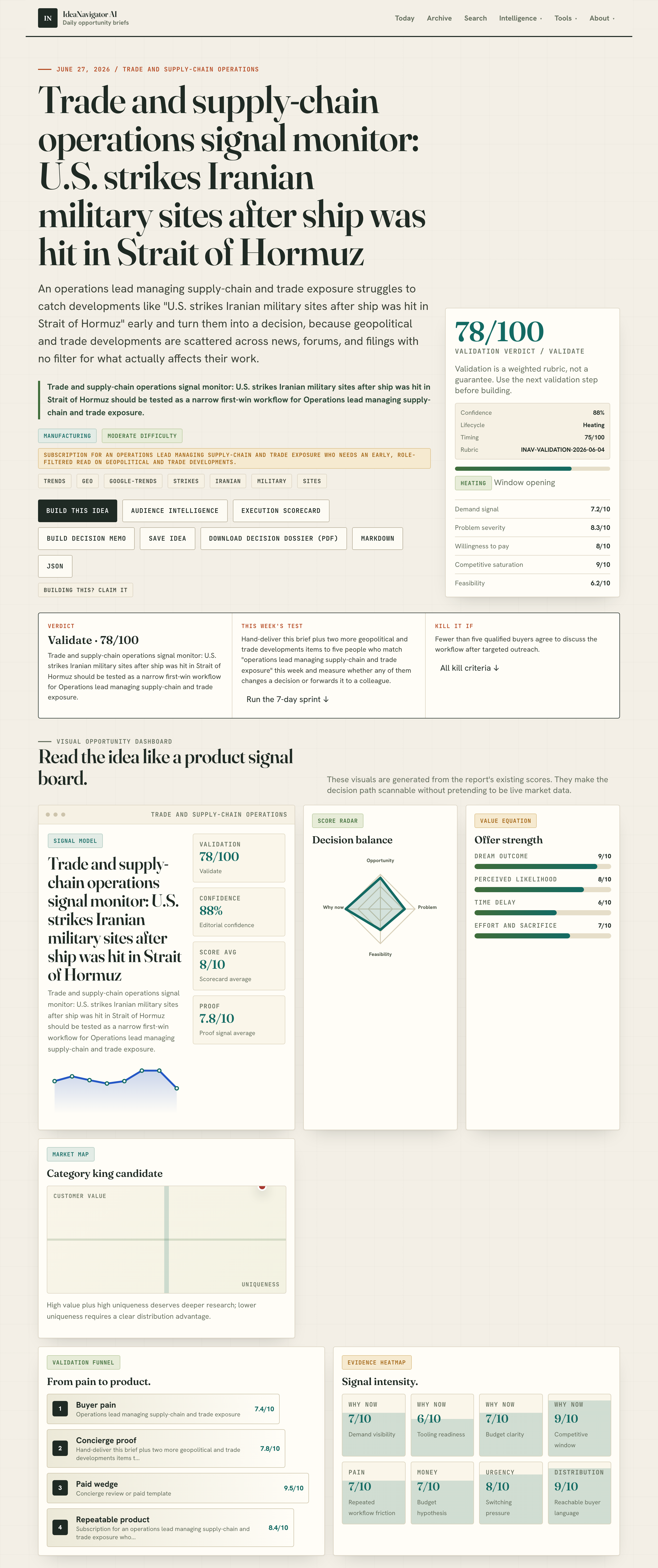
📊 Full opportunity report: Trade and supply-chain operations signal monitor: U.S. strikes Iranian military sites after ship was hit in Strait of Hormuz on IdeaNavigator AI — validation score, market gap, and execution plan.

Prime made for students and young adults
- Fast, free delivery for dorm and study essentials
- Prime Video and Amazon Music included
- Member-only deals
TL;DR
The U.S. launched strikes on Iranian military sites after a ship was hit in the Strait of Hormuz. This escalation impacts trade routes and supply chains, with ongoing developments to monitor.
The United States has carried out airstrikes against Iranian military sites in response to an attack on a commercial ship in the Strait of Hormuz, according to U.S. officials.
U.S. officials confirmed that military strikes targeted Iranian military infrastructure in southern Iran early this morning. The operation was launched after a commercial vessel was hit in the Strait of Hormuz, an important global shipping route, raising tensions in the region. The incident was reported by multiple sources, including the U.S. Department of Defense, which stated the strikes aimed to prevent further attacks and destabilization.
Iranian authorities have not yet officially responded to the strikes, and it remains unclear whether the attack on the ship was directly linked to Iranian forces or other regional actors. The targeted sites reportedly included military installations and missile launch facilities, but precise locations and extent of damage are still being verified. The incident has prompted heightened alert among regional shipping operators and trade analysts concerned about potential disruptions in the Strait of Hormuz, a critical chokepoint for global oil and trade flows.
Implications for Global Trade and Regional Stability
This escalation could significantly impact global trade, especially oil shipments passing through the Strait of Hormuz, which accounts for a substantial portion of the world’s oil exports. The military action raises the risk of further confrontations that might disrupt supply chains and increase insurance costs for maritime routes. For supply chain managers and trade operators, the event underscores the importance of monitoring geopolitical developments closely, as escalation could lead to route diversions, delays, or increased costs. The incident also signals heightened regional instability, which could influence broader Middle East geopolitics and international relations.
maritime trade route monitoring device
As an affiliate, we earn on qualifying purchases.
As an affiliate, we earn on qualifying purchases.
Recent Escalations in Iran-U.S. Tensions and Strait Incidents
The Strait of Hormuz has been a flashpoint for regional tensions, with previous incidents involving Iran and Western powers, including maritime confrontations and sanctions. Earlier this year, there were multiple reports of Iranian military maneuvers and threats against shipping in the area. The attack on the ship, which was not publicly identified but described as commercial, occurred amid ongoing diplomatic tensions over Iran’s nuclear program and regional influence. The U.S. has previously conducted targeted strikes and patrols in the region to deter Iranian military activity, but this latest escalation marks a notable increase in military engagement.
“The strikes targeted Iranian military infrastructure in response to recent attacks on commercial shipping in the Strait of Hormuz.”
— U.S. Department of Defense
As an affiliate, we earn on qualifying purchases.
Unconfirmed Details and Regional Reactions
It is not yet clear whether the attack on the ship was directly attributable to Iran or other regional actors. The extent of damage from the U.S. strikes and Iran’s immediate response are still emerging. Regional reactions, including potential retaliatory actions or diplomatic responses, remain uncertain as authorities assess the situation.
As an affiliate, we earn on qualifying purchases.
Monitoring Developments and Potential Escalation Risks
Further updates are expected from U.S. and Iranian officials regarding the incident and subsequent military or diplomatic responses. Shipping industry advisories may be issued to mitigate risks, and international actors could call for de-escalation. Analysts will closely watch for signs of escalation that could impact regional stability and global trade routes.
As an affiliate, we earn on qualifying purchases.
Key Questions
Why did the U.S. strike Iranian military sites?
The U.S. stated the strikes were in response to an attack on a commercial ship in the Strait of Hormuz and aimed to prevent further attacks and destabilization in the region.
Could this impact global oil supplies?
Yes, the Strait of Hormuz is a critical passage for global oil exports. Any escalation that disrupts shipping could lead to increased oil prices and supply chain disruptions.
Has Iran officially responded to the strikes?
Iran has not issued an official statement yet. Previous responses have denied involvement in recent maritime incidents.
What are the risks of further conflict in the region?
The situation could escalate if Iran or other regional actors retaliate, potentially leading to broader military confrontations or increased instability affecting global trade routes.
How might this affect supply chain operations?
Supply chain managers should monitor the situation closely, as escalation could lead to route diversions, delays, or higher insurance costs for maritime shipping in the region.
Source: IdeaNavigator AI
Fall Picks
fall essentials
As an affiliate, we earn on qualifying purchases.