TL;DR

Prime made for students and young adults
- Fast, free delivery for dorm and study essentials
- Prime Video and Amazon Music included
- Member-only deals
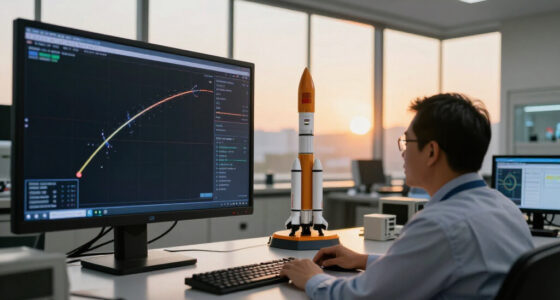
NASA has created an emulator replicating Voyager 1’s Flight Data System (FDS) computer, restoring the ability to access and analyze historical spacecraft data. This development marks a significant step in space heritage preservation and data recovery efforts.
NASA has successfully developed a software emulator that replicates the Flight Data System (FDS) computer onboard Voyager 1. This breakthrough allows engineers and researchers to access and analyze data stored in Voyager 1’s original onboard computer, which has been largely inaccessible since the spacecraft’s systems aged and failed over time. The development is a significant milestone in space heritage preservation and spacecraft data recovery, providing new opportunities for scientific analysis and historical record-keeping.
The emulator was created by NASA’s Jet Propulsion Laboratory (JPL) using a combination of archived hardware specifications, original software code, and modern simulation techniques. The project aimed to recreate the FDS environment, which was responsible for managing data collection and spacecraft commands during Voyager 1’s primary mission. According to NASA officials, the emulator now allows secure access to the spacecraft’s stored data, including telemetry and scientific measurements, which had been effectively inaccessible for years due to hardware degradation.
NASA emphasizes that this emulator is not a replacement for the spacecraft itself but a tool for data retrieval and analysis. It is expected to facilitate detailed studies of Voyager 1’s historic mission, including its journey through interstellar space, and could inform future spacecraft data management strategies. The project involved collaboration among engineers, computer scientists, and archivists to ensure the fidelity of the emulation process, based on extensive historical documentation and recovered hardware components.
Implications for Space Heritage and Data Preservation
This development is significant because it restores access to decades-old data from Voyager 1, one of humanity’s most distant and enduring spacecraft. The emulator enables scientists to revisit the original mission data, potentially uncovering new insights about interstellar space and the spacecraft’s performance. It also sets a precedent for preserving and accessing data from other aging space assets, ensuring that valuable scientific information is not lost over time. The project highlights the importance of digital preservation techniques in maintaining the legacy of historic space missions.
As an affiliate, we earn on qualifying purchases.
Background on Voyager 1 and Data Accessibility Challenges
Voyager 1 launched in 1977 and has since traveled beyond the influence of our solar system, providing invaluable data about interstellar space. Over the years, its onboard systems have aged, and hardware failures have limited direct access to its data. NASA has relied on ground-based data retrieval systems, but as hardware components deteriorated, accessing the original onboard data became increasingly difficult. In recent years, efforts have been underway to preserve and recover this data, including hardware restoration projects and digital archiving.
Previous attempts to access Voyager 1’s onboard data relied on legacy hardware emulation and partial software recovery, but these efforts were limited by incomplete information and hardware degradation. The recent development of a full software emulator marks a new phase in these preservation efforts, leveraging modern computing to simulate the original FDS environment accurately.
NASA Voyager 1 data retrieval tools
As an affiliate, we earn on qualifying purchases.
As an affiliate, we earn on qualifying purchases.
Remaining Questions About Emulator Fidelity and Data Integrity
It is not yet clear how fully the emulator replicates all aspects of the original FDS hardware and software. NASA officials have stated that testing is ongoing to verify the accuracy of data retrieved through the emulator, but comprehensive validation results are not yet publicly available. Additionally, it remains uncertain whether this approach can be scaled to other aging spacecraft or if future hardware failures will limit access again.
space mission data analysis software
As an affiliate, we earn on qualifying purchases.
As an affiliate, we earn on qualifying purchases.
Next Steps in Data Validation and Broader Application
NASA plans to conduct extensive testing to confirm the emulator’s fidelity and reliability. Once validated, the emulator will be used for detailed scientific analysis of Voyager 1’s stored data, potentially leading to new discoveries about its interstellar journey. The agency also intends to explore applying similar emulation techniques to other legacy spacecraft, preserving their data for future research. Further updates are expected as validation progresses and new findings emerge.
As an affiliate, we earn on qualifying purchases.
Key Questions
How does the Voyager 1 emulator work?
The emulator replicates the original Flight Data System environment using software based on archived hardware specifications and code, allowing secure access to stored spacecraft data.
What kind of data can now be accessed with the emulator?
Telemetry, scientific measurements, and other onboard data stored in Voyager 1’s original systems are now accessible for analysis.
Why is this development important for space history?
It preserves and restores access to critical data from one of humanity’s most distant spacecraft, ensuring its legacy and scientific value are maintained.
Are there limitations to the emulator’s accuracy?
While efforts are ongoing to verify its fidelity, full validation results have not yet been released, and some uncertainties remain about its complete accuracy.
Could this technology be used for other spacecraft?
Potentially, yes. NASA is exploring applying similar emulation techniques to other aging missions to preserve their data and operational capabilities.
Source: hn
Fall Picks
fall essentials
As an affiliate, we earn on qualifying purchases.