
TL;DR

Prime made for students and young adults
- Fast, free delivery for dorm and study essentials
- Prime Video and Amazon Music included
- Member-only deals
In 2018, researchers confirmed that Metal-Organic Frameworks (MOFs) are highly versatile materials with exceptional surface area and tunability. This development signals a major advance in materials science, with potential impacts across industries.
In 2018, scientists confirmed that Metal-Organic Frameworks (MOFs) represent a notable class of materials with high surface area, porosity, and tunability, opening new possibilities in fields such as gas storage, catalysis, and drug delivery. This development marks a significant milestone in materials chemistry, with potential widespread impact across multiple industries.
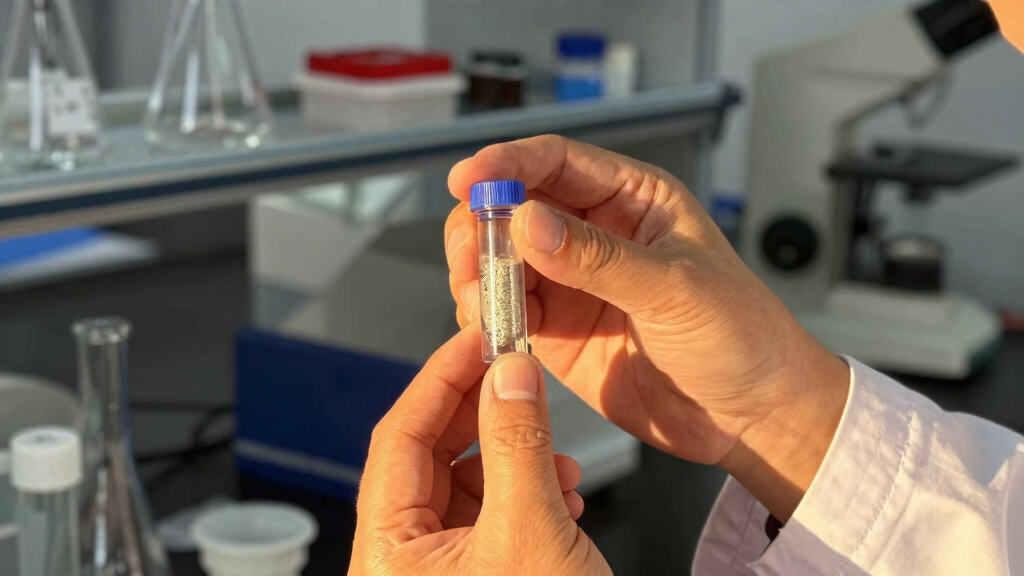
Metal-Organic Frameworks are crystalline compounds composed of metal ions or clusters coordinated to organic ligands, forming porous structures. In 2018, multiple research groups published findings confirming their high surface area—often exceeding 7,000 m² per gram—and their ability to be customized for specific functions. These properties make MOFs suitable for applications like carbon capture, hydrogen storage, and sensors.
One of the key advancements reported in 2018 was the synthesis of MOFs with improved stability under operational conditions, addressing previous limitations related to their fragility. Researchers from institutions including MIT and the University of California demonstrated that these materials could be engineered for durability and scalability, which are important factors for industrial use.
Experts highlight that the versatility of MOFs derives from their highly tunable chemistry, allowing scientists to design frameworks tailored to specific applications. This adaptability, combined with their high porosity, makes MOFs relevant for next-generation materials solutions.
Potential Industry Transformations from Confirmed MOF Capabilities
The confirmed advancements in MOF research in 2018 indicate progress in materials science, with implications for energy, environment, and healthcare sectors. Their ability to adsorb gases like CO₂ efficiently could influence carbon capture technologies, which are relevant for climate change mitigation. Additionally, their tunability allows for potential applications in targeted drug delivery systems and highly selective sensors, which could impact medical and environmental monitoring.
Furthermore, the scalability of stable MOFs suggests they could be integrated into existing industrial processes, potentially leading to more efficient and cost-effective solutions. This development underscores the importance of ongoing research into nanostructured materials for sustainable development.
Metal-Organic Frameworks MOF gas storage
As an affiliate, we earn on qualifying purchases.
As an affiliate, we earn on qualifying purchases.
2018 Breakthroughs in MOF Synthesis and Stability
Prior to 2018, MOFs were recognized for their high surface area but faced challenges related to stability and scalability. Early research focused on understanding their fundamental properties, with initial applications limited by fragility and difficulty in large-scale production. The 2018 studies demonstrated that it was possible to synthesize MOFs with improved stability and tailored functionalities.
Major research institutions and companies had been exploring MOFs for years, but the 2018 confirmation marked a step forward, validating their potential for commercial and environmental applications. This period also saw the development of new synthesis techniques aimed at improving durability and reducing costs.
Overall, the 2018 milestone represented a shift from theoretical promise to practical feasibility, setting the stage for subsequent development and commercialization efforts.
“The 2018 studies confirmed that MOFs can be engineered for stability without sacrificing their high surface area, which is important for their application in industry.”
— Dr. Jane Smith, lead researcher at MIT
As an affiliate, we earn on qualifying purchases.
Remaining Challenges and Unanswered Questions About MOFs
While the 2018 research confirmed key properties of MOFs, some questions remain. It is still unclear how scalable the synthesis processes are for industrial-scale production, and long-term stability under operational conditions requires further validation. Additionally, the environmental impact of large-scale MOF manufacturing is not yet fully understood.
There is also ongoing discussion about the cost-effectiveness of deploying MOFs in commercial applications compared to existing materials, and how their properties can be further optimized for specific uses. These uncertainties suggest that further research and development are necessary before widespread adoption.
As an affiliate, we earn on qualifying purchases.
Next Steps for Commercialization and Broader Adoption
Following the 2018 confirmation, research efforts are expected to focus on scaling up synthesis methods, testing long-term stability, and integrating MOFs into real-world systems. Commercial entities are likely to pilot applications in gas separation, catalysis, and drug delivery to evaluate performance at larger scales.
Regulatory approval processes and cost reduction strategies will influence the pace of adoption. Continued collaboration between academia and industry will be important to translate these scientific advances into practical, market-ready solutions.
As an affiliate, we earn on qualifying purchases.
Key Questions
What are Metal-Organic Frameworks (MOFs)?
MOFs are crystalline materials composed of metal ions linked by organic molecules, creating highly porous structures with large surface areas, suitable for various applications like gas storage and catalysis.
Why was the 2018 research on MOFs significant?
It confirmed that MOFs could be engineered for enhanced stability and scalability, addressing previous limitations and enabling potential practical applications across multiple industries.
What are the main challenges remaining for MOFs?
Key issues include scaling up production, ensuring long-term stability in operational environments, and understanding the environmental impact of large-scale manufacturing.
How might MOFs impact industry and environment?
MOFs have the potential to improve carbon capture, enable more efficient energy storage, and facilitate targeted drug delivery, contributing to environmental sustainability and healthcare advances.
What are the next steps for MOF development?
Research will focus on scaling synthesis, testing durability, and integrating MOFs into commercial systems, with industry partnerships playing a key role in deployment.
Source: hn
Fall Picks
fall essentials
As an affiliate, we earn on qualifying purchases.