
TL;DR
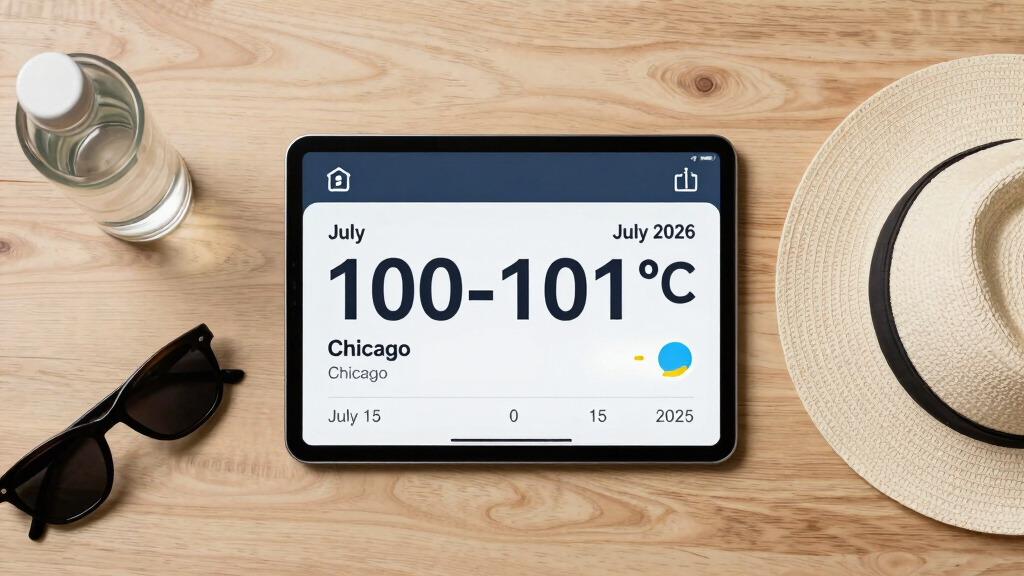
A trading market indicates a high likelihood that Chicago will hit 100-101°F on July 15, 2026. However, no official weather forecast confirms this yet, and the prediction is based on market activity rather than meteorological data.
Market activity indicates a strong trader consensus that Chicago will reach a high temperature of 100-101°F on July 15, 2026. For more on future weather predictions, see Will The High Temp In Chicago Be 96° On Jul 15, 2026?. However, no official meteorological forecast has confirmed this prediction as of now. This prediction is based on recent trades in a weather-related market, not on current weather models or authoritative forecasts.
The prediction stems from recent trades in a Kalshi market, which is actively trading on whether Chicago will hit 100-101°F on July 15, 2026. Six recent trades suggest traders see a significant probability of this temperature range. Nonetheless, no official weather agencies, such as the National Weather Service, have issued forecasts or projections for the date in question. The market-based prediction reflects trader sentiment rather than scientific forecast models. It is important to note that weather forecasts typically become more accurate as the date approaches, and predictions made years in advance remain highly uncertain. Experts caution that long-term temperature predictions are inherently uncertain due to climate variability and changing conditions.Why Market-Based Predictions for Long-Term Weather Matter
This development highlights how financial markets and trading platforms are increasingly used to gauge long-term weather expectations, which can influence sectors like agriculture, energy, and insurance. However, relying on market activity for precise weather predictions decades in advance is inherently uncertain. For residents and policymakers, understanding the difference between market sentiment and scientific forecast is crucial for making informed decisions about climate preparedness and infrastructure planning.

PlayHot Portable Handheld Turbo Fan, Travel Essentials, Gifts for Women/Men
- Powerful Turbo Cooling: 13,550 RPM brushless motor with aerodynamic blades
- Adjustable Airflow: Five-speed levels for customized cooling
- Long Battery Life: Up to 12 hours of use on a single charge
As an affiliate, we earn on qualifying purchases.
As an affiliate, we earn on qualifying purchases.
Market Activity and the Limitations of Long-Term Weather Forecasts
The recent trades in the Kalshi market are part of a broader trend where traders bet on future weather conditions, often for financial or hedging purposes. While these markets can reflect collective expectations, they do not replace scientifically validated weather forecasts. The National Weather Service and other meteorological agencies do not produce forecasts for specific temperatures this far in advance. Historically, long-term climate models can project general trends but cannot reliably predict specific daily temperatures years ahead. The current market activity is therefore best viewed as a speculative indicator rather than a definitive forecast.
“Long-term weather predictions several years into the future are highly uncertain. Market activity can indicate sentiment, but it should not replace official forecasts when planning for weather-sensitive activities.”
— Dr. Lisa Martinez, Meteorologist

Tough Headwear Balaclava Ski Mask for Men and Women – Winter Shiesty Mask Cover – Cold Weather Full Face Masks – Snow Gear for Skiing, Snowboarding, Running & Motorcycle – Black
- Warm and Comfortable: Ultra-soft fleece lining with stretch fit
- Breathable Design: Mesh panels for airflow and moisture control
- All Weather Protection: Waterproof shell and extended neck coverage
As an affiliate, we earn on qualifying purchases.
As an affiliate, we earn on qualifying purchases.
Unconfirmed Nature of Long-Term Temperature Predictions
It is not yet certain whether Chicago will reach 100-101°F on July 15, 2026. No official weather models or forecasts have been issued for that date, and long-term climate variability makes such predictions inherently uncertain. The current market activity reflects trader sentiment, not scientific consensus, and should be interpreted with caution.
As an affiliate, we earn on qualifying purchases.
Monitoring for Official Weather Forecasts Closer to the Date
As the date approaches, meteorological agencies are expected to release more accurate forecasts based on updated climate models. Market activity is unlikely to provide reliable predictions beyond the near term, and residents, businesses, and policymakers should rely on official sources for planning. The next significant forecast updates are anticipated in the months leading up to July 2026, when models will offer more precise projections.
As an affiliate, we earn on qualifying purchases.
Key Questions
Can the market prediction be trusted as an accurate forecast?
No, market predictions reflect trader sentiment and probability estimates, not scientific weather forecasts. They should be viewed as speculative indicators rather than reliable predictions.
Why is there no official forecast for July 15, 2026, yet?
Weather agencies typically do not issue specific daily forecasts more than a year in advance due to the high uncertainty involved. Long-term climate trends are modeled, but precise daily temperatures are not predictable this far ahead.
How reliable are long-term climate predictions?
Long-term climate models can indicate general trends and variability but cannot accurately predict specific daily temperatures years in advance. Their primary use is for understanding climate change patterns rather than specific weather events.
What should residents do with this market-based prediction?
Residents should not base planning decisions solely on market predictions for such a distant date. Instead, they should follow official forecasts closer to the event for accurate information.
Source: kalshi