

You can explore astrobiology right from your home by simulating exoplanet atmospheres using simple materials. Set up glass jars to represent different atmospheres and mix gases like carbon dioxide and methane to mimic chemical compositions. Adjust conditions like pressure and temperature with household items. Keep track of your observations and analyze the changes you see. This hands-on approach will deepen your understanding of life beyond Earth, and you’ll discover even more exciting methods as you continue.

Prime made for students and young adults
- Fast, free delivery for dorm and study essentials
- Prime Video and Amazon Music included
- Member-only deals
Key Takeaways
- Set up glass jars to represent different exoplanet atmospheres using simple household materials for simulations.
- Mix gases like carbon dioxide, methane, and ammonia to replicate exoplanet atmospheric chemistry.
- Adjust gas ratios and simulate environmental conditions like pressure and temperature to observe reactions.
- Document changes in chemical interactions and analyze results to assess habitability of simulated atmospheres.
- Utilize machine learning tools to enhance data analysis and gain deeper insights into experimental outcomes.
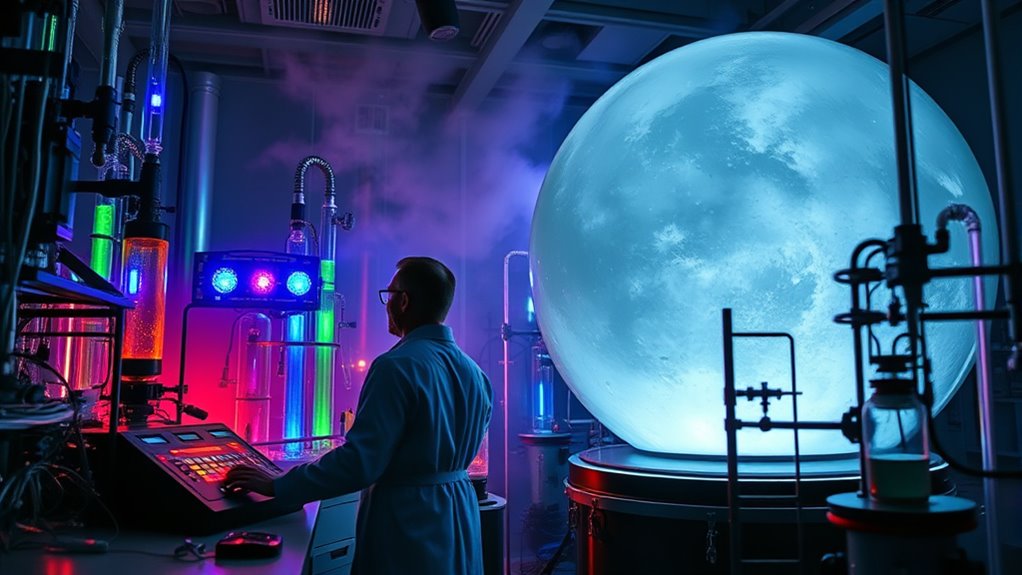
Astrobiology at home offers a unique opportunity to explore the mysteries of life beyond Earth right from your living room. You can immerse yourself in the exciting world of exoplanet chemistry by simulating the atmospheres of distant worlds and conducting laboratory experiments to uncover the potential for life. With the right materials and a little creativity, you can replicate conditions that exist on these far-off planets, giving you a firsthand experience of what astrobiologists do.
Explore the wonders of astrobiology from home by simulating exoplanet atmospheres and discovering the potential for extraterrestrial life.
To start, you’ll need to familiarize yourself with the fundamental aspects of exoplanet chemistry. This involves understanding the elements and compounds that might exist in the atmospheres of these planets. You can research different exoplanets, focusing on their atmospheric compositions, temperatures, and other environmental factors. By doing this, you’ll gain insights into what conditions might support life, allowing you to simulate these environments in your experiments.
Setting up your laboratory at home doesn’t require fancy equipment; you can use simple materials to create your own experiments. For instance, consider using glass jars to represent different exoplanet atmospheres. By mixing gases like carbon dioxide, methane, and ammonia, you can mimic the chemical makeup of an exoplanet’s atmosphere. You’ll want to pay attention to the ratios of these gases, as they can considerably affect the outcomes of your experiments.
Next, think about how you can simulate various conditions such as pressure and temperature. Using a heat source or ice can help you replicate thermal conditions found on these planets. You could also use pH indicators to assess how chemical reactions change under different conditions. Tracking these changes will enhance your understanding of how life might adapt to unique environments.
Once your experiments are set up, document your observations meticulously. Take notes on how the compounds interact and any noticeable changes. This data can help you draw conclusions about the potential habitability of different atmospheric conditions. You might even find that some combinations yield interesting results, sparking new questions and avenues for further exploration. Additionally, utilizing machine learning tools can enhance your analysis of experimental data, providing deeper insights into the chemical processes at play.
laboratory glass jars for science experiments
As an affiliate, we earn on qualifying purchases.
As an affiliate, we earn on qualifying purchases.
Frequently Asked Questions
What Materials Are Needed for Simulating Exoplanet Atmospheres at Home?
To simulate exoplanet atmospheres at home, you’ll need some basic laboratory equipment, like beakers, gas syringes, and a spectrometer. You’ll also require various chemical reagents, such as carbon dioxide, methane, and water vapor, to replicate different atmospheric conditions. A controlled environment is essential, so consider using a temperature regulator. With these materials, you can create and analyze different atmospheric compositions, exploring their effects on potential habitability in a fun and educational way.
How Can I Analyze the Results of My Simulations?
To analyze your simulation results, start by organizing your data systematically. Use statistical tools for data analysis, identifying patterns and trends. Apply interpretation techniques like comparing your results with existing models or simulations. Visualize your data through graphs or charts to spot anomalies and correlations easily. Keep notes on your findings, and discuss them with peers for additional insights. This approach will help you draw meaningful conclusions from your simulations.
Are There Online Resources for Further Learning About Astrobiology?
Yes, there are plenty of online resources for further learning about astrobiology! You can explore online courses offered by universities and platforms like Coursera or edX. They provide a structured way to dive deeper into the subject. Additionally, check out scientific journals like Astrobiology or Planetary Science Journal to stay updated with the latest research. These resources will enhance your understanding and keep you engaged with current developments in the field.
Can These Simulations Predict Habitable Conditions on Exoplanets?
Yes, these simulations can predict habitable conditions on exoplanets. By using exoplanet climate modeling, you can analyze different atmospheric chemistry scenarios to see how they affect temperature, pressure, and the potential for liquid water. These models help you understand which combinations of gases might support life, giving insight into whether an exoplanet could have conditions similar to Earth. This knowledge is essential for identifying targets in the search for extraterrestrial life.
What Safety Precautions Should I Take While Conducting Experiments?
When you’re working in the lab, it’s vital to keep your ducks in a row. Always wear appropriate personal protective equipment, like gloves and goggles, to guarantee lab safety. Familiarize yourself with the chemicals you’re handling, and never work with them without proper ventilation. Keep emergency equipment, like eyewash stations and fire extinguishers, accessible. Finally, read safety data sheets for each chemical to understand potential hazards.
gas mixing kit for science projects
As an affiliate, we earn on qualifying purchases.
As an affiliate, we earn on qualifying purchases.
Conclusion
By exploring exoplanet atmospheres in your own home, you’re not just a spectator in the vast universe; you’re a participant in its mysteries. You’re mixing gases, observing reactions, and creating models, all while understanding the delicate balance of life beyond Earth. You’re imagining the colors of distant skies, feeling the pressure of alien winds, and dreaming of worlds yet to be discovered. So plunge into this cosmic adventure, and let your curiosity guide you to the stars.
pH indicator strips for chemical reactions
As an affiliate, we earn on qualifying purchases.
As an affiliate, we earn on qualifying purchases.
home science experiment kit for kids
As an affiliate, we earn on qualifying purchases.
As an affiliate, we earn on qualifying purchases.
Fall Picks
fall essentials
As an affiliate, we earn on qualifying purchases.