

Choosing the right astrophotography telescope involves balancing aperture size, ease of use, and image quality. The SVBONY SV503 stands out as the best overall pick thanks to its large 102mm aperture and high-quality ED glass for sharp images. For those seeking smartphone control, the ZWO Seestar S30 Pro offers seamless app integration, making astrophotography more accessible. However, tradeoffs exist—larger telescopes often mean more setup complexity, while compact models may compromise on image detail. Keep reading to see how these options compare and find the best fit for your astrophotography goals.

Prime made for students and young adults
- Fast, free delivery for dorm and study essentials
- Prime Video and Amazon Music included
- Member-only deals
Key Takeaways
- Aperture size remains the most critical factor for capturing detailed astrophotos, with larger apertures offering better light gathering capabilities.
- Smartphone and app-controlled telescopes like the ZWO Seestar S30 Pro simplify the imaging process, ideal for beginners or casual users.
- Premium options like the Celestron NexStar 8SE deliver high-quality optics and advanced features but come with a higher price tag and complexity.
- Reflector telescopes such as the MEEZAA 150EQ provide a cost-effective way to achieve high magnification, though they may require more maintenance.
- Ease of setup and automation features can significantly influence the overall experience, especially for first-time astrophotographers.
| SVBONY SV503 Telescope for Adults, 102mm Aperture, F7 ED Refractor |  | Best Overall for Astrophotography Enthusiasts | Objective Lens Diameter: 102mm | Focal Length: 714mm | Focal Ratio: F7 | VIEW ON AMAZON | See Our Full Breakdown |
| 90mm Telescope for Adults High Powered, 180X Magnification |  | Best for Beginners and Portable Observation | Aperture: 90mm | Focal Length: 600mm | Magnification: 24×–180× | VIEW ON AMAZON | See Our Full Breakdown |
| ZWO Seestar S30 Pro Smart Telescope, App-Controlled Astrophotography |  | Best for Urban and Beginner Digital Astrophotography | Weight: 3.64 lbs | Optics: Apochromatic | Camera: Dual 4K | VIEW ON AMAZON | See Our Full Breakdown |
| Celestron NexStar 8SE Computerized Telescope – Schmidt-Cassegrain |  | Best for Advanced Amateur Astronomers | Aperture: 8 inches | Type: Schmidt-Cassegrain | Mount: Computerized GoTo | VIEW ON AMAZON | See Our Full Breakdown |
| Celestron AstroMaster 130EQ Telescope for Beginners |  | Best for Entry-Level Astronomy and Learning | Optics: 130mm Newtonian reflector | Mount: Equatorial | Included Eyepieces: 20mm, 10mm | VIEW ON AMAZON | See Our Full Breakdown |
| MEEZAA 90mm Aperture Refractor Telescope for Adults |  | Best for Beginners Seeking Portability and Easy Setup | Aperture: 90mm | Focal Length: 800mm | Magnification: 32X-240X | VIEW ON AMAZON | See Our Full Breakdown |
| MEEZAA 150EQ Newtonian Reflector Telescope for Adults and Beginners |  | Best for Deep-Sky Observation and Beginners Ready for More Power | Aperture: 150mm | Focal Length: 650mm | Magnification Range: 26X to 130X | VIEW ON AMAZON | See Our Full Breakdown |
| Celestron StarSense Explorer 150mm App-Enabled Tabletop Dobsonian Telescope |  | Best for Easy Navigation and Beginner-Friendly App Integration | Aperture: 150mm | Type: Reflector | Mount: Tabletop Dobsonian | VIEW ON AMAZON | See Our Full Breakdown |
| Celestron NexStar 6SE Schmidt-Cassegrain Telescope | 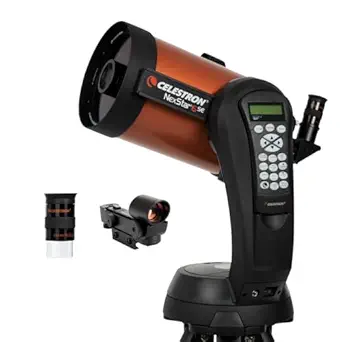 | Best for Advanced Users Needing Automation and Extensive Object Database | Aperture: 6 inches | Optics: Schmidt-Cassegrain | Mount Type: Computerized GoTo | VIEW ON AMAZON | See Our Full Breakdown |
| Celestron StarSense Explorer LT 114AZ Newtonian Smartphone Guided Telescope |  | Best for Entry-Level Stargazing with Smartphone Guidance | Telescope Type: Newtonian reflector | Aperture: 114mm | Mount Type: Altazimuth | VIEW ON AMAZON | See Our Full Breakdown |
| astrophotography telescope | Aperture |
|---|---|
| SVBONY SV503 Telescope for Adu | — |
| 90mm Telescope for Adults High | 90mm |
| ZWO Seestar S30 Pro Smart Tele | — |
| Celestron NexStar 8SE Computer | 8 inches |
| Celestron AstroMaster 130EQ Te | — |
| MEEZAA 90mm Aperture Refractor | 90mm |
| MEEZAA 150EQ Newtonian Reflect | 150mm |
| Celestron StarSense Explorer 1 | 150mm |
| Celestron NexStar 6SE Schmidt- | 6 inches |
| Celestron StarSense Explorer L | 114mm |
More Details on Our Top Picks
SVBONY SV503 Telescope for Adults, 102mm Aperture, F7 ED Refractor
The SVBONY SV503 stands out for its high-quality optics and versatility, making it a top choice for dedicated astrophotographers. Its fully multi-coated FMC lenses and S-FPL51 ED glass deliver bright, contrast-rich images with minimized chromatic aberration, outperforming many entry-level telescopes like the AstroMaster 130EQ in image clarity. The dual-speed focuser and 360° field rotator offer precise control, ideal for capturing detailed planetary and deep-sky shots. However, its weight of nearly 4 kg and the absence of a finderscope mean setup can be challenging for beginners or those with lighter mounts. This telescope is suited for users ready to invest in a stable mount and willing to handle a more complex setup.
Pros:- Excellent optical quality with fully multi-coated FMC lenses
- Minimized chromatic aberration with S-FPL51 ED glass
- Versatile focusing and mounting options including 360° rotator
Cons:- Relatively heavy at 3.95 kg, requiring sturdy mount
- Complex setup may overwhelm novice users
- No included finderscope, requiring extra accessories
Best for: Astrophotographers seeking high optical performance and flexibility in a mid-range refractor
Not ideal for: Beginners who prefer a lightweight, plug-and-play setup without additional accessories
- Objective Lens Diameter:102mm
- Focal Length:714mm
- Focal Ratio:F7
- Optical Tube Length:63cm
- Weight:3.95 kg
- Field of View:1.45 degrees
Our verdict“This pick is best for experienced astrophotographers who want a high-performance refractor with rich features, despite the setup complexity.”
90mm Telescope for Adults High Powered, 180X Magnification
The 90mm Telescope offers a compact, affordable option with versatile magnification up to 180X, suitable for lunar, planetary, and terrestrial viewing. Compared with the Celestron AstroMaster 130EQ, it is more portable and easier to carry, with a lightweight frame and adjustable tripod. The included phone adapter makes it appealing for casual astrophotographers who want quick image capture. Nevertheless, its lightweight build can compromise stability at high magnifications, and the limited aperture restricts deep-sky imaging. It suits beginners or casual users who prioritize portability over long-exposure astrophotography.
Pros:- Coated glass lenses for clear, sharp images
- Wide magnification range up to 180X
- Includes phone adapter for quick photo capturing
Cons:- Limited stability at high magnification due to lightweight design
- Basic mount without tracking capabilities
- Limited aperture restricts deep-sky observation
Best for: Beginners and casual sky observers looking for an easy-to-use, portable telescope
Not ideal for: Intermediate or advanced astrophotographers aiming for detailed deep-sky imaging or long exposures
- Aperture:90mm
- Focal Length:600mm
- Magnification:24×–180×
- Eyepieces:25mm and 10mm
- Barlow Lens:3×
- Tripod Height:29–49 inches
Our verdict“Ideal for beginners and on-the-go users who want an affordable, portable telescope for casual viewing and basic astrophotography.”
ZWO Seestar S30 Pro Smart Telescope, App-Controlled Astrophotography
The ZWO Seestar S30 Pro excels in making astrophotography accessible with its automatic GOTO system and app control, ideal for urban environments with light pollution. Its dual 4K cameras deliver detailed images, surpassing many traditional telescopes like the NexStar 8SE in ease of use but lacking the large aperture for deep-sky detail. The AI noise reduction and anti-dew features simplify outdoor photography, though reliance on a smartphone app introduces a learning curve and potential technical hiccups. This telescope is best for casual users or urban dwellers who want quick, high-resolution images without extensive equipment setup.
Pros:- Automatic GOTO and app control for effortless targeting
- High-resolution 4K imaging captures detailed shots
- Lightweight and portable for outdoor use
Cons:- Requires smartphone app, which may have a learning curve
- Limited detailed specs in the product info
- Potentially higher cost for casual users
Best for: Beginners and urban sky enthusiasts who prioritize ease of use and digital imaging
Not ideal for: Advanced astrophotographers seeking high aperture or deep-sky astrophotography capabilities
- Weight:3.64 lbs
- Optics:Apochromatic
- Camera:Dual 4K
- Features:Automatic GOTO, AI noise reduction
Our verdict“Best suited for urban astrophotographers and beginners who want simple, high-quality digital images with minimal setup.”
Celestron NexStar 8SE Computerized Telescope – Schmidt-Cassegrain
The Celestron NexStar 8SE offers a significant jump in aperture, making it ideal for deep-sky and planetary imaging compared to smaller refractors like the SV503. Its 8-inch Schmidt-Cassegrain design provides bright, detailed visuals, while the computerized GoTo mount with a vast database simplifies locating objects. While the setup and operation are more complex than beginner models like the AstroMaster, the automated features and extensive object library make it worth the effort for serious amateurs. The need for power sources and higher price point are tradeoffs for its advanced capabilities, but it remains portable for a telescope of this size.
Pros:- Large 8-inch aperture for detailed lunar and planetary views
- Extensive database with 40,000+ objects and automated GoTo
- Compact, portable design for its size
Cons:- Requires electrical power, adding setup complexity
- Higher price point compared to simpler models
- Learning curve for full utilization of features
Best for: Intermediate to advanced amateur astronomers seeking a powerful, all-in-one deep-sky and planetary scope
Not ideal for: Beginners or casual stargazers who prefer simple, manual operation without electrical setup
- Aperture:8 inches
- Type:Schmidt-Cassegrain
- Mount:Computerized GoTo
- Object Database:40,000+ objects
- Warranty:2 years
Our verdict“Best for users ready to handle a more complex, feature-rich telescope for serious astrophotography and observation.”
Celestron AstroMaster 130EQ Telescope for Beginners
The Celestron AstroMaster 130EQ provides a straightforward, reliable option for newcomers to astronomy. Its 130mm Newtonian reflector gathers ample light for viewing planets and the moon, with a stable equatorial mount that enhances tracking. Compared to compact refractors, it offers better light collection, but its manual operation and no motorized tracking mean longer exposures or high-magnification astrophotography are limited. The quick assembly and included accessories make it accessible, but more experienced users might find it lacking advanced features. It’s a sound choice for beginners who want a durable, easy-to-use telescope to learn the basics.
Pros:- Easy quick setup with no tools needed
- Good light-gathering with 130mm aperture
- Stable mount with smooth controls
Cons:- Limited to manual tracking, less suited for long exposures
- No motorized features, restricting astrophotography options
- Basic accessories may require upgrades for advanced use
Best for: Beginners seeking an affordable, easy-to-assemble telescope for lunar and planetary observation
Not ideal for: Advanced users or those interested in deep-sky astrophotography requiring tracking or motorized features
- Optics:130mm Newtonian reflector
- Mount:Equatorial
- Included Eyepieces:20mm, 10mm
- Finderscope:StarPointer red dot
- Warranty:2-year US
Our verdict“A practical, beginner-friendly telescope that balances ease of use with decent optical performance, suitable for lunar and planetary viewing.”
MEEZAA 90mm Aperture Refractor Telescope for Adults
The MEEZAA 90mm Refractor stands out for its large aperture that captures bright, detailed images, making it an excellent choice for newcomers eager to explore the night sky without complex equipment. Compared to the Celestron StarSense Explorer 150mm, it offers less aperture power but excels in portability and quick assembly, ideal for casual stargazing or quick trips. Its versatile magnification options and included accessories support basic astrophotography, though it falls short for advanced imaging due to limited stability and focusing precision. The tripod and phone adapter enhance beginner usability, but users should be aware that high-level astrophotography demands more specialized gear. This model is perfect for beginners wanting a straightforward, portable telescope that can still reveal impressive planetary and lunar details.
Pros:- Large 90mm aperture captures bright, detailed images
- Versatile magnification range with included eyepieces and Barlow lens
- Portable and easy to assemble for quick setup
Cons:- Limited magnification for deep-sky astrophotography
- Requires some setup time for optimal viewing
Best for: Beginner amateur astronomers who want an easy-to-transport telescope with decent imaging capabilities
Not ideal for: Advanced astrophotographers seeking high-magnification imaging or long-exposure astrophotography
- Aperture:90mm
- Focal Length:800mm
- Magnification:32X-240X
- Eyepieces:10mm and 25mm
- Barlow Lens:3X
- Tripod Height:28 to 46 inches
Our verdict“This telescope makes the most sense for beginners looking for a portable, easy-to-use option that still offers decent planetary views.”
MEEZAA 150EQ Newtonian Reflector Telescope for Adults and Beginners
The MEEZAA 150EQ offers a significant upgrade over smaller scopes like the Celestron StarSense Explorer 150mm by providing a stable German equatorial mount that allows for precise tracking, making it suitable for longer astrophotography sessions. Its large 150mm aperture gathers more light, revealing fainter deep-sky objects and planetary details with clarity. While assembly may pose a challenge for those unfamiliar with telescope components, its complete set of accessories, including a moon filter and phone adapter, supports beginner exploration. The heavier weight and less portable design mean it’s better suited for home use rather than frequent travel. Its magnification range offers flexibility but isn’t tailored for the high-magnification needs of advanced astrophotography. This pick is ideal for beginners who want to step up their observing game without sacrificing ease of use.
Pros:- Large 150mm aperture provides bright, detailed images
- Stable German equatorial mount allows precise tracking
- Complete accessories support beginner learning and imaging
Cons:- Assembly may require familiarity with telescope parts
- Heavy tripod reduces portability for travel
Best for: Beginner astronomers interested in deep-sky and planetary observation willing to handle a heavier setup
Not ideal for: Travelers seeking a lightweight, highly portable telescope for quick trips
- Aperture:150mm
- Focal Length:650mm
- Magnification Range:26X to 130X
- Eyepieces:25mm & 10mm
- Mount:German Equatorial
- Accessories:Phone adapter, moon filter, carry bag, finderscope, Barlow lens
Our verdict“This telescope is best for beginners prepared to learn and handle a heavier, more capable setup for serious observing.”
Celestron StarSense Explorer 150mm App-Enabled Tabletop Dobsonian Telescope
The Celestron StarSense Explorer 150mm leverages smartphone technology to simplify navigation, making it ideal for beginners or casual stargazers. Its app-guided sky tours with on-screen arrows help locate celestial objects effortlessly, contrasting with traditional manual finders like on the Celestron NexStar 6SE. Its 6-inch reflector delivers vivid views of the Moon and planets with minimal setup, although reliance on the app means less independence in manual tracking. The tabletop mount offers convenience but may feel less stable than full-height mounts, especially for prolonged viewing. While it lacks advanced tracking features, it provides a rewarding visual experience for those new to astronomy. This pick appeals to beginners who want a straightforward, tech-assisted stargazing experience.
Pros:- Smartphone-powered sky tour with visual guidance
- High-quality 6-inch reflector provides bright, detailed views
- Simple setup with smooth manual tracking
Cons:- Dependent on a smartphone app for full functionality
- Manual tracking may be less precise for astrophotography
Best for: Novice astronomers seeking an intuitive, app-guided experience without complex setup
Not ideal for: Astrophotographers aiming for long-exposure imaging or precise tracking
- Aperture:150mm
- Type:Reflector
- Mount:Tabletop Dobsonian
- Connectivity:App-enabled
Our verdict“This telescope is perfect for beginners who want an easy, guided introduction to stargazing with impressive visual results.”
Celestron NexStar 6SE Schmidt-Cassegrain Telescope
The Celestron NexStar 6SE combines powerful optics with a fully automated GoTo mount, making it the best choice for users who want to efficiently explore the night sky. Its 6-inch Schmidt-Cassegrain design offers superior light-gathering, outperforming smaller scopes when observing faint deep-sky objects and planetary details. Unlike manual scopes like the MEEZAA 90mm, the NexStar 6SE’s SkyAlign technology simplifies object location, saving time during sessions. However, its weight and complexity mean it’s less suited for quick setup or travel. While not ideal for beginners unfamiliar with computerized mounts, it offers impressive upgrade potential for serious amateurs. This scope is tailored for those ready to harness automation and deeper astrophotography features.
Pros:- Automated GoTo system simplifies object finding
- Large 6-inch aperture provides bright, detailed images
- Easy to set up with SkyAlign technology
Cons:- Heavier and less portable than smaller scopes
- May be too complex for complete beginners
Best for: Experienced amateur astronomers wanting a reliable, automated telescope with extensive object database access
Not ideal for: Complete beginners or those seeking a lightweight, portable setup for casual use
- Aperture:6 inches
- Optics:Schmidt-Cassegrain
- Mount Type:Computerized GoTo
- Object Database:40,000+ objects
- Warranty:2 years
Our verdict“This telescope suits intermediate to advanced users looking for automation and high-quality imaging potential.”
Celestron StarSense Explorer LT 114AZ Newtonian Smartphone Guided Telescope
The Celestron StarSense Explorer LT 114AZ offers an accessible entry point for newcomers wanting smartphone-assisted celestial exploration. Its 114mm Newtonian reflector provides bright views of the Moon and planets, comparable to the MEEZAA 90mm, but with more aperture for better detail. The standout feature is its smartphone-guided sky navigation, which greatly simplifies object locating for users unfamiliar with star charts. The altazimuth mount is straightforward but less stable than equatorial mounts for astrophotography. While it doesn’t support long exposures or precise tracking, it offers an engaging, intuitive experience for beginners. The included eyepieces and full tripod enhance stability and usability. This telescope is ideal for absolute beginners who want guided stargazing without a steep learning curve.
Pros:- Smartphone-guided navigation with augmented reality
- Bright, detailed views suitable for planetary and lunar observation
- Includes multiple eyepieces and a stable tripod
Cons:- Requires a compatible smartphone for full functionality
- Manual mount limits precision for astrophotography
Best for: Beginners eager to learn the night sky with smartphone assistance and minimal setup
Not ideal for: Astrophotographers aiming for detailed imaging or long exposure photography
- Telescope Type:Newtonian reflector
- Aperture:114mm
- Mount Type:Altazimuth
- Included Eyepieces:10mm and 25mm
- Finderscope:Red dot
- Compatibility:Android 12+, iOS 18+
Our verdict“This scope offers a friendly, guided experience perfect for newcomers wanting quick, impressive views of the Moon and planets.”
How We Picked
To select the best astrophotography telescopes, I focused on key factors that directly impact image quality and usability. Aperture size and optical quality were primary considerations because they determine how much detail can be captured. Ease of use, including features like motorized mounts and app control, ranked highly for making astrophotography accessible. Build quality and durability also mattered, especially for equipment that might face outdoor conditions. Price was a factor, but I prioritized value—selecting models that deliver strong performance relative to their cost. The ranking reflects a balance of these considerations, aiming to guide both newcomers and experienced astronomers toward the best options for their needs.
Factors to Consider When Choosing Astrophotography Telescopes
When choosing an astrophotography telescope, several key factors can influence your success and satisfaction. Understanding these factors helps avoid common pitfalls and ensures you select a model that aligns with your experience level and goals. The right telescope isn’t just about specifications; it’s about how those specs translate into real-world results and usability.Aperture Size and Optical Quality
The aperture size determines how much light the telescope can gather, directly affecting image clarity and detail. Larger apertures provide brighter, more detailed images, which are essential for capturing faint celestial objects. However, bigger telescopes tend to be heavier and more cumbersome to set up. Optical quality—such as ED glass and high-quality coatings—also impacts the sharpness and color fidelity of your shots. Balancing aperture with ease of handling is key, especially for those who plan to do extended sessions.
Ease of Use and Automation
For beginners, features like motorized mounts, automatic tracking, and app control can dramatically improve the astrophotography experience. These features reduce the need for manual adjustments and help maintain precise alignment over long exposures. However, they add to the cost and complexity, which might be overwhelming for absolute newcomers. Advanced users might prefer more customizable setups but should be prepared for a learning curve. Consider how much automation you need versus how much you’re willing to learn and manage manually.
Portability and Setup Time
Astrophotography often involves traveling to dark sky locations, making portability an important consideration. Smaller, lightweight telescopes are easier to transport but may sacrifice some aperture size and image detail. Conversely, larger setups can produce better images but require more time and effort to set up and calibrate. Think about your typical shooting environment and whether quick setup or maximum image quality takes priority.
Compatibility and Accessories
Some telescopes are designed to work seamlessly with smartphones or dedicated astrophotography cameras, simplifying the process. Compatibility with mounts, filters, and tracking systems can extend your capabilities and improve image quality. Be aware that adding accessories might increase overall costs and complexity. Choosing a model with a flexible, compatible ecosystem can save time and money in the long run.
Budget and Long-term Value
While it’s tempting to focus on initial cost, investing in a higher-quality telescope can pay off in better images and fewer frustrations. Cheaper models often lack stability, optical quality, or automation features, leading to subpar results or a steep learning curve. Conversely, premium options come with higher upfront costs but provide more reliable performance and durability. Consider your long-term goals and willingness to upgrade as your skills grow.
Frequently Asked Questions
Can I do astrophotography with a portable telescope?
Yes, many portable telescopes are suitable for astrophotography, especially models with motorized mounts and good tracking capabilities. Compact setups like the Celestron StarSense Explorer LT 114AZ are designed for quick assembly and ease of use, making them ideal for field work. Keep in mind, portability might mean sacrificing some aperture size, so it’s a balance between convenience and image quality. For best results, choose a model that offers stable tracking and compatibility with your camera or smartphone.
How important is computer control for astrophotography beginners?
Computer control can significantly simplify the learning process by automating star alignment, tracking, and image capturing. For beginners, app-controlled telescopes like the ZWO Seestar S30 Pro remove much of the manual effort involved in precise setup. This reduces the chance of errors and allows you to focus more on capturing images than on technical adjustments. However, it does add some complexity and cost, so assess your comfort level with technology before opting for these features.
Is a reflector telescope better than a refractor for astrophotography?
Reflector telescopes, such as the MEEZAA 150EQ, often offer larger apertures at lower prices, making them appealing for high-magnification astrophotography. However, they generally require more maintenance and collimation, and their longer focal lengths can mean more setup time. Refractors, especially ED models like the SVBONY SV503, tend to be more straightforward to use and maintain, providing sharper images with less calibration. The best choice depends on your willingness to manage maintenance versus your desire for simplicity and image quality.
Should I prioritize automation or manual control?
Automation features like motorized mounts and app control make astrophotography more accessible, especially for those new to the hobby. They help maintain precise tracking during long exposures, reducing frustration and improving results. Manual control might appeal more to experienced users who want maximum flexibility and control over every aspect of imaging. Consider your skill level, patience, and how much you’re willing to learn—automation generally favors beginners or casual enthusiasts.
How much should I expect to spend on a good astrophotography telescope?
Entry-level models suitable for casual astrophotography can start around $300–$600, offering decent optics and basic tracking. Mid-range options range from $700 to $1500, providing better image quality, automation, and stability. Premium setups, like advanced Schmidt-Cassegrain systems, can cost $2000 or more but deliver professional-level results. Your budget should reflect your goals: hobbyist imaging might be satisfied with mid-range models, while serious astrophotographers should consider investing in higher-end systems that ensure long-term satisfaction and better results.
Conclusion
For those new to astrophotography or casual hobbyists, a compact, easy-to-use telescope like the Celestron AstroMaster 130EQ offers a good balance of affordability and performance. Enthusiasts seeking the best possible images should consider the Celestron NexStar 8SE for its high-quality optics and automation features. Budget-conscious buyers can explore the SVBONY SV503 for excellent optical performance at a reasonable price. Serious amateurs and professionals aiming for top-tier results will find premium options like the Celestron NexStar 6SE and larger Schmidt-Cassegrain systems worth the investment. Your choice depends on your experience level, goals, and willingness to manage complexity.
As an affiliate, we earn on qualifying purchases.Halloween Picks
halloween