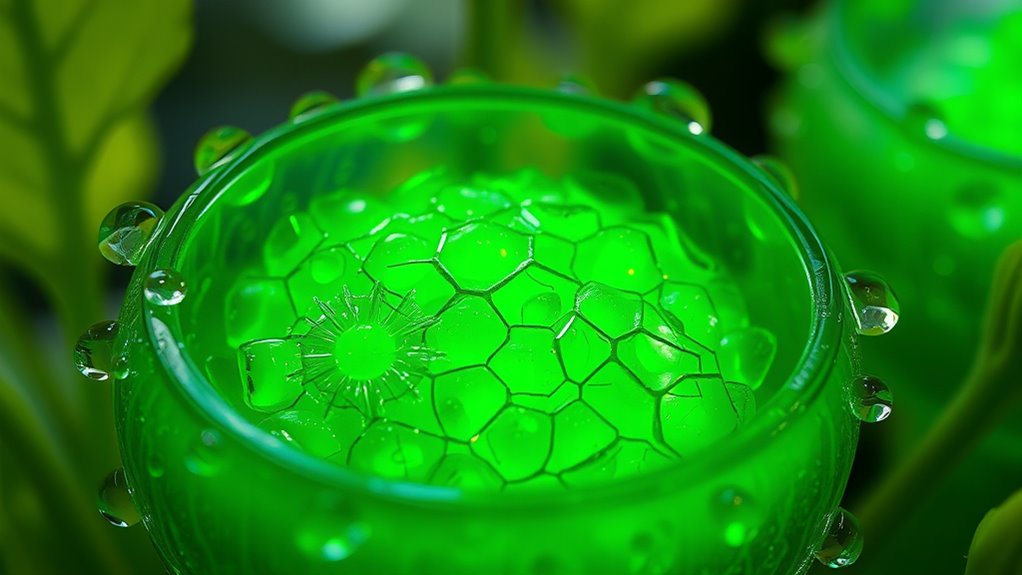

Artificial chloroplasts are pushing the boundaries of photosynthesis by mimicking the natural process to convert sunlight into cleaner, sustainable energy. They capture and store solar energy more effectively than plants, markedly reducing energy waste. These innovative systems can produce fuels like hydrogen and methanol, offering a more accessible alternative to fossil fuels. Plus, they can be customized for various environments and energy needs. Discover even more about their potential impact on our energy future.
Key Takeaways
- Artificial chloroplasts mimic natural photosynthesis, transforming sunlight into chemical energy with enhanced efficiency.
- They streamline energy capture, reducing waste compared to traditional photosynthesis methods.
- Capable of producing sustainable fuels like hydrogen and methanol from sunlight and CO₂, they promote cleaner alternatives to fossil fuels.
- Customizable synthetic pathways allow adaptation to various environmental conditions for optimized performance.
- Integration with urban settings can power buildings and vehicles, contributing to reduced carbon footprints and sustainable energy solutions.
As scientists dive deeper into the mysteries of photosynthesis, they’ve uncovered groundbreaking advancements that could reshape our understanding of energy production in plants. One of the most exciting developments is the creation of artificial chloroplasts. These innovations mimic the natural processes of photosynthesis and offer a glimpse into a future where energy conversion could be dramatically more efficient. You might wonder how these artificial systems can change our approach to energy production, so let’s explore their potential.
Artificial chloroplasts are designed to replicate the synthetic pathways that occur in natural chloroplasts. By harnessing sunlight, these systems can convert solar energy into chemical energy, much like plants do. However, the key difference lies in their efficiency. Traditional photosynthesis has its limitations, which often results in wasted energy and less effective energy conversion. In contrast, artificial chloroplasts streamline the process, optimizing the pathways to ensure more energy is captured and stored.
Artificial chloroplasts enhance energy conversion by mimicking natural processes, capturing and storing solar energy more efficiently than traditional photosynthesis.
Imagine walking through a world where these artificial systems are widely implemented. You’d see buildings adorned with panels that not only provide energy but also actively contribute to reducing carbon footprints. By integrating artificial chloroplasts into everyday environments, energy conversion could be as seamless as breathing. They could power homes, businesses, and even vehicles, creating a sustainable loop of energy production and consumption.
One intriguing aspect of these advancements is their potential to produce fuels directly from sunlight and carbon dioxide. Just like plants convert carbon dioxide into sugars, artificial chloroplasts can be engineered to synthesize fuels, such as hydrogen or methanol. This capability could revolutionize the energy landscape, making renewable energy more accessible and affordable. You wouldn’t have to rely solely on fossil fuels, and the environmental benefits would be immense.
Moreover, the flexibility of these systems allows for customization. Scientists can tweak the synthetic pathways to optimize energy conversion for specific applications. This means that as technology evolves, so too can the efficiency and effectiveness of energy production. The prospect of adapting these artificial chloroplasts to different environmental conditions opens up possibilities we’ve yet to fully explore. Additionally, the integration of air purification technology in the environment could enhance the overall sustainability of urban areas, further supporting the adoption of these innovative energy solutions.

Photoconversion Processes for Energy and Chemicals: Energy from Biomass 5
As an affiliate, we earn on qualifying purchases.
As an affiliate, we earn on qualifying purchases.
Frequently Asked Questions
How Do Artificial Chloroplasts Compare to Natural Ones in Efficiency?
Artificial chloroplasts often outperform natural ones in regard to photosynthesis optimization and energy conversion efficiency. They can be designed to absorb a broader spectrum of light and convert it more effectively into usable energy. By mimicking the essential processes of natural chloroplasts while enhancing specific functions, you’ll find that their efficiency can markedly exceed traditional methods. This advancement could lead to more sustainable energy solutions, helping you make a positive environmental impact.
What Materials Are Used to Create Artificial Chloroplasts?
You’ll find that creating artificial chloroplasts involves a fascinating mix of materials. Scientists often use synthetic membranes to mimic the natural ones, providing a barrier for reactions. They also incorporate nano scale catalysts, which enhance efficiency at a molecular level. These components work together to optimize light absorption and energy conversion, making the entire process more efficient. It’s amazing how these innovations can push the boundaries of energy production and sustainability!
Are There Any Environmental Risks Associated With Artificial Chloroplasts?
Yes, there are potential environmental risks associated with artificial chloroplasts. You should consider their ecological impact, as introducing these systems could disrupt local ecosystems or alter nutrient cycles. There’s also a chance that engineered organisms could outcompete native species, leading to biodiversity loss. Monitoring and regulations are essential to mitigate these risks, ensuring that the benefits of artificial chloroplasts don’t come at the expense of environmental health and stability.
How Can Artificial Chloroplasts Impact Global Food Production?
Artificial chloroplasts can greatly impact global food production by enabling crop enhancement and yield optimization. They enhance photosynthetic efficiency, allowing plants to convert sunlight into energy more effectively. With improved photosynthesis, crops grow faster and produce higher yields, which can help meet the demands of a growing population. By reducing the need for chemical fertilizers and water, you’ll see a more sustainable agricultural practice that benefits both farmers and the environment.
What Is the Future Potential of Artificial Chloroplast Technology?
The future potential of artificial chloroplast technology is promising, isn’t it? Imagine harnessing synthetic photosynthesis to produce food and renewable energy simultaneously! You could see a world where energy crises become a thing of the past, and food scarcity is tackled with ease. It’s ironic how nature’s efficiency could be replicated, transforming our approach to sustainability. With continued innovation, you’re witnessing a shift towards a greener future right before your eyes.

Photoelectrochemical Solar Fuel Production: From Basic Principles to Advanced Devices
As an affiliate, we earn on qualifying purchases.
As an affiliate, we earn on qualifying purchases.
Conclusion
In the grand tapestry of nature, artificial chloroplasts weave a vibrant thread of possibility. By harnessing the sun’s golden rays, you can unveil a new era of energy and sustainability. As these innovations blossom, they promise to shatter the limits of traditional photosynthesis, turning sunlight into fuel with the grace of a dancer. Embrace this revolution, and let the world bask in the brilliance of your ingenuity, lighting the path toward a greener, more sustainable future.

Fakllod Hydrogen Water Bottle Generator, Portable Rechargeable aquahealth Hydrogen Water, Hydrogen Water Ionizer Machine, with SPE/PEM Technology, for Home Office Travel Fitness Drinking
Hydrogen Water Bottle Generator: A single use can produce a hydrogen concentration of up to 1600-2000 ppb, transforming…
As an affiliate, we earn on qualifying purchases.
As an affiliate, we earn on qualifying purchases.
solar methanol synthesizer
As an affiliate, we earn on qualifying purchases.
As an affiliate, we earn on qualifying purchases.