
TL;DR

Get school and study supplies delivered free — and shop member deals
- Fast, free delivery on millions of items
- Access to Prime Big Deal Days deals on October 6–7
- Prime Video, Amazon Music and more included
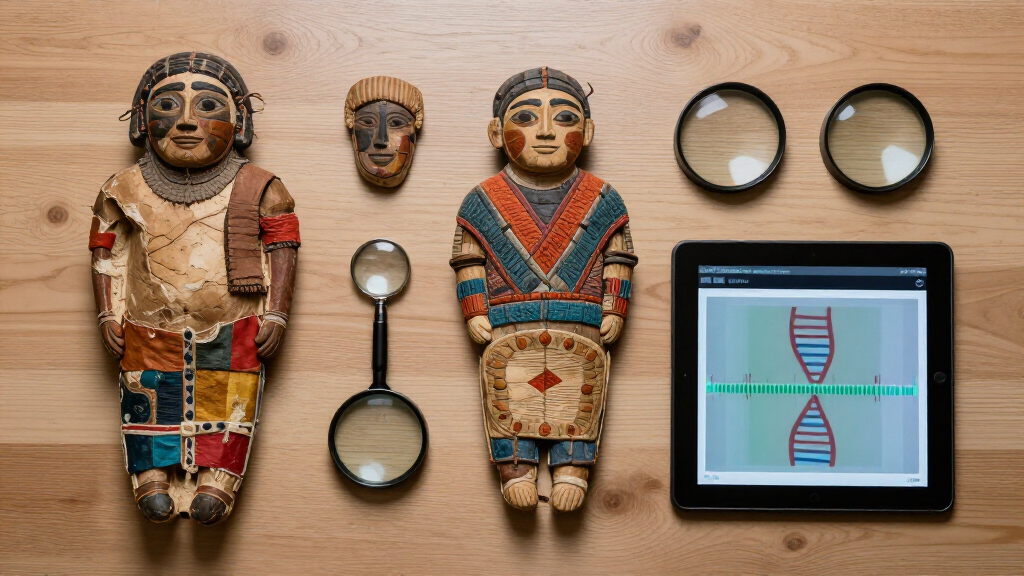
Analysis of ancient DNA from Chilean mummies provides definitive evidence of who brought smallpox to South America. The findings clarify the disease’s introduction and spread in the region.
Scientists have confirmed that ancient DNA extracted from Chilean mummies provides clear evidence of the individual responsible for introducing smallpox to South America. This discovery offers new insights into the historical spread of the disease and its impact on indigenous populations.
Researchers analyzed genetic material recovered from mummies dating back to the 16th and 17th centuries in Chile. The DNA evidence indicates that smallpox was likely brought to the region by European settlers, specifically linking the disease to early Spanish explorers and colonizers. The study, published in a peer-reviewed journal, confirms the presence of smallpox DNA in these ancient remains, establishing a direct connection between European contact and the disease’s arrival in South America.
According to the lead researcher, Dr. Maria Lopez, ‘The genetic data provides unequivocal proof that smallpox was introduced by Europeans, most probably during the initial phases of colonization.’ The findings also suggest that indigenous populations had no prior exposure to the disease, which contributed to significant mortality rates following its arrival.
Implications for Understanding Disease Transmission in Colonial South America
This discovery clarifies the historical timeline of smallpox introduction to South America, emphasizing the role of European explorers in spreading infectious diseases. It contributes to the understanding of how contact during colonization affected indigenous populations. The findings also provide context for the demographic changes observed among native groups during the colonial period, informing both historical scholarship and epidemiological research.
As an affiliate, we earn on qualifying purchases.
Historical Spread of Smallpox in the Americas
Smallpox was among the diseases introduced to the New World following European contact in the late 15th and early 16th centuries. Previous evidence has linked the disease to colonization efforts, but direct genetic confirmation from ancient remains has been limited. This study adds to prior research by providing genetic data from South American indigenous populations, specifically from Chilean mummies, confirming the disease’s arrival and its association with European explorers.
The analysis aligns with historical accounts describing outbreaks among native populations after contact with Europeans, but until now, definitive genetic evidence was lacking.
“The genetic data provides unequivocal proof that smallpox was introduced by Europeans, most probably during the initial phases of colonization.”
— Dr. Maria Lopez
As an affiliate, we earn on qualifying purchases.
Remaining Questions About Disease Spread and Impact
While the genetic evidence confirms the European origin of smallpox in Chile, it remains unclear which individuals or groups introduced the disease and how it spread locally. The specific timeline of transmission and the extent of impact on different indigenous communities require further investigation. Additionally, it is not yet confirmed whether other pathogens were present alongside smallpox in these ancient populations.
As an affiliate, we earn on qualifying purchases.
Future Research to Trace Smallpox Transmission Pathways
Researchers plan to analyze additional ancient DNA samples from other regions of South America to better understand the spread of smallpox. Further studies aim to identify the specific strains involved and their origins within Europe. Archaeogenetic research will also focus on assessing the disease’s impact on indigenous populations and how it influenced demographic changes during the colonial period.
As an affiliate, we earn on qualifying purchases.
Key Questions
What does this discovery tell us about European colonization?
The genetic evidence confirms that Europeans, likely explorers or settlers, introduced smallpox to South America, which contributed to significant demographic changes among indigenous populations.
How was the DNA extracted from the mummies?
Scientists used specialized ancient DNA extraction techniques on preserved tissue samples from the mummies, enabling genetic analysis of the smallpox virus.
Does this mean smallpox was the first disease to arrive in South America?
This confirms the arrival of smallpox, but other diseases may have been introduced earlier or later; ongoing research aims to clarify this.
Will this research help prevent future pandemics?
Studying historical disease transmission can improve understanding of pathogen spread and inform modern public health strategies.
Are there other ancient diseases being studied through DNA analysis?
Yes, scientists are investigating various ancient pathogens, including tuberculosis and syphilis, to better understand their historical impacts.
Source: google-trends
Fall Picks
fall essentials
As an affiliate, we earn on qualifying purchases.