
Smart wound care is becoming more data-driven by integrating advanced imaging, sensors, and AI to monitor healing in real-time. You can now track progress with wearable devices and mobile apps that visualize your improvement, increasing your engagement and motivation. These technologies help clinicians personalize treatments, predict complications, and optimize interventions. As innovation continues, you’ll see even more precise, proactive approaches that improve outcomes. Keep exploring to discover how these advancements could impact your wound care journey.

Prime made for students and young adults
- Fast, free delivery for dorm and study essentials
- Prime Video and Amazon Music included
- Member-only deals
Key Takeaways
- Advanced imaging and AI analyze wound images to assess healing and detect complications automatically.
- Integrated data platforms consolidate information from sensors, health records, and labs for comprehensive monitoring.
- Wearable devices and mobile apps enable real-time wound tracking, improving treatment responsiveness.
- Predictive analytics personalize treatment plans and forecast risks, facilitating proactive interventions.
- Automation of routine tasks reduces errors and frees clinical resources, enhancing decision-making efficiency.
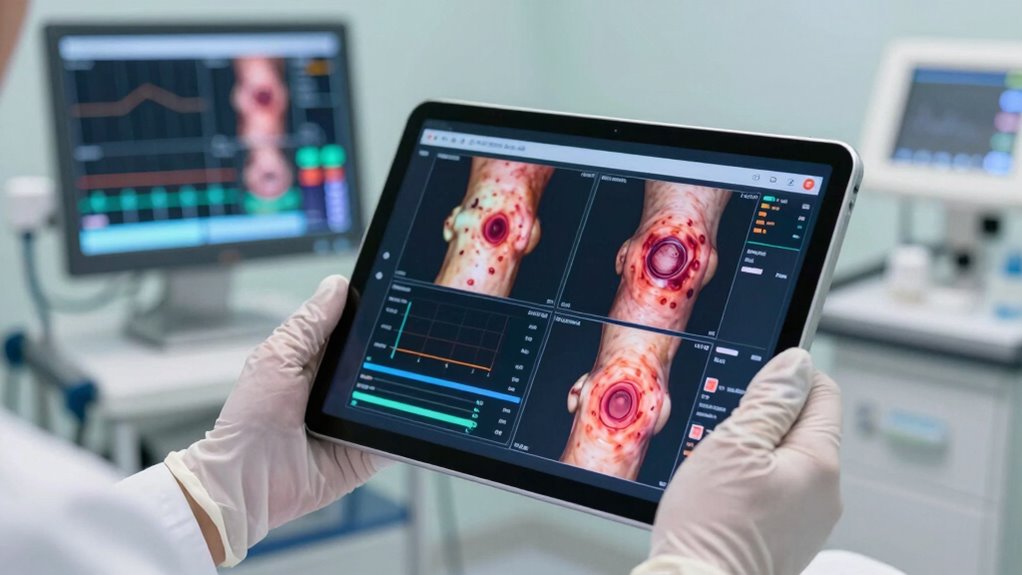
In today’s healthcare landscape, data-driven approaches are transforming how wound care is managed. You’re now working with tools and systems that leverage vast amounts of data to improve patient outcomes and streamline treatment processes. One of the key elements driving this change is patient engagement. When patients actively participate in their wound care, they provide valuable real-time information that enhances treatment accuracy. Wearable devices, mobile apps, and digital monitoring tools allow you to track wound progress continuously, making it possible to respond quickly to changes. This increased engagement not only empowers patients but also creates a collaborative environment where treatment plans are tailored more precisely to individual needs.
Patient engagement and digital tools are revolutionizing wound care with real-time data and personalized treatment.
Technological innovations are at the heart of this evolution. Advanced imaging systems, for example, enable your team to capture high-resolution images of wounds, which can be analyzed automatically to assess healing stages, infection signs, or complications. These images, combined with data analytics, help you identify patterns and predict potential setbacks before they occur. Furthermore, artificial intelligence (AI) algorithms sift through enormous datasets, offering insights that inform smarter decision-making. This means you can optimize dressing choices, determine the best intervention timing, and customize treatment regimens based on reliable, evidence-based data.
Additionally, data integration platforms now allow you to consolidate information from various sources—patient health records, sensor inputs, lab results—into a single, accessible dashboard. This seamless integration reduces errors, saves time, and ensures you always have an extensive view of the patient’s wound status. The automation of routine monitoring tasks frees you to focus more on direct patient care and complex decision-making. Furthermore, predictive analytics help you anticipate wound deterioration or infection risks, allowing for preemptive interventions that can accelerate healing and reduce complications.
As data collection becomes more sophisticated, your ability to personalize wound care improves dramatically. Tailoring treatment plans based on continuous data streams leads to higher patient engagement, as individuals see their progress more clearly and understand the impact of their actions. This cycle of data-driven feedback fosters motivation and adherence to care protocols. Ultimately, technological innovations are making wound management more precise, proactive, and patient-centered. By embracing these advancements, you stay at the forefront of wound care, ensuring better outcomes, reduced healing times, and increased patient satisfaction. The future of wound care is undeniably intertwined with the power of data and the active participation of patients, creating a more effective and innovative healthcare environment.
smart wound care monitoring device
As an affiliate, we earn on qualifying purchases.
As an affiliate, we earn on qualifying purchases.
Frequently Asked Questions
How Secure Is Patient Data in Smart Wound Care Systems?
Your patient data in smart wound care systems is generally secure, thanks to data encryption protocols that protect sensitive information. However, it’s essential that you obtain proper patient consent before collecting and sharing their data. While technology advances enhance security, maintaining rigorous privacy standards and staying compliant with regulations guarantee your patients’ data remains protected against breaches and unauthorized access.
What Are the Costs Associated With Implementing Data-Driven Wound Care?
Imagine planting a garden; the initial costs are like soil preparation. Implementing data-driven wound care involves expenses for advanced technology integration, such as sensors and software, plus ongoing maintenance and training. A thorough cost analysis helps you understand these investments, balancing upfront costs with long-term savings from improved healing outcomes. While initial investments can seem steep, the enhanced precision and efficiency often justify the costs.
How Do Data-Driven Approaches Improve Healing Times?
Data-driven approaches improve healing times by enabling personalized treatment plans based on predictive analytics. You get tailored care that targets specific wound needs, which accelerates healing. Continuous data collection helps monitor progress, allowing adjustments in real-time. This proactive strategy minimizes complications, reduces healing duration, and enhances overall outcomes, making your wound care more efficient and effective.
Are There Any Privacy Concerns With Wound Care Data Collection?
Yes, there are privacy concerns with wound care data collection. You need to consider data ownership, ensuring patients retain control over their information. Consent management is vital, as patients should explicitly agree to how their data is used, stored, and shared. Implementing strict security measures helps protect sensitive health data, maintaining trust and compliance with regulations like HIPAA, so your patients’ privacy stays safeguarded throughout their wound care journey.
What Training Is Needed for Healthcare Providers on New Technologies?
You need to undergo thorough training protocols that focus on technology integration to effectively utilize new wound care tools. This includes understanding device functionalities, data management, and troubleshooting. Hands-on practice and ongoing education are essential to keep up with evolving smart technologies. By mastering these skills, you can improve patient outcomes, guarantee proper data handling, and confidently incorporate innovative solutions into your wound care practices.
As an affiliate, we earn on qualifying purchases.
Conclusion
You’re now part of a revolution in wound care, where data-driven solutions are transforming healing outcomes. Did you know that smart wound management systems can reduce healing time by up to 30%? This means quicker recoveries and fewer complications for you. As technology advances, you’ll benefit from more personalized, efficient care—making healing faster and easier. Embrace these innovations, and watch how data-driven wound care reshapes your recovery experience.
As an affiliate, we earn on qualifying purchases.
As an affiliate, we earn on qualifying purchases.
Fall Picks
fall essentials
As an affiliate, we earn on qualifying purchases.