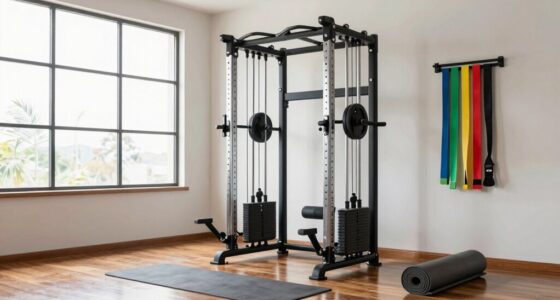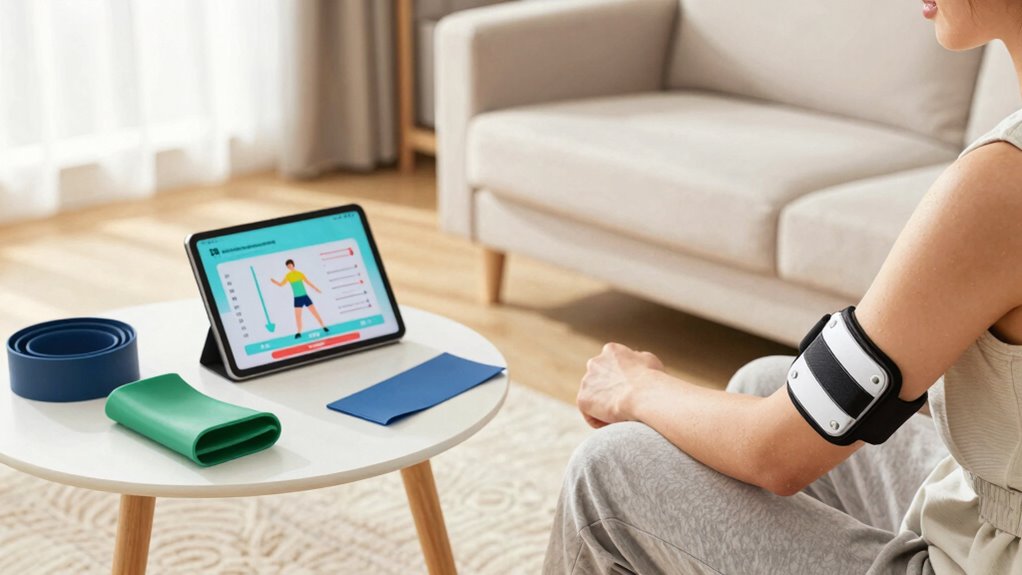

Smart rehabilitation tools help you recover at home by creating immersive virtual environments that make exercises more engaging and motivating. They analyze your progress in real time, adjusting difficulty to keep you challenged without feeling overwhelmed. These tools also track your improvement, provide instant feedback, and remind you to stay on schedule. Plus, remote monitoring allows healthcare providers to review your progress without frequent visits. Keep exploring to discover how these innovations can make your recovery smoother and more effective.

Prime made for students and young adults
- Fast, free delivery for dorm and study essentials
- Prime Video and Amazon Music included
- Member-only deals
Key Takeaways
- Provide immersive virtual environments to simulate real-world tasks, increasing engagement and motivation during home exercises.
- Use AI to personalize therapy by adjusting difficulty and tracking subtle progress changes in real time.
- Offer instant feedback and progress markers to encourage consistency and long-term commitment.
- Enable remote monitoring, allowing healthcare providers to assess and modify treatment without in-person visits.
- Incorporate safety tips and environment considerations, such as proper ventilation, to ensure safe and effective home rehabilitation.
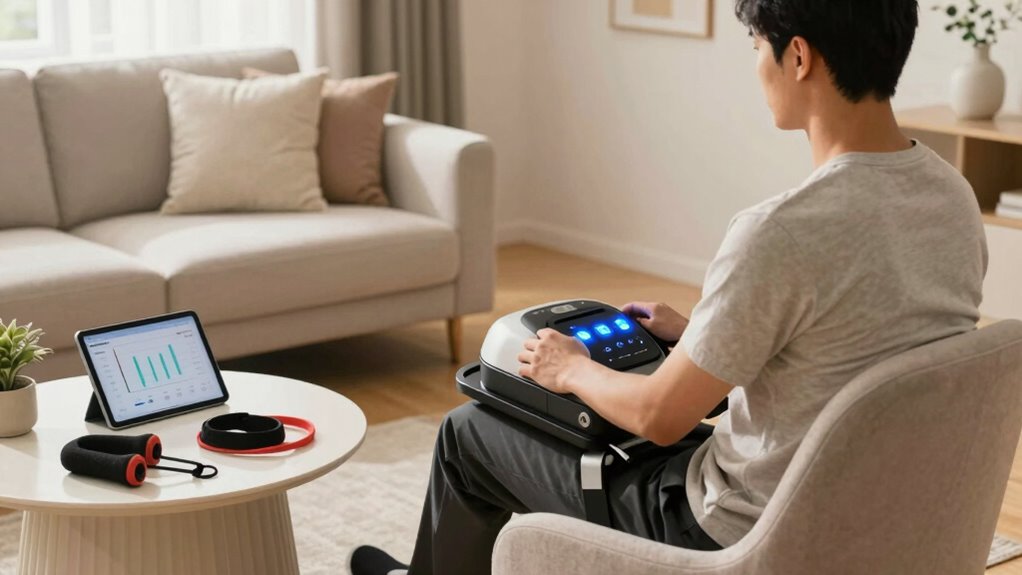
Have you ever wondered how modern rehabilitation tools accelerate recovery and improve outcomes? Today, technology plays a significant role in helping you regain mobility and strength right from the comfort of your home. Virtual reality and artificial intelligence are at the forefront, transforming traditional therapy into engaging, personalized experiences. Virtual reality creates immersive environments that simulate real-world tasks, making exercises more engaging and motivating. Instead of performing repetitive movements on a plain mat, you might find yourself steering through a virtual park or completing tasks that mimic daily activities. This not only keeps you motivated but also helps retrain your brain more effectively by providing realistic feedback.
Artificial intelligence enhances this process further by tailoring your therapy program to your specific needs. AI-powered systems analyze your progress in real time, adjusting difficulty levels or suggesting new exercises based on your performance. This personalized approach guarantees you’re neither overwhelmed nor under-challenged, which is essential for steady improvement. AI can also identify subtle changes in your movement patterns, alerting you or your therapist if adjustments are needed, therefore preventing setbacks or injuries. These smart systems often come with user-friendly interfaces that guide you through exercises step-by-step, making it easier to stay consistent and confident in your recovery journey.
Moreover, both virtual reality and artificial intelligence foster a sense of accountability and engagement, which are necessary for long-term success. When you see virtual progress markers or receive instant feedback, you’re more likely to stay committed to your rehab routine. The immersive nature of virtual reality helps distract from discomfort and fatigue, allowing you to perform exercises longer and with greater focus. AI-driven apps can also remind you to stick to your schedule and track your achievements over time, giving you a clear view of your progress and motivating you to keep going. Incorporating data analysis further enhances the precision of your therapy by providing insights that might be missed during traditional assessments.
These tools also facilitate remote monitoring, so your therapist can assess your progress without being physically present. Data collected by AI algorithms can be shared easily, enabling your healthcare provider to fine-tune your program remotely. This convenience means you don’t need frequent visits to the clinic, saving time and reducing stress. Additionally, understanding the essential safety tips for using equipment like portable oil radiators can help prevent hazards in your recovery environment, ensuring a safer space for your exercises. Incorporating air quality awareness into your recovery environment is also crucial, as pollutants like microplastics in dust can affect your respiratory health and overall well-being during rehabilitation. Recognizing the importance of proper ventilation can further improve your recovery space by reducing airborne irritants that may hinder healing.
Furthermore, integrating visual feedback mechanisms can enhance your ability to perform exercises with correct form, increasing the effectiveness of your therapy. In summary, virtual reality and artificial intelligence make home-based recovery more effective, engaging, and tailored to your needs, empowering you to take control of your healing process. They turn what might be a tedious routine into an interactive journey, giving you the best chance for a successful and speedy recovery.
virtual reality rehabilitation system
As an affiliate, we earn on qualifying purchases.
As an affiliate, we earn on qualifying purchases.
Frequently Asked Questions
Are Smart Rehab Tools Suitable for All Age Groups?
Smart rehab tools are generally suitable for most age groups, but you should consider age-specific challenges and user adaptability. For children or older adults, tools need to be user-friendly and adaptable to different ability levels. Younger users often adapt quickly, while seniors might require simpler interfaces. Always select tools designed with age-related needs in mind, ensuring safe and effective recovery, and consult healthcare providers for personalized recommendations.
How Secure Is My Personal Health Data With These Tools?
Your personal health data is generally secure with smart rehabilitation tools, thanks to robust security protocols. These tools prioritize data privacy by encrypting your information and limiting access only to authorized personnel. Developers continuously update security measures to protect against breaches. However, it’s wise to review the privacy policy and verify the device complies with health data regulations, so you stay informed and confident about your data’s safety.
Can I Use These Tools Without Medical Supervision?
You can definitely use these tools without constant medical supervision, but don’t underestimate their power—these devices are so advanced, they could practically be your personal rehab coach! Still, be mindful of privacy concerns and device accessibility, as some tools might store sensitive data or require specific tech setups. For maximum safety and effectiveness, it’s best to follow professional guidance, especially during critical recovery phases.
What Is the Cost Comparison With Traditional Rehab Methods?
Smart rehabilitation tools often cost less than traditional rehab methods, offering better cost efficiency over time. While initial expenses might be higher, they reduce the need for frequent clinic visits, saving you money. Insurance coverage varies, but many plans now include these tools, making them more accessible. This way, you can recover comfortably at home without sacrificing affordability or support, streamlining your path to health.
How Do I Choose the Right Smart Rehab Device for My Needs?
Choosing the right smart rehab device is like finding a custom puzzle piece that fits perfectly. Start by examining device features—look for those that match your specific recovery goals. Consider user compatibility too; make sure it’s easy for you to operate and suits your tech skills. Visit reviews, consult your healthcare provider, and test options if possible. This way, you’ll pick a device that truly supports your journey to recovery.
AI-powered physical therapy tools
As an affiliate, we earn on qualifying purchases.
As an affiliate, we earn on qualifying purchases.
Conclusion
Smart rehabilitation tools make recovery at home more effective and engaging. Imagine slipping on a wearable device that guides your exercises and tracks your progress in real-time. For example, Sarah, a stroke survivor, used a smart glove to regain hand mobility faster than traditional therapy. These tools empower you to stay motivated, monitor improvements, and adjust your rehab plan easily. Embracing smart technology can truly transform your recovery journey, helping you regain independence sooner.
As an affiliate, we earn on qualifying purchases.
remote patient monitoring system
As an affiliate, we earn on qualifying purchases.
As an affiliate, we earn on qualifying purchases.
Fall Picks
fall essentials
As an affiliate, we earn on qualifying purchases.