
Accessible medical technology helps you monitor your health easily with wearable devices that track activity, sleep, and essential signs. It keeps you connected to healthcare providers, enabling remote care and early intervention. These tools support independence, especially for older adults or those with chronic conditions, by making health management simple and comfortable. When you understand how these devices work, you can confidently take charge of your well-being. Keep exploring to discover more about how these innovations fit into your daily life.

Prime made for students and young adults
- Fast, free delivery for dorm and study essentials
- Prime Video and Amazon Music included
- Member-only deals
Key Takeaways
- Enables continuous health monitoring for early detection and timely intervention.
- Facilitates remote care, reducing travel and increasing healthcare access for remote or mobility-challenged individuals.
- Supports independence by helping users manage chronic conditions and daily health routines effortlessly.
- Enhances comfort and usability, encouraging consistent use and adherence to health management plans.
- Promotes informed self-care through user-friendly data insights and awareness of personal health metrics.
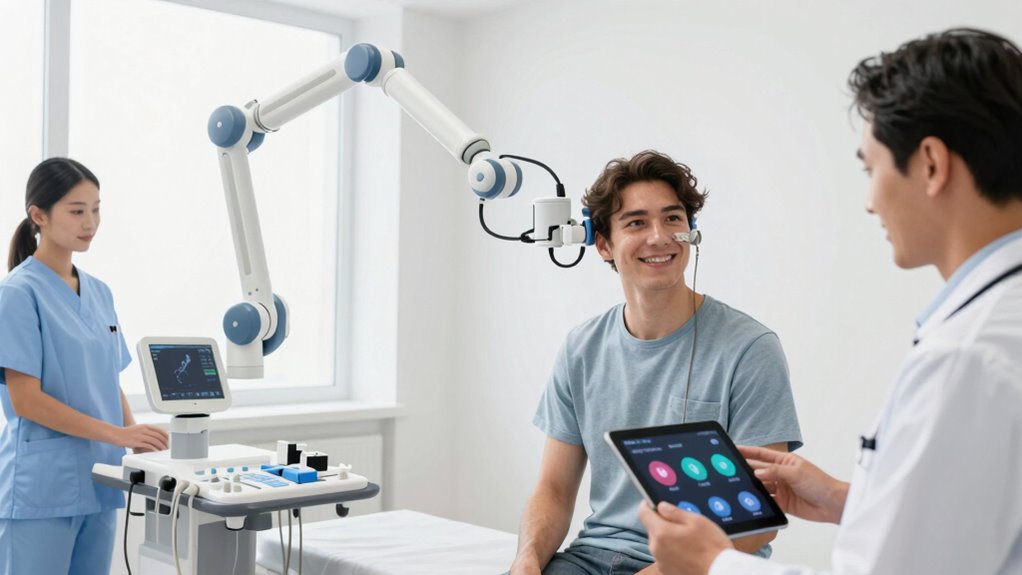
Wearable devices play a vital role in everyday care because they are small, user-friendly, and capable of collecting a wide range of health information. These devices, whether they’re fitness trackers, smartwatches, or specialized medical wearables, seamlessly integrate into your daily routine. They monitor your activity levels, sleep patterns, and physiological data, providing instant feedback that can motivate healthier habits. This accessibility empowers you to stay engaged with your health without feeling overwhelmed or disconnected from your care team.
Moreover, these technologies bridge gaps caused by physical disabilities or geographic barriers. If you have mobility challenges or live in a remote area, wearable devices and remote monitoring systems make it easier to access high-quality medical care. You no longer need to travel long distances for routine check-ups or worry about missing a vital appointment. Instead, your data is transmitted securely, enabling your healthcare provider to intervene early if necessary. This constant connection fosters a more personalized approach, where treatment and advice can be tailored precisely to your needs, improving outcomes and reducing hospital visits. Understanding device limitations and how they can impact your healthcare experience is also crucial for making informed choices.
In addition, these advancements promote independence, especially for older adults or those managing chronic illnesses. You can stay involved in your healthcare journey, track your progress, and communicate with your providers more easily than ever before. The integration of accessible medical technology into daily life reduces the barriers of cost, mobility, and time, making healthcare not just more efficient but genuinely more inclusive. Recognizing the importance of user comfort and usability when selecting wearable devices ensures sustained use and better health management. Interestingly, understanding nail biology/hygiene, including differences between male and female nails, can also help inform personalized self-care routines that support overall health. Properly designed wearable technology takes into account user comfort and usability, ensuring that devices are comfortable for extended wear and accessible to diverse populations. Ultimately, this innovation guarantees that quality care isn’t limited by physical boundaries or financial constraints, helping you live healthier, more informed, and more autonomous every day.
wearable health monitor for seniors
As an affiliate, we earn on qualifying purchases.
As an affiliate, we earn on qualifying purchases.
Frequently Asked Questions
How Affordable Is Accessible Medical Technology for Most Patients?
Accessible medical technology can be quite affordable for most patients, but cost barriers and insurance coverage play significant roles. If your insurance includes coverage for these technologies, your out-of-pocket expenses decrease, making them more accessible. However, without sufficient coverage, costs may be prohibitive. You should explore your insurance options and seek programs or assistance that help reduce costs, ensuring you can benefit from the latest medical advancements without financial strain.
What Training Is Needed to Use New Medical Devices Effectively?
To use new medical devices effectively, you need thorough user training focused on device usability. You’ll learn how to operate, troubleshoot, and interpret device data confidently. Hands-on training helps you familiarize yourself with features and functions, ensuring safety and accuracy. Regular refreshers reinforce skills, reduce errors, and improve overall care. Clear, concise instruction makes technology approachable, empowering you to deliver better, safer patient care every day.
Are There Privacy Concerns With Remote Health Monitoring Devices?
Yes, there are privacy concerns with remote health monitoring devices. You need to guarantee data security to protect sensitive health information from breaches. Patient confidentiality is vital, so secure encryption and strict access controls are essential. By staying aware of these issues, you can help prevent unauthorized data access, maintain trust, and make sure your remote monitoring practices comply with privacy laws. This way, your patients’ privacy remains protected while benefiting from technology.
How Quickly Is Accessible Technology Being Integrated Into Healthcare Systems?
Rapidly, accessible technology is integrating into healthcare, despite innovation barriers and regulatory challenges. You’ll notice new tools transforming treatment, making monitoring more manageable and care more personalized. Healthcare providers and policymakers are working to improve infrastructure and streamline standards, speeding up adoption. As progress persists, you’ll experience more efficient, effective, and equitable care, bridging gaps and breaking barriers to bring medical marvels closer to everyone’s reach.
Can Accessible Medical Technology Be Customized for Individual Needs?
Yes, accessible medical technology can be customized for individual needs. You’ll find personalization options that allow you to adjust features based on your preferences or health requirements. User interface design plays a essential role, making sure controls are intuitive and easy to use. This customization enhances comfort and effectiveness, ensuring that each person gets tailored support, which ultimately improves health outcomes and daily life management.
remote patient monitoring device
As an affiliate, we earn on qualifying purchases.
As an affiliate, we earn on qualifying purchases.
Conclusion
By embracing accessible medical technology, you open a future where healthcare is truly within everyone’s reach. It’s not just about convenience; it’s about revolutionizing how you receive care, making it faster, safer, and more personalized than ever before. Imagine a world where every heartbeat, every breath, is supported by life-changing innovations—this isn’t a distant dream, it’s happening now. Together, you can be part of this incredible transformation that’s shaping the future of everyday care.
fitness tracker with sleep tracking
As an affiliate, we earn on qualifying purchases.
As an affiliate, we earn on qualifying purchases.
medical smartwatch for chronic conditions
As an affiliate, we earn on qualifying purchases.
As an affiliate, we earn on qualifying purchases.
Halloween Picks
halloween
As an affiliate, we earn on qualifying purchases.



![Terence Tao: Math 2.0 [Pdf]](https://thegeniusfactory.net/wp-content/uploads/2026/10/terence-tao-math-2-0-pdf-featured-260x140.jpg)