
Patient-centered innovation is changing clinical design by focusing on your individual needs, preferences, and experiences. It integrates advanced technologies like telemedicine and AI to offer personalized treatments and better data access. Spaces are now designed for comfort, privacy, and accessibility, making your visits less stressful. Continuous feedback guarantees environments evolve with you. If you continue exploring, you’ll discover how these changes make healthcare more responsive, human-centered, and tailored specifically for you.

Prime made for students and young adults
- Fast, free delivery for dorm and study essentials
- Prime Video and Amazon Music included
- Member-only deals
Key Takeaways
- Personalized treatments prioritize patient needs, influencing the design of clinical spaces to enhance comfort and engagement.
- Technology integration streamlines data collection and communication, shaping more efficient and accessible clinical environments.
- Clinical spaces are designed for accessibility and emotional support, improving patient experience and reducing anxiety.
- Continuous feedback mechanisms enable real-time adjustments, ensuring spaces evolve with patient preferences and regulatory standards.
- Emphasis on privacy, security, and human-centered design creates trustworthy, responsive healthcare environments.
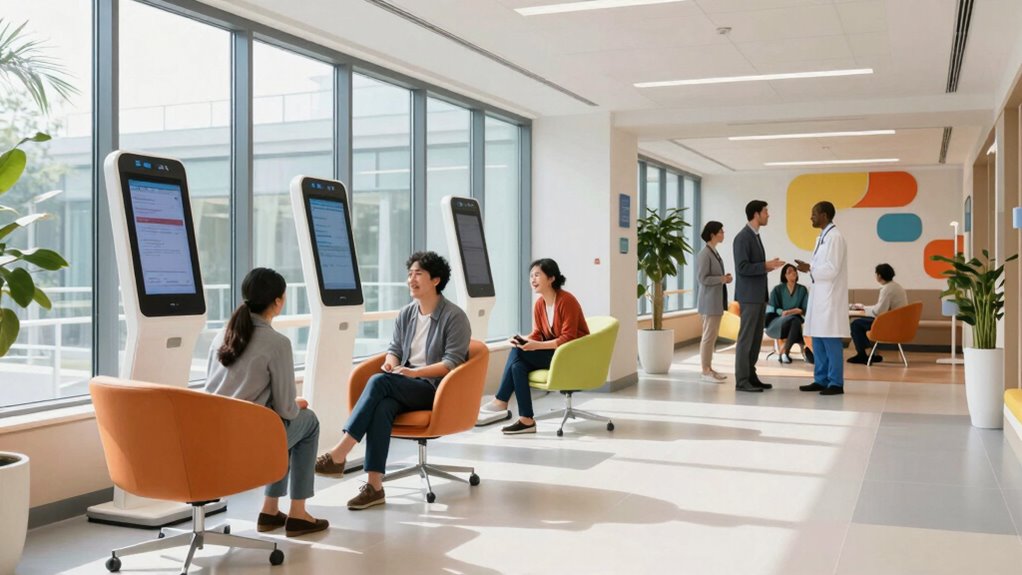
Innovations in clinical design are increasingly centered around the needs and experiences of patients, transforming how healthcare is delivered. You’re at the forefront of this shift, where personalized treatments become the norm rather than the exception. Instead of one-size-fits-all approaches, healthcare providers now tailor interventions to your unique genetic makeup, lifestyle, and preferences. This shift not only improves outcomes but also makes you an active participant in your care journey. As a result, clinical spaces are designed to support these personalized approaches, with layouts and technologies that foster comfort, privacy, and engagement.
Technology integration plays an essential role in this transformation. You benefit from advanced tools like electronic health records, telemedicine, and AI-powered diagnostics, which streamline your experience and guarantee timely, precise care. These innovations allow healthcare providers to gather detailed data about you quickly and accurately, enabling more targeted treatments. You might notice that your healthcare team uses digital dashboards to coordinate your care plan seamlessly, reducing delays and errors. This integration empowers you to access your health information easily, schedule virtual visits, and communicate with your providers more conveniently, making healthcare feel less intimidating and more accessible.
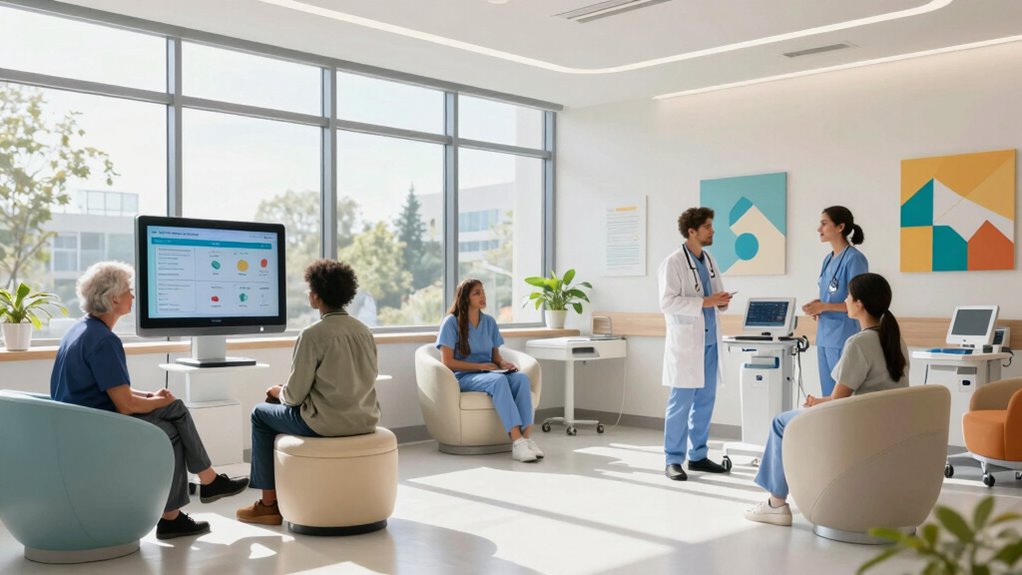
Designing clinical spaces with you in mind means creating environments that support these technological advancements while also addressing your emotional and physical needs. Modern clinics incorporate private, comfortable areas where you can discuss sensitive health issues without feeling exposed. Waiting areas are designed to be calming, reducing stress and anxiety. The layout often emphasizes accessibility, ensuring that everyone, regardless of mobility or health status, can navigate easily. These spaces are also equipped with user-friendly interfaces and digital tools that help you understand your treatment options and make informed decisions. Incorporating requirements traceability ensures that all these design choices meet regulatory standards and support continuous improvement. Additionally, the integration of patient feedback allows healthcare environments to adapt dynamically based on your actual experiences and preferences. Moreover, the use of color accuracy in clinical design can enhance visual cues and reduce confusion, creating a more intuitive environment. Furthermore, leveraging data-driven design principles ensures that clinical spaces are continuously optimized based on real-world usage and outcomes. A comprehensive understanding of privacy regulations is essential to ensure that your personal health information remains secure while facilitating seamless data sharing when necessary.
Your experience is further enhanced through the integration of real-time data and feedback mechanisms. You might be invited to participate in digital surveys or provide input on your satisfaction, helping healthcare providers refine their designs and services. This ongoing feedback loop ensures that clinical environments evolve to meet your changing needs and preferences. Ultimately, patient-centered innovation in clinical design isn’t just about adopting new technology; it’s about reshaping healthcare to make it more responsive, personalized, and human-centered. When your care environment adapts to your needs, you’re more likely to feel empowered, supported, and confident in your health journey.
telemedicine consultation device
As an affiliate, we earn on qualifying purchases.
As an affiliate, we earn on qualifying purchases.
Frequently Asked Questions
How Is Patient Feedback Integrated Into Clinical Design Processes?
You actively incorporate patient feedback into clinical design by engaging patients early and often through surveys, interviews, and focus groups. This patient engagement helps identify needs and preferences, ensuring feedback incorporation shapes the process. You continuously gather insights during development, adapt designs based on real-world input, and validate solutions with patient input, making the process more effective and patient-centric, ultimately leading to better health outcomes and improved satisfaction.
What Challenges Hinder Implementing Patient-Centered Innovations Widely?
You face challenges like regulatory hurdles and resource limitations when trying to implement patient-centered innovations widely. Regulatory processes can slow down development and approval, creating delays. At the same time, limited resources—funding, staff, and time—make it hard to prioritize patient input and adapt designs accordingly. Overcoming these obstacles requires strategic planning, collaboration, and advocacy to streamline regulations and allocate necessary resources effectively.
How Does Patient-Centered Design Impact Healthcare Costs?
You’ll see that patient-centered design can lead to significant healthcare cost savings by reducing unnecessary tests and hospital readmissions. It improves resource allocation by focusing on what truly matters to patients, streamlining care, and avoiding waste. When you prioritize patient needs, you optimize outcomes efficiently, which ultimately lowers overall healthcare costs. This approach not only benefits patients but also makes healthcare systems more sustainable and financially responsible.
Are There Specific Technologies Driving This Innovation?
You’re seeing specific technologies like personalized diagnostics and wearable devices driving this innovation. Personalized diagnostics tailor treatments based on individual patient data, making care more precise and effective. Wearable devices monitor health in real-time, giving you continuous insights and enabling proactive management. These technologies empower patients and clinicians alike, fostering collaborative decision-making, improving outcomes, and ultimately transforming clinical design to be more patient-centered and adaptable to individual needs.
How Do Clinicians Adapt to New Patient-Centered Clinical Models?
You adapt to new patient-centered models by embracing personalized care and participating in empathy training. Studies show that clinicians who focus on personalized care see a 25% improvement in patient satisfaction. You stay flexible, learn new technologies, and prioritize active listening to better understand patient needs. Empathy training helps you build stronger relationships, making it easier to implement innovative approaches that truly center on the patient’s experience and well-being.
As an affiliate, we earn on qualifying purchases.
Conclusion
By embracing patient-centered innovation, you’re not just redesigning clinical trials—you’re transforming healthcare into a journey where patients are truly heard and valued. This shift acts as a compass, guiding you toward more effective treatments and better outcomes. As you champion this change, remember: when you put patients at the heart of your design, you’re crafting a future where healing and hope go hand in hand, lighting the way for a better tomorrow.
As an affiliate, we earn on qualifying purchases.
accessible clinical environment furniture
As an affiliate, we earn on qualifying purchases.
As an affiliate, we earn on qualifying purchases.
Fall Picks
fall essentials
As an affiliate, we earn on qualifying purchases.