
TL;DR

Get school and study supplies delivered free — and shop member deals
- Fast, free delivery on millions of items
- Access to Prime Big Deal Days deals on October 6–7
- Prime Video, Amazon Music and more included
Jellyfish can heal wounds within minutes, a process that scientists are now studying to understand the underlying mechanisms. This research could lead to new advances in medicine.
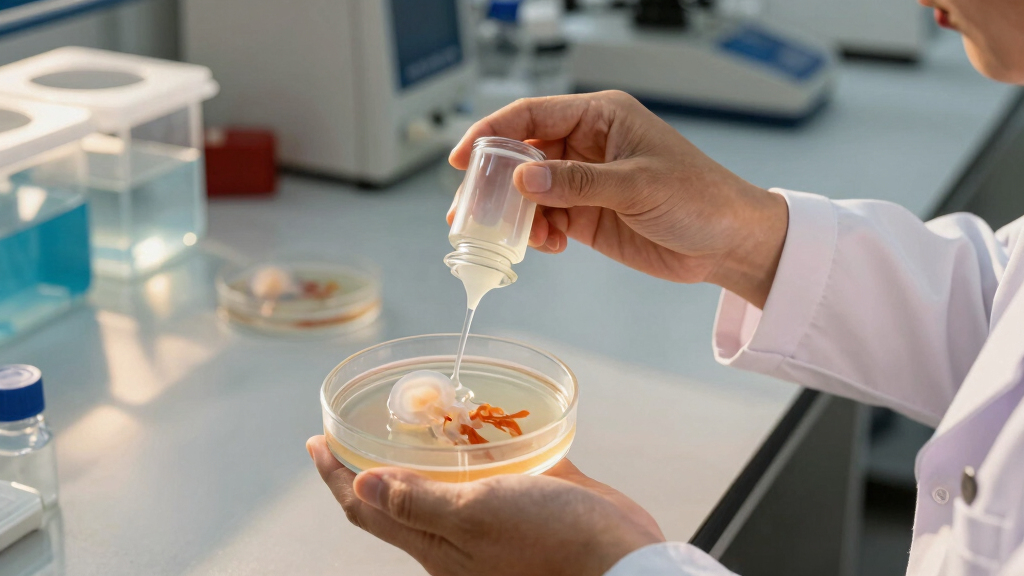
Scientists are investigating how certain jellyfish can heal their wounds within minutes, a remarkable biological process that could have significant implications for medicine. This research aims to uncover the cellular and molecular mechanisms behind this rapid healing, which remains poorly understood. The findings could pave the way for innovative treatments for human injuries and tissue regeneration.
Recent studies have confirmed that some species of jellyfish possess an extraordinary ability to repair damaged tissue extremely quickly, often within a matter of minutes. Researchers from multiple institutions are now focusing on identifying the specific biological factors involved. According to Dr. Emily Carter, a marine biologist at the Marine Research Institute, “The speed at which these jellyfish heal is unlike anything observed in other animals, and understanding this could revolutionize regenerative medicine.”
Preliminary experiments suggest that the jellyfish’s wound healing involves a combination of unique cellular responses and biochemical signals that promote rapid tissue regeneration. However, the exact pathways and molecules responsible are still under investigation. The research team is employing advanced imaging techniques and genetic analysis to pinpoint the key factors involved.
While this ability is confirmed in laboratory observations, scientists emphasize that translating these findings into human medicine will require extensive further research. The potential applications include developing new wound dressings, tissue engineering methods, and even treatments for degenerative diseases.
Potential Medical Breakthroughs from Jellyfish Healing
This discovery is significant because understanding how jellyfish achieve such rapid wound repair could lead to breakthroughs in human medicine. If scientists can replicate or stimulate similar processes in humans, it could dramatically improve healing times for injuries, reduce scarring, and aid in regenerative therapies. The research also highlights the importance of studying marine organisms for biomedical advancements.
As an affiliate, we earn on qualifying purchases.
Previous Research on Marine Organisms and Regeneration
Research into animal regeneration has historically focused on species like salamanders and starfish, which can regrow limbs and tissues. Recent studies have increasingly turned to marine creatures, including jellyfish, for their unique regenerative abilities. Prior work has identified some molecular pathways involved in tissue repair in simpler organisms, but the rapid healing observed in jellyfish is unprecedented. This latest research builds on these efforts by examining jellyfish’s cellular responses in real time.
“The speed at which these jellyfish heal is unlike anything observed in other animals, and understanding this could revolutionize regenerative medicine.”
— Dr. Emily Carter, Marine Biologist
As an affiliate, we earn on qualifying purchases.
Unanswered Questions About Jellyfish Rapid Healing
While the phenomenon has been observed and initial studies have identified some involved factors, it is not yet clear exactly how jellyfish coordinate cellular responses to achieve such rapid healing. The specific genes, proteins, and signaling pathways responsible are still under investigation, and translating these findings to human medicine remains a complex challenge.
As an affiliate, we earn on qualifying purchases.
Next Steps in Jellyfish Healing Research
Researchers plan to conduct more detailed genetic and biochemical analyses to identify the precise mechanisms behind jellyfish wound healing. They also aim to test whether these processes can be stimulated or mimicked in human cells. Collaboration with biomedical engineers is expected to explore potential applications in wound care and regenerative medicine within the next few years.
As an affiliate, we earn on qualifying purchases.
Key Questions
How do jellyfish heal wounds so quickly?
Scientists believe it involves a combination of cellular responses and biochemical signals that promote rapid tissue regeneration, but the exact mechanisms are still being studied.
Can this research lead to new medical treatments?
Potentially, yes. If researchers can understand and replicate the process, it could lead to faster healing methods for human injuries and improved regenerative therapies.
Which jellyfish species are capable of this rapid healing?
Specific species have been observed to heal quickly, but further research is needed to determine which species and what factors contribute to this ability.
When might these findings translate into human medicine?
It is still early, and translating these findings into clinical applications could take several years of research and development.
Are there any risks or ethical concerns involved?
As with any biomedical research, ethical considerations include ensuring safe application and understanding potential side effects of mimicking biological processes in humans.
Source: hn
Fall Picks
fall essentials
As an affiliate, we earn on qualifying purchases.