
The future of home health monitoring will see you using advanced sensors and AI-driven analytics for real-time health tracking and early detection of issues. Wearable devices will continuously monitor your essential signs and send updates to your healthcare team, enabling personalized care. Seamless connectivity will integrate data from various devices, making health assessments quicker and more accurate. Smart home health stations and virtual consultations will reduce trips to the doctor, helping you stay healthier at home. Keep exploring to uncover how these innovations will transform your health management.
Get ready for Prime Big Deal Days — try Prime free
Exclusive member deals on October 6–7, plus fast free delivery. Cancel anytime.
As an affiliate, we earn on qualifying purchases.
Key Takeaways
- Integration of advanced wearable sensors for continuous, real-time vital sign monitoring and proactive health management.
- Use of AI-driven predictive analytics to identify health issues early and personalize treatment plans.
- Development of seamless data sharing systems ensuring secure, interoperable health information flow between devices and providers.
- Deployment of smart home health stations and projectors for comprehensive remote diagnostics and health education.
- Virtual healthcare consultations and remote monitoring reducing hospital visits, especially for chronic disease management.
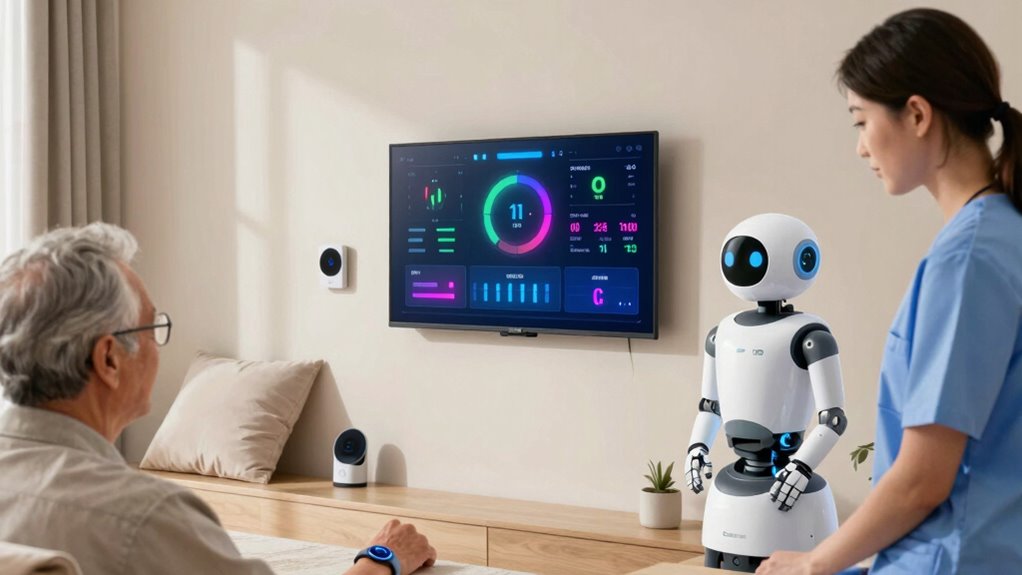
Have you ever wondered how technology is transforming healthcare at home? It’s changing rapidly, making it easier for you to manage your health without constant visits to the doctor’s office. One of the most exciting developments is the rise of remote diagnostics, which lets healthcare providers monitor your health data from afar. Instead of scheduling frequent in-person appointments, you can now undergo tests and assessments that are transmitted directly to your medical team. This not only saves time but also allows for quicker responses if your health shows signs of concern. Remote diagnostics create a continuous flow of information, helping catch potential issues early and enabling timely interventions.
Remote diagnostics enable continuous health monitoring and faster, proactive medical responses from home.
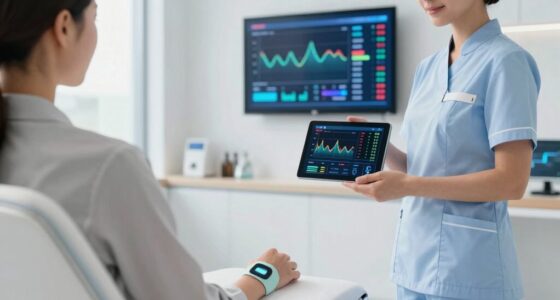
Complementing remote diagnostics are wearable sensors, small devices that you can comfortably wear throughout your day. These sensors track essential signs such as heart rate, blood pressure, oxygen levels, and even activity patterns. They work silently in the background, providing real-time updates to both you and your healthcare providers. Imagine waking up and knowing that your wearable sensors are constantly monitoring your health, alerting you if something abnormal occurs. These devices foster a proactive approach to health management, giving you insights into your body’s trends over days or weeks. As data accumulates, your medical team gains a clearer picture of your overall health, which can lead to more personalized treatment plans. Incorporating health data integration ensures that all your health information is synchronized for more accurate analysis. Additionally, understanding the importance of data security is crucial as your sensitive health data is shared across multiple platforms.
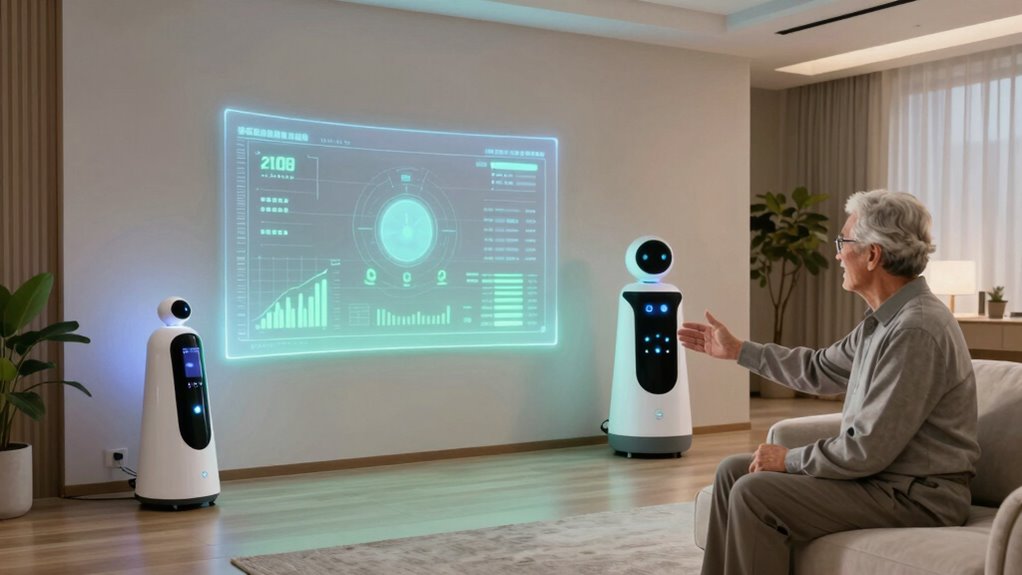
Looking ahead, the integration of remote diagnostics with wearable sensors will make home health monitoring even more seamless. Imagine a system where your sensors automatically relay data to your healthcare provider, who then analyzes it with advanced algorithms. If anything seems off, you might receive an instant notification or a prompt for an in-person check-up. This continuous monitoring could reduce hospital visits and emergency room trips, especially for chronic conditions like diabetes or heart disease. You might also see the rise of smart home health stations that combine diagnostics and sensors, providing detailed health assessments from the comfort of your living room. Furthermore, advancements in projector technology are paving the way for innovative health monitoring solutions, such as large display screens for visual health assessments or educational purposes at home. Additionally, data integration will be crucial to ensuring that all health information from various devices is seamlessly combined for comprehensive analysis. As these systems become more interconnected, interoperability will play a vital role in creating a unified healthcare experience.
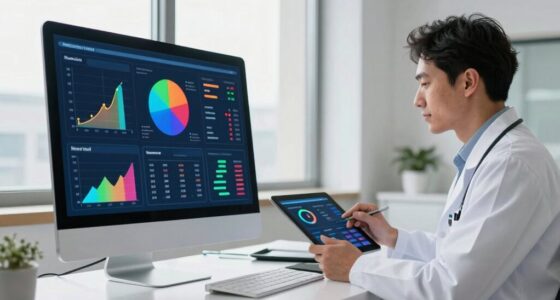
In the future, artificial intelligence will further enhance these technologies, offering predictive analytics that anticipate health issues before symptoms appear. You’ll have access to personalized health insights, tailored advice, and even virtual consultations that feel just as effective as in-person visits. The goal is to empower you with tools that promote independence, early detection, and better quality of life—all from the familiarity and comfort of home. As these innovations continue to evolve, you’ll find yourself at the center of a smarter, more responsive healthcare system designed to keep you healthier, longer.
wearable health sensors for continuous monitoring
As an affiliate, we earn on qualifying purchases.
As an affiliate, we earn on qualifying purchases.
Frequently Asked Questions
How Secure Is Personal Health Data in Future Monitoring Systems?
Your personal health data in future monitoring systems will be more secure with advanced data encryption methods and strict privacy regulations. Developers will prioritize safeguarding your information, making unauthorized access difficult. As regulations evolve, companies will implement stronger standards to protect your privacy, giving you confidence in how your data is stored and shared. While no system is entirely foolproof, ongoing innovations will considerably enhance the security of your personal health information.
Will Home Health Devices Be Affordable for All Income Levels?
Like the tale of the little prince, affordable home health devices aim to reach everyone, but cost considerations and accessibility challenges remain. You might find some options becoming more budget-friendly as technology advances, yet disparities could persist. While efforts are underway to make these devices accessible for all income levels, it’s uncertain whether they’ll fully bridge the gap, leaving some still facing barriers to quality home health monitoring.
Can Older Adults Easily Adapt to New Monitoring Technologies?
You can adapt to new monitoring technologies more easily when user engagement is prioritized and tools are designed with technology accessibility in mind. As an older adult, you’ll find devices intuitive and straightforward, especially if support is available. Manufacturers are increasingly focusing on creating accessible interfaces, making it simpler for you to stay engaged and comfortable with these innovations, ultimately enhancing your health management and independence.
What Role Will AI Play in Personalized Healthcare?
AI will play a vital role in personalized healthcare by leveraging predictive analytics to identify health risks early. It allows you to receive treatment customization tailored specifically to your needs, improving outcomes and comfort. As AI analyzes your health data in real-time, it empowers your healthcare providers to make proactive decisions. This technology transforms your care experience, making it more precise, efficient, and responsive to your unique health profile.
How Will Emergency Alerts Be Managed Remotely?
Did you know that 85% of emergency alerts in home health monitoring are now managed through remote diagnostics? You’ll experience real-time response, where alerts are instantly transmitted to healthcare providers. They can assess the situation remotely, determine urgency, and coordinate immediate action. This seamless process guarantees swift intervention, reducing risks and improving outcomes, all while you stay comfortably at home.
AI-powered remote health diagnostics devices
As an affiliate, we earn on qualifying purchases.
As an affiliate, we earn on qualifying purchases.
Conclusion
The future of home health monitoring is like a beacon guiding you toward better wellness and independence. As technology advances, you’ll find yourself effortlessly staying in tune with your health, catching issues early like a vigilant guardian. Embracing these innovations means you’re not just a passive patient but an active participant in your well-being. With each new device, you’re building a bridge to a healthier, more connected life—making healthcare feel less like a distant shore and more like your home port.
smart home health stations for elderly
As an affiliate, we earn on qualifying purchases.
As an affiliate, we earn on qualifying purchases.
virtual healthcare consultation devices
As an affiliate, we earn on qualifying purchases.
As an affiliate, we earn on qualifying purchases.
Fall yard work Picks
leaf blowers
As an affiliate, we earn on qualifying purchases.