🔍 Read the full analysis: 2026'S Top 11 AI Tools For Smarter Workflows on ThorstenMeyerAI.com
Play games included with Prime
Start a Prime free trial and play with Amazon Luna on your devices.
Start playingAs an affiliate, we earn on qualifying purchases.
TL;DR
In 2026, eleven AI tools stand out for enhancing workflows, offering automation, integration, and customization. This report details each tool’s strengths and relevance for different users.
In 2026, the landscape of AI productivity software has expanded significantly, with eleven tools emerging as leaders for smarter workflows. For a detailed analysis, see the original analysis. These tools are designed to automate tasks, improve collaboration, and optimize efficiency across various professional settings. Microsoft Copilot remains the top choice due to its broad integration with Microsoft 365, while other solutions like Claude AI and niche-focused products cater to specialized needs. The development underscores the ongoing shift toward AI-driven work environments that promise to reshape productivity paradigms.
The top eleven AI tools of 2026 are distinguished by their ability to blend advanced AI features with user-friendly interfaces. Microsoft Copilot continues to dominate for its seamless integration with widely used productivity suites, enabling automation within familiar environments like Word, Excel, and Outlook. Claude AI offers powerful prompt engineering capabilities, appealing to professionals seeking customization and control. Several tools focus on niche applications, such as ADHD management, time tracking, or specialized automation, reflecting a diverse market catering to varied user needs.
Pricing varies broadly—from free or low-cost options suitable for individual users to enterprise-grade solutions with extensive features. To explore the best options, check out Buy Smarter: AI & Automation Tools For 2026. Many tools emphasize ease of use, with some prioritizing accessibility for beginners, while others cater to power users requiring deep customization. Support and community resources also play a key role, with well-supported platforms facilitating faster onboarding and troubleshooting. The overall trend indicates a market moving toward tailored, integrated, and scalable AI solutions that can adapt across different industries and workflows. For insights into the leading tools, see 2026’S Leading AI Tools For Automation And Innovation.
The 11 picks
- 1
 Claude AI for Microsoft 365 for Beginners: Practical Guide to Mastering Produ…View on Amazon →
 - 2
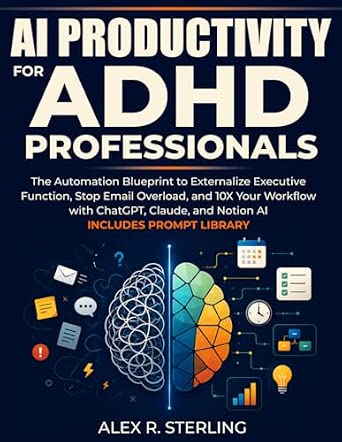 AI Productivity for ADHD Professionals: Automation Blueprint to Externalize E…View on Amazon →
 - 3
 Mastering Claude AI: The Complete Practical Guide to Prompt Engineering, Proj…View on Amazon →
 - 4
 AI Prompts for Productivity and Time Management: 500 Powerful Prompts to Work…View on Amazon →
 - 5
 Master AI for Beginners: Develop Artificial Intelligence Basics, Understand M…View on Amazon →
 - 6
 AI Tools for Everyone: Your Guide to Artificial IntelligenceView on Amazon →
 - 7
 AI-Powered Productivity & Prompt Engineering: A Practical System to Work Smar…View on Amazon →
 - 8
 Microsoft Copilot: A Practical Guide to Using AI in Word, Excel, PowerPoint,…View on Amazon →
 - 9
 AI Productivity Made Simple: How to Use ChatGPT, Automation Tools, Prompts, a…View on Amazon →
 - 10
 AI Tools for Productivity: Microsoft Copilot at Work for BeginnersView on Amazon →
 - 11
 How To Master Generative AI: Master AI Tools, Write Better Prompts, Boost Pro…View on Amazon →
Why These AI Tools Will Reshape Work in 2026
The emergence of these eleven AI productivity tools signals a fundamental shift in how work is conducted. They enable automation of routine tasks, freeing up human resources for more strategic activities. Integration with existing platforms like Microsoft 365 ensures minimal disruption, while advanced customization options allow for tailored workflows. For organizations and professionals, adopting these tools can lead to significant time savings, increased accuracy, and improved collaboration. As AI continues to evolve, these tools are setting a new standard for efficiency and adaptability in modern workplaces, making them essential for staying competitive in 2026 and beyond.
The Evolution of AI in Workplace Productivity
Over the past few years, AI-driven productivity tools have transitioned from experimental features to core components of daily work routines. Microsoft’s introduction of Copilot in 2023 marked a turning point, integrating AI deeply into familiar applications. Since then, the market has expanded rapidly, with new entrants focusing on niche needs like prompt engineering, automation, and niche workflows such as ADHD management. The 2026 landscape reflects a mature ecosystem where AI tools are not only more powerful but also more accessible, supporting a broad spectrum of users from individual professionals to large enterprises. This evolution underscores a broader trend toward intelligent automation and personalized workflows, driven by advances in natural language processing, machine learning, and user interface design.
“The top AI tools of 2026 are redefining how we approach work, blending automation with customization in ways that were unthinkable a few years ago.”
— Thorsten Meyer, AI Productivity Expert
Remaining Questions About AI Tool Adoption and Effectiveness
While these tools are gaining popularity, questions remain about their long-term effectiveness, security, and adaptability across different industries. It is not yet clear how well they will scale in large organizations or how they will handle evolving workflows. Additionally, concerns about data privacy, AI bias, and user training persist, especially as organizations seek to implement these solutions at scale. The pace of technological change also raises questions about future updates and the sustainability of current features.
Upcoming Developments and Adoption Trends for 2026
Expect continued innovation in AI features, with new tools emerging to address specific industry needs. Integration with other enterprise systems, enhanced customization, and improved user interfaces are likely to be key focus areas. Adoption will probably accelerate as organizations recognize the productivity gains, but success will depend on addressing security concerns and ensuring user training. Market leaders like Microsoft are expected to expand their AI offerings, while niche developers will refine specialized solutions. Monitoring these developments will be critical for users aiming to stay ahead in productivity technology.
Key Questions
How do these AI tools improve productivity?
They automate routine tasks, assist with complex workflows, enhance collaboration, and provide personalized prompts, saving time and reducing errors.
Are these tools suitable for small businesses?
Yes, many tools offer scalable plans, with some designed specifically for small teams and individual professionals, providing affordable automation and integration features.
What should I consider when choosing an AI productivity tool?
Evaluate compatibility with your existing tools, ease of use, customization options, support resources, and whether the features align with your specific workflow needs.
Will AI tools replace human workers?
Most experts see AI as augmenting human work rather than replacing it, by automating repetitive tasks and enabling focus on higher-value activities.
How secure are these AI tools with sensitive data?
Security varies by provider; choose solutions with strong data privacy policies, encryption, and compliance with industry standards to mitigate risks.
Source: ThorstenMeyerAI.com
Fall yard work Picks
leaf blowers
As an affiliate, we earn on qualifying purchases.