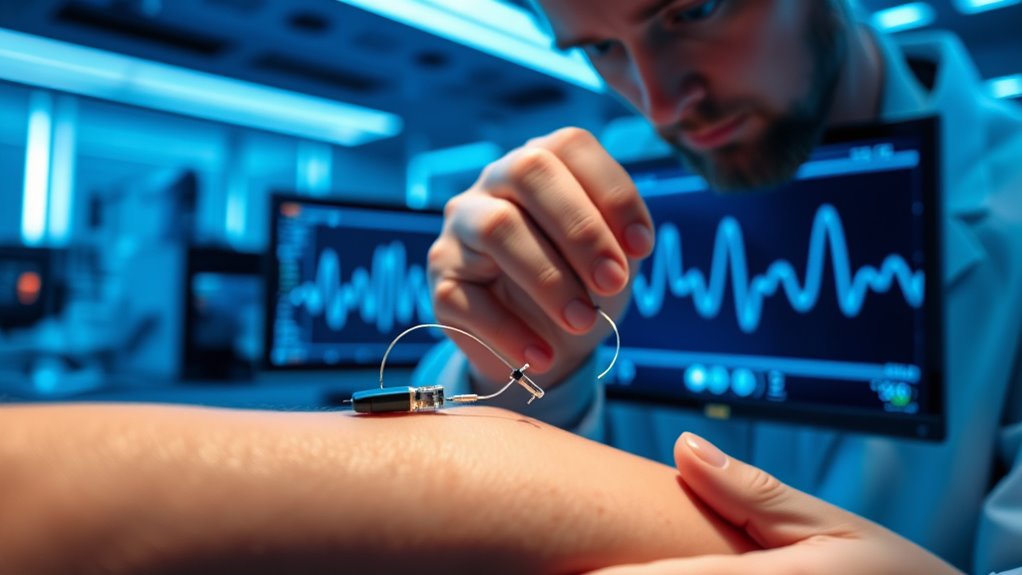

Electroceuticals use electrical impulses to directly target neural circuits and treat various health conditions. Instead of relying solely on drugs, these devices deliver precise electrical stimulation to areas like the brain or nerves, helping with issues such as depression, epilepsy, heart problems, and pain. This innovative approach offers promising benefits like fewer side effects and personalized therapy. If you want to find out how this groundbreaking technology is changing medicine, there’s more to discover below.
Key Takeaways
- Electroceuticals use targeted electrical impulses to modulate neural circuits and treat various medical conditions.
- They offer alternative or complementary therapies to traditional drugs, often with fewer side effects.
- Implantable and non-invasive devices deliver precise electrical stimulation to influence disease-related biological signals.
- Applications include managing cardiovascular, neurological, metabolic, and psychiatric disorders.
- Advances in technology enable smaller, more personalized devices that promote healing and cellular regeneration.
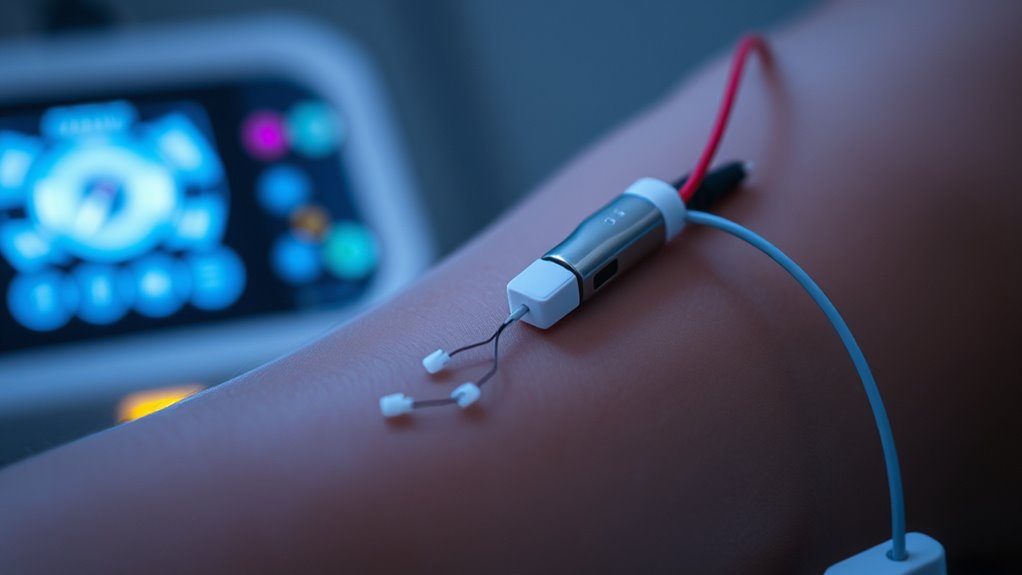
Have you ever wondered how electrical impulses can be harnessed to treat medical conditions? This fascinating approach lies within the field of electroceuticals, which are therapeutic agents designed to target neural circuits and modify bodily functions. Instead of relying solely on drugs, electroceuticals use implantable devices to deliver precise electrical impulses directly to specific areas in your body. These technologies are often called bioelectronics, emphasizing their focus on using electrical stimulation to treat various health issues. They include devices like pacemakers, cochlear implants, and spinal cord stimulators, all working to influence natural electrical signals within your nervous system.
Electroceuticals are rapidly expanding in medicine, offering new possibilities for managing conditions that were once difficult to treat. For example, they hold promise for heart failure, atrial fibrillation, and other cardiovascular diseases. Researchers are also exploring their potential in controlling metabolic disorders like diabetes, respiratory issues such as asthma, and chronic airway diseases. One notable application is Vagus Nerve Stimulation (VNS), which involves delivering electrical impulses to the vagus nerve to help manage epilepsy and depression. Deep brain stimulation, another form of electroceutical therapy, targets neurological disorders like Parkinson’s disease and severe tremors. These therapies are showing significant promise in treating long-term chronic illnesses, often with fewer side effects than traditional medications.
Electroceuticals offer promising treatments for chronic illnesses with fewer side effects than traditional medications.
There are various types of electroceutical therapies, each designed to stimulate neural responses in different ways. Electroconvulsive Therapy (ECT), for example, is used to treat severe depression and other neuropsychiatric conditions by applying controlled electrical currents to specific brain areas. Repetitive Transcranial Magnetic Stimulation (rTMS) uses magnetic fields to stimulate brain activity, mainly for depression. Other approaches like Microcurrent Electrical Therapy (MET) and Cranial Electrotherapy Stimulation (CES) are used to relieve pain and treat psychological conditions. Vagus Nerve Stimulation, as mentioned, targets neural circuits to control epilepsy and depression. These therapies involve carefully calibrated electrical currents to influence neural responses, often resulting in targeted relief.
Advances in technology have made these devices smaller, more precise, and easier to use. Implantable devices deliver targeted electrical impulses directly to specific neural circuits, mimicking or influencing natural electrical signals in your body. External devices, meanwhile, can apply electrical currents from outside the body, providing non-invasive options for treatment. To be effective, these technologies require detailed mapping of neural pathways, ensuring the electrical stimulation reaches the right areas. Research in bioelectric signaling has demonstrated that electrical stimulation can promote cellular regeneration and healing, which further enhances the potential of electroceuticals in regenerative medicine. The benefits of electroceuticals include reducing reliance on pharmaceuticals, offering personalized treatments, and potentially decreasing side effects associated with traditional therapies. Some, like ECT, have even proven more effective for certain conditions than standard approaches.
The future of electroceuticals looks promising, with ongoing research uncovering new applications and improving device capabilities. As technology advances, these devices will become even smaller, more efficient, and tailored to individual needs. The growing interest in this field reflects a shift toward more precise, targeted treatment options—where electricity itself becomes a powerful tool for healing and restoring health.
Frequently Asked Questions
Are Electroceuticals Safe for Long-Term Use?
You wonder if electroceuticals are safe long-term. Based on current trial data, they’re generally safe when properly designed, regulated, and monitored. Devices like vagus nerve stimulators have been used safely for decades, and ongoing studies show promising safety profiles for implants near sensitive areas. However, long-term risks like surgical complications and physiological effects require careful management, ongoing research, and advances like biodegradable materials to enhance safety over time.
How Do Electroceuticals Compare to Traditional Medications?
Think of traditional medications as a broad spray, affecting your entire body, while electroceuticals are like a laser pointer, targeting specific nerves or tissues. You benefit from higher precision, reducing side effects and allowing real-time adjustments. Electroceuticals can provide rapid relief and personalized treatment, unlike fixed-dose drugs. However, they involve implants or devices, which can carry risks and higher costs, but offer more focused, controlled therapy.
Can Electroceuticals Be Personalized for Individual Patients?
You can personalize electroceuticals for your needs by leveraging digital health data and advanced implantable devices. These technologies allow you to tailor electrical stimulation based on your specific health profile, adjusting parameters in real-time. By using sensors and closed-loop systems, your treatment adapts to your body’s responses, improving effectiveness. This personalized approach helps target your condition more precisely, potentially reducing side effects and enhancing overall health outcomes.
What Are the Potential Side Effects of Electroceutical Treatments?
Imagine feeling a sharp sting or a mild burn as tiny electrodes hug your skin, delivering pulses. That’s what you might experience with electroceutical treatments. Common side effects include headaches, nausea, muscle soreness, skin irritation, and temporary memory issues. Some people may feel dizzy or uncomfortable sensations. While generally safer than drugs, you should still be cautious, especially if you have heart conditions or implanted devices, and always seek professional guidance.
Are Electroceuticals Approved by Regulatory Agencies?
You might wonder if electroceuticals get approved by regulators. Yes, many do. The FDA grants clearances like 510(k) for specific uses, mainly non-invasive, drug-free therapies for pain and neurological conditions. Some benefit from faster approval through programs like the Breakthrough Devices Program. These approvals guarantee safety and effectiveness, allowing you to access innovative treatments while regulators monitor ongoing safety concerns.
Conclusion
Imagine a future where your body’s own electrical signals heal and restore itself. Electroceuticals are revealing this potential, offering new hope for treating diseases without drugs or surgery. As you consider this revolutionary approach, ask yourself: could harnessing your body’s natural electricity be the key to a healthier, more balanced life? With ongoing advancements, it’s clear that the power to heal might very well be within your own nervous system, waiting to be awakened.