
Advanced wearable tech lets you monitor your health in real time, giving you vital insights into your activity levels, vital signs, and sleep patterns. With these devices, you can make informed health decisions and adopt a proactive approach to your wellness. It’s important to contemplate factors like privacy, battery life, and how well the device aligns with your health goals. There’s much more to explore when it comes to maximizing the benefits of wearable tech.
Key Takeaways
- Advanced wearable tech includes devices like smartwatches and fitness trackers that provide real-time monitoring of vital signs and activity levels.
- These devices offer immediate health insights, enabling users to make proactive wellness and lifestyle choices.
- Long battery life is essential for continuous health tracking, ensuring uninterrupted data collection without frequent recharging.
- Privacy and security measures are crucial, as wearable tech collects sensitive personal information that needs protection.
- Choosing wearables aligned with individual health goals enhances their effectiveness in monitoring and improving personal health.
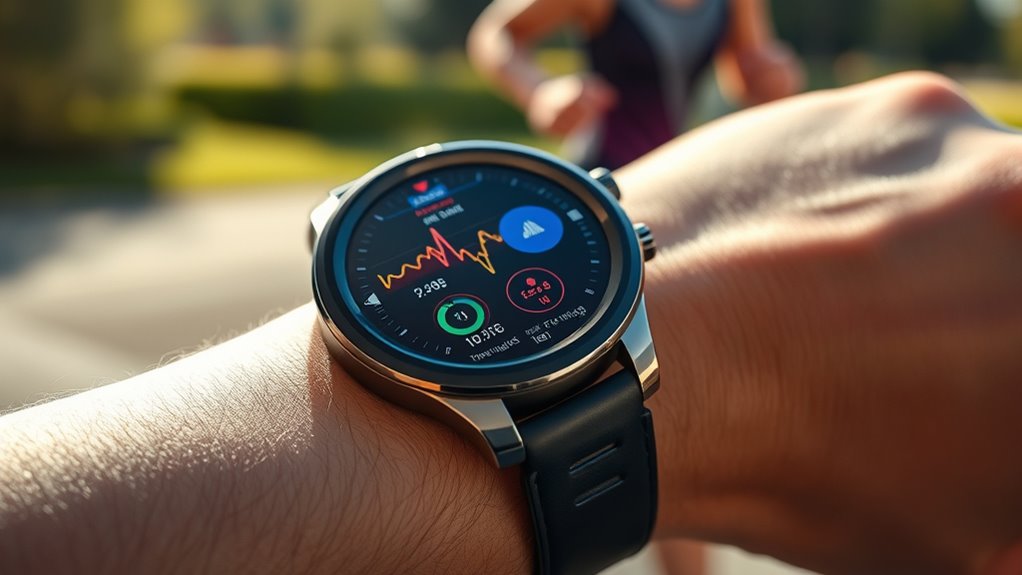
As the world becomes increasingly health-conscious, wearable tech has emerged as a game changer in how you track and improve your well-being. These devices, ranging from smartwatches to fitness trackers, help you monitor vital signs, daily activity, and even sleep patterns. By providing real-time data, they empower you to make informed decisions about your health and lifestyle. The convenience of having such information at your fingertips can lead to a more proactive approach to wellness.
However, as you embrace wearable technology, it’s important to consider data privacy. With so much personal information being collected, you need to be aware of how your data is stored, used, and shared. Many devices sync with apps that allow you to analyze your health metrics, but this can expose you to potential risks if proper safeguards aren’t in place. Always review the privacy policies of the apps you use and ensure you’re comfortable with how your data is handled. Opt for devices that prioritize your privacy and offer robust security features, so you can enjoy the benefits without compromising your personal information.
Battery lifespan is another essential aspect of wearable tech. You want a device that can keep up with your active lifestyle without needing constant recharging. A short battery life can be frustrating, especially if you rely on your device to track your health around the clock. Look for wearables that boast long-lasting batteries, ensuring they can monitor your activities and vitals throughout the day and night. This way, you won’t miss valuable insights just because your device ran out of juice.
Battery life is crucial in wearable tech; choose devices with long-lasting power to ensure continuous health monitoring without interruptions.
As you explore the wide range of wearable tech options, consider how each device aligns with your health goals and lifestyle. Whether you’re aiming to lose weight, boost your fitness levels, or monitor a chronic condition, there’s a wearable out there tailored to your needs. The key is to find one that combines functionality with your personal preferences—be it design, usability, or features.
Frequently Asked Questions
How Do Wearable Devices Ensure User Data Privacy and Security?
Wearable devices guarantee your data privacy and security through strong data encryption and clear privacy policies. When you use these devices, they encrypt your information, making it unreadable to unauthorized users. Additionally, privacy policies outline how your data’s collected, used, and shared, ensuring transparency. You should always review these policies to understand your rights. By prioritizing security measures, these devices help protect your sensitive health information from potential breaches.
Can Wearable Tech Replace Traditional Medical Devices and Consultations?
Wearable tech can’t completely replace traditional medical devices and consultations, just like a smartphone can’t fully replace a computer. However, with data integration and device customization, these gadgets enhance your health monitoring experience. They provide real-time insights and track essential signs, making it easier for you to manage your health. While they’re valuable tools, they should complement, not substitute, professional medical advice and equipment for thorough healthcare.
What Are the Potential Risks of Using Wearable Health Technology?
Using wearable health technology comes with potential risks like data breaches and device malfunctions. You might find your sensitive health information exposed if security measures aren’t robust enough. Additionally, if your device malfunctions, it could provide inaccurate readings, leading to misguided health decisions. It’s crucial to stay informed, choose reliable products, and understand the limitations of wearables to minimize these risks and guarantee your health data remains secure.
How Accurate Are the Health Metrics Provided by Wearable Devices?
You’d think all those fancy wearable devices would be spot-on with health metrics, right? Well, accuracy often hinges on calibration challenges and sensor reliability. While many devices provide decent estimates, they can struggle with precision due to environmental factors or user error. So, while you might feel like a health guru, those numbers might not always tell the whole story. It’s best to use them as a guide, not gospel.
Are There Any Age Restrictions for Using Wearable Health Technology?
There aren’t strict age restrictions for using wearable health technology, but accessibility can vary. Many devices are designed for all ages, while some may have minimum age recommendations due to safety or data privacy concerns. If you’re considering a wearable for a child or senior, check the manufacturer’s guidelines. Ultimately, it’s about finding a device that suits your needs and ensuring it’s user-friendly for the intended age group.
Conclusion
In a world where health is wealth, embracing advanced wearable tech can truly put you ahead of the game. These devices not only monitor essential signs in real-time but also empower you to take charge of your well-being. By staying informed about your health, you can make better lifestyle choices and catch potential issues before they become serious. So, why wait? Step into the future of health management and let technology work for you.