3D-printed bone scaffolds are game-changers in healing complex fractures. They create personalized structures that mimic natural bone, making it easier for tissues to grow and repair. With enhancements in design accuracy and biocompatibility testing, these scaffolds minimize adverse reactions and improve healing outcomes. They adapt to your unique anatomy and account for daily stresses, ensuring durability. Discover how these innovations are revolutionizing recovery and their potential impact on future treatments.
Key Takeaways
- 3D-printed bone scaffolds are designed to mimic natural bone architecture, promoting effective tissue growth and regeneration in complex fractures.
- Customization of scaffolds allows for patient-specific designs, enhancing compatibility with individual anatomy and injury characteristics for improved healing.
- Biocompatibility testing ensures scaffold materials are safe and effective, minimizing adverse reactions and promoting better patient outcomes post-implantation.
- Optimized design features, including porosity and mechanical properties, enhance integration with surrounding bone and support healing under mechanical stress.
- Advances in 3D printing technology facilitate rapid iteration of scaffold designs, allowing for quick adaptations based on testing results and patient needs.
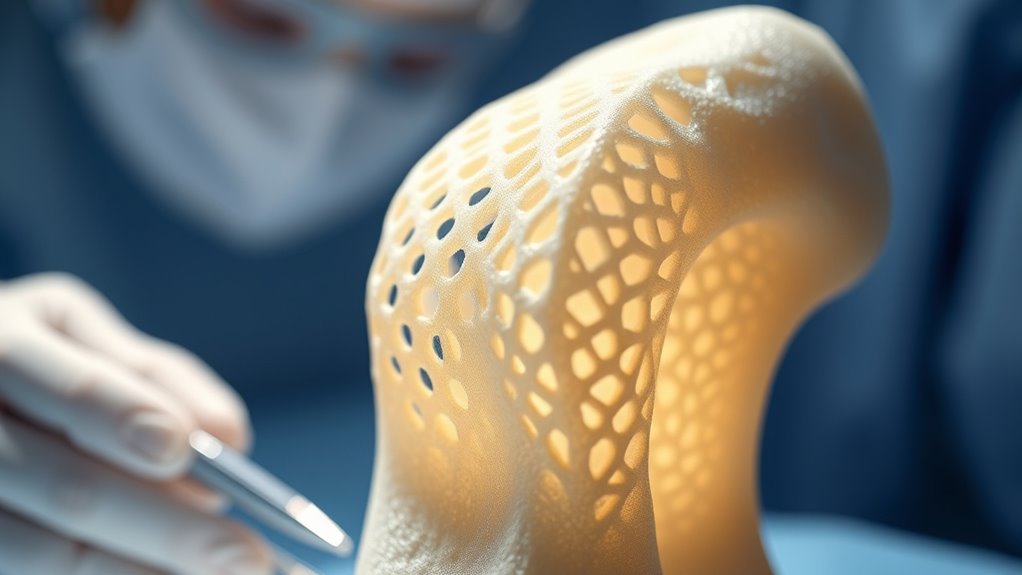
As advancements in medical technology continue to evolve, 3D-printed bone scaffolds are revolutionizing the way we approach bone repair and regeneration. These innovative structures are designed to mimic the natural architecture of bones, providing a framework for new tissue growth. When you think about complex fractures, the ability to create personalized scaffolds tailored to an individual’s unique anatomy can markedly enhance healing outcomes. The precision offered by 3D printing technology allows for meticulous design, which is essential in complex medical situations.
One of the earliest steps in the journey of developing these scaffolds is biocompatibility testing. You wouldn’t want to implant a material that your body might reject. Biocompatibility testing ensures that the materials used in the scaffolds are compatible with human tissue, minimizing the risk of adverse reactions. This step is vital to gaining the trust of both medical professionals and patients. The results from these tests guide you in selecting the right materials that can support bone growth while being safe to use.
Once you have established biocompatibility, the next focus is on scaffold design optimization. This involves tweaking the scaffold’s porosity, shape, and mechanical properties to ensure it encourages the best possible integration with the surrounding bone. You have to consider how the scaffold will behave under different loads, as bone is subjected to various stresses in daily life. By optimizing the design, you guarantee that the scaffold can support the healing process while also enduring the physical demands placed upon it.
Moreover, the use of 3D printing allows you to create scaffolds that are not only functional but also aesthetically pleasing. Custom designs can incorporate features that align with a patient’s specific injury, promoting a more effective healing process. As you move from initial designs to final products, the ability to iterate quickly in response to testing outcomes can lead to faster, more effective solutions for patients suffering from complex fractures. Additionally, advances in biocompatibility testing have led to safer materials being used in these innovative scaffolds, further improving patient outcomes.
Frequently Asked Questions
What Materials Are Typically Used in 3d-Printed Bone Scaffolds?
In 3D-printed bone scaffolds, you’ll typically find biocompatible polymers and bioactive ceramics. These materials work together to create a supportive structure for bone regeneration. Biocompatible polymers guarantee the scaffold integrates well with your body, while bioactive ceramics promote cell attachment and growth. By combining these elements, you’re enhancing the scaffold’s effectiveness in healing and fostering new bone development, making it a vital aspect of advancing regenerative medicine.
How Long Does It Take to Create a 3d-Printed Bone Scaffold?
Creating a 3D-printed bone scaffold typically takes a few hours to a couple of days, depending on the complexity and size. The manufacturing timeline involves designing the scaffold, selecting materials, and executing the production process. You’ll need to factor in post-processing, like sterilization and surface treatment, which can add extra time. Overall, while the printing itself is quick, the entire preparation and finishing stages can extend the total time required.
Are 3d-Printed Bone Scaffolds Customizable for Individual Patients?
Yes, 3D-printed bone scaffolds are customizable for individual patients. Imagine a one-size-fits-all approach versus a tailored solution just for you. With patient-specific design, these scaffolds can match your unique anatomy and needs, enhancing the effectiveness of your treatment. This personalized treatment not only improves healing but also fosters better integration with your body. You’ll benefit from a solution that’s crafted specifically for you, ensuring ideal recovery and functionality.
What Are the Risks Associated With Using 3d-Printed Bone Scaffolds?
Using 3D-printed bone scaffolds does come with risks. You need to weigh the potential for infection risk, which can arise if the scaffold isn’t properly sterilized or integrated into the body. Additionally, there might be biocompatibility issues, meaning that the material used could provoke an adverse reaction in your body. These factors can affect healing and overall outcomes, so it’s essential to discuss these concerns with your healthcare provider before proceeding.
How Do 3d-Printed Scaffolds Integrate With the Body’s Natural Bone?
3D-printed scaffolds integrate with your body’s natural bone through a process called biocompatibility integration. The materials used are designed to mimic bone properties, allowing your body to accept them without rejection. As the scaffolds dissolve, they support the vascularization process, encouraging blood vessel growth and nutrient delivery to the healing area. This combination promotes effective healing and enhances the regeneration of bone tissue, ultimately leading to better recovery outcomes.
Conclusion
In the domain of modern medicine, 3D-printed bone scaffolds are revolutionizing how we heal complex fractures. These innovative structures provide the perfect environment for your body to regenerate, much like how a knight would rely on their trusty steed in battle. By bridging the gap between technology and biology, these scaffolds not only enhance recovery but also offer hope for the future of orthopedic treatments. Embracing this cutting-edge approach could lead to even more incredible advancements ahead.