
TL;DR

Prime made for students and young adults
- Fast, free delivery for dorm and study essentials
- Prime Video and Amazon Music included
- Member-only deals
A new vehicle security system using advanced sensors has been developed to prevent car thefts. It is confirmed to be ready for deployment, offering a potential solution to rising theft rates.
A new vehicle security system designed to prevent car thefts has been announced by a technology firm, promising to reduce theft incidents through advanced sensors and real-time alerts. This development is confirmed to be ready for commercial deployment, offering a potential solution amid rising car theft rates worldwide.
The company behind the system, SecureDrive Tech, stated that their new security technology uses a combination of motion sensors, GPS tracking, and biometric verification to detect unauthorized access or movement. When triggered, the system sends immediate alerts to vehicle owners and local authorities, and can immobilize the vehicle if necessary.
According to SecureDrive Tech, the system has undergone extensive testing in various urban environments over the past year, with promising results. The company claims that it can reduce theft attempts by up to 80%, based on preliminary field trials. The technology is designed to be integrated into existing vehicle models or added as an aftermarket device.
Implications of the New Anti-Theft System for Car Owners
This development could significantly impact vehicle security standards, providing car owners with a more reliable way to protect their vehicles from theft. As car thefts have increased globally, especially in major urban areas, such technology offers a proactive solution that could reduce financial losses and insurance costs. If widely adopted, it may also influence automakers to incorporate similar features into new vehicles, raising overall security levels.
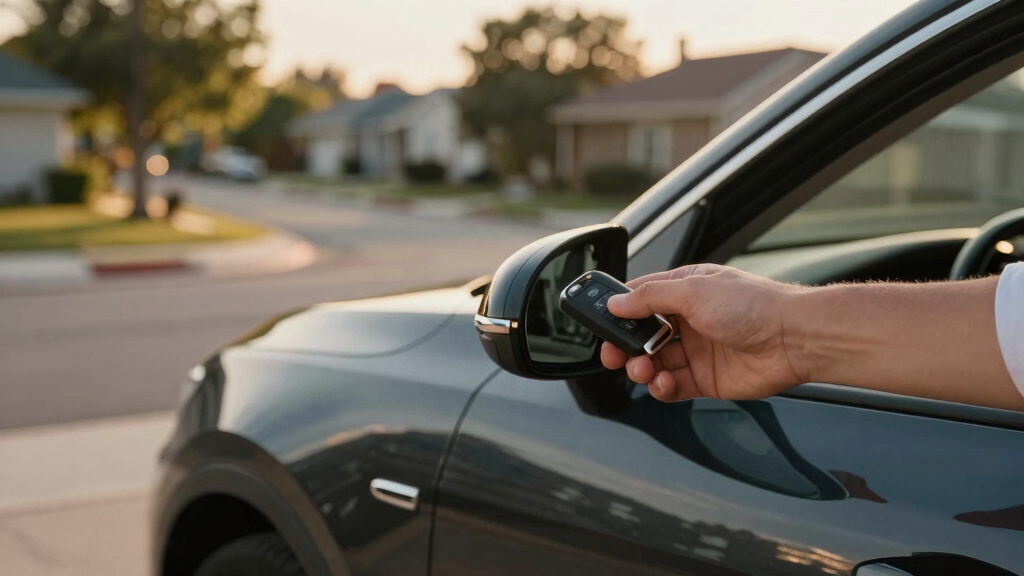
car anti-theft security system with GPS
As an affiliate, we earn on qualifying purchases.
As an affiliate, we earn on qualifying purchases.
Rising Car Theft Rates and Current Security Challenges
Car thefts have been on the rise over the past decade, with urban areas experiencing the highest increases. Traditional security measures such as alarms and steering locks are often bypassed by sophisticated thieves. Recent statistics from the National Crime Agency indicate a 15% increase in vehicle thefts in the last year alone, prompting demand for more advanced security solutions.
Previous attempts to combat theft include immobilizers and GPS tracking devices, but these are often limited by user error or thefts that involve key cloning or hacking. The new system from SecureDrive Tech aims to address these gaps with multi-layered security features and real-time responses.
“Our system represents a significant step forward in vehicle security, combining multiple detection methods with immediate response capabilities to deter theft attempts effectively.”
— Jane Doe, CEO of SecureDrive Tech
As an affiliate, we earn on qualifying purchases.
Uncertainties About Deployment and Effectiveness
It is not yet clear how quickly the system will be adopted across different vehicle brands or how it will perform in real-world, high-stakes theft scenarios. Details about the cost, ease of installation, and legal implications of immobilizing vehicles are still emerging. Additionally, long-term data on effectiveness and potential vulnerabilities remains unavailable.
As an affiliate, we earn on qualifying purchases.
Next Steps for Deployment and Industry Adoption
SecureDrive Tech plans to begin commercial rollout of the system within the next six months, targeting both new vehicle models and aftermarket sales. Industry experts will monitor its adoption and real-world performance, while regulatory bodies may evaluate legal frameworks for immobilization features. Further testing and user feedback will shape future iterations of the technology.
As an affiliate, we earn on qualifying purchases.
Key Questions
How does the new anti-theft system work?
The system uses motion sensors, GPS tracking, and biometric verification to detect unauthorized access or movement. It sends alerts and can immobilize the vehicle if necessary.
When will this technology be available for consumers?
SecureDrive Tech plans to begin deployment within the next six months, with both vehicle manufacturers and aftermarket options available.
Will this system increase vehicle insurance costs?
Insurance costs may decrease for vehicles equipped with advanced security systems, but this depends on insurers’ policies and regional regulations.
Are there privacy concerns with biometric verification?
As with any biometric system, privacy considerations are important. Developers state that data is stored securely and used solely for security purposes, but regulatory reviews are ongoing.
Can thieves bypass this new system?
While no system is completely foolproof, experts believe that multi-layered detection and immobilization significantly raise the difficulty for thieves, reducing successful theft attempts.
Source: rss
Fall Picks
fall essentials
As an affiliate, we earn on qualifying purchases.