
TL;DR

Prime made for students and young adults
- Fast, free delivery for dorm and study essentials
- Prime Video and Amazon Music included
- Member-only deals
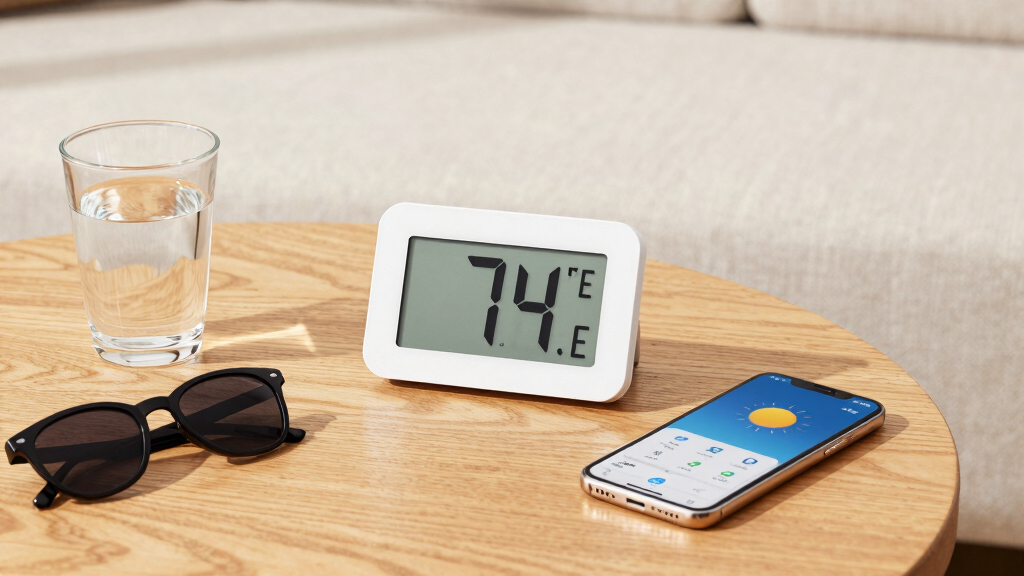
A market-based prediction indicates uncertainty about whether the temperature will exceed 73°F in a specific location on July 3, 2026. No definitive forecast exists yet, highlighting the unpredictability of long-term weather patterns.
There is currently no confirmed weather forecast indicating whether the maximum temperature will be greater than 73°F on July 3, 2026. Market data shows active trading on predictions about this temperature threshold, but official meteorological agencies have not issued specific forecasts for that date. This uncertainty highlights the challenges in predicting long-term weather conditions with precision.
The prediction about whether the temperature will exceed 73°F on July 3, 2026, relies heavily on market speculation rather than official weather models. The Kalshi trading platform has seen 14 recent trades related to this forecast, indicating ongoing interest but no definitive consensus. Weather forecasts typically become more accurate within a few days to weeks, but projections for a date nearly three years in advance remain highly uncertain.
Experts in climate and meteorology emphasize that long-term weather predictions beyond a year are inherently unreliable due to the complex interplay of atmospheric factors. The current market activity reflects this uncertainty, with traders betting on different outcomes based on evolving climate data and regional trends. No authoritative weather agency has issued a forecast for that specific date or temperature threshold.
Implications of Long-Term Temperature Predictions
This uncertainty matters because it underscores the limitations of current climate modeling and weather forecasting, especially over multi-year horizons. For policymakers, planners, and residents, understanding the reliability of such predictions is crucial for making informed decisions about infrastructure, agriculture, and disaster preparedness. The active trading on market platforms also indicates a growing interest in probabilistic climate predictions, which could influence future risk assessments and climate policy.
As an affiliate, we earn on qualifying purchases.
Background on Long-Range Weather Forecasting and Market Predictions
Forecasting specific weather conditions more than a year in advance is beyond current scientific capabilities, with most models providing general climate trends rather than precise daily temperatures. The use of prediction markets, like Kalshi, introduces a new dimension where traders buy and sell contracts based on their expectations of future weather events. These markets reflect collective speculation but do not replace scientific forecasts.
Recent years have shown increased volatility in climate patterns, partly driven by global climate change, making long-term predictions more complex. The specific prediction about July 3, 2026, is part of a broader trend of using financial instruments to gauge future climate risks, although their accuracy remains limited.
“Long-term weather forecasts, especially for specific days several years ahead, are highly unreliable. Market activity can indicate interest but doesn’t equate to scientific certainty.”
— Dr. Emily Carter, Climate Scientist
As an affiliate, we earn on qualifying purchases.
Unconfirmed Nature of Long-Term Temperature Expectations
It is not yet clear whether the temperature will indeed exceed 73°F on July 3, 2026. No official weather model or meteorological forecast has confirmed this specific threshold, and the current market activity reflects speculation rather than scientific consensus. The accuracy of predictions at this horizon remains highly questionable, and external factors such as climate change could influence outcomes unpredictably.
As an affiliate, we earn on qualifying purchases.
Monitoring Climate Trends and Market Activity for Updates
In the coming months, meteorological agencies will refine seasonal forecasts, but precise daily predictions for July 2026 are unlikely. Market activity on prediction platforms may continue to reflect evolving expectations, but scientific validation of specific temperature thresholds for that date will require closer to the time. Researchers will also analyze climate data to better understand long-term temperature trends.
As an affiliate, we earn on qualifying purchases.
Key Questions
Can we reliably predict the temperature for July 3, 2026?
No, current scientific methods do not allow for precise temperature predictions that far in advance. Long-term climate trends are better understood than specific daily conditions.
What does the active trading on prediction markets indicate?
It indicates interest and speculation about future weather outcomes but does not provide confirmed forecasts or scientific certainty.
Why is it difficult to forecast weather three years ahead?
Weather is influenced by numerous complex and dynamic atmospheric factors that make precise predictions over such a long horizon unreliable.
Will climate change affect the accuracy of long-term forecasts?
Yes, climate change introduces additional variability and unpredictability, complicating long-term climate and weather predictions.
Source: kalshi
Fall Picks
fall essentials
As an affiliate, we earn on qualifying purchases.