
TL;DR

Prime made for students and young adults
- Fast, free delivery for dorm and study essentials
- Prime Video and Amazon Music included
- Member-only deals
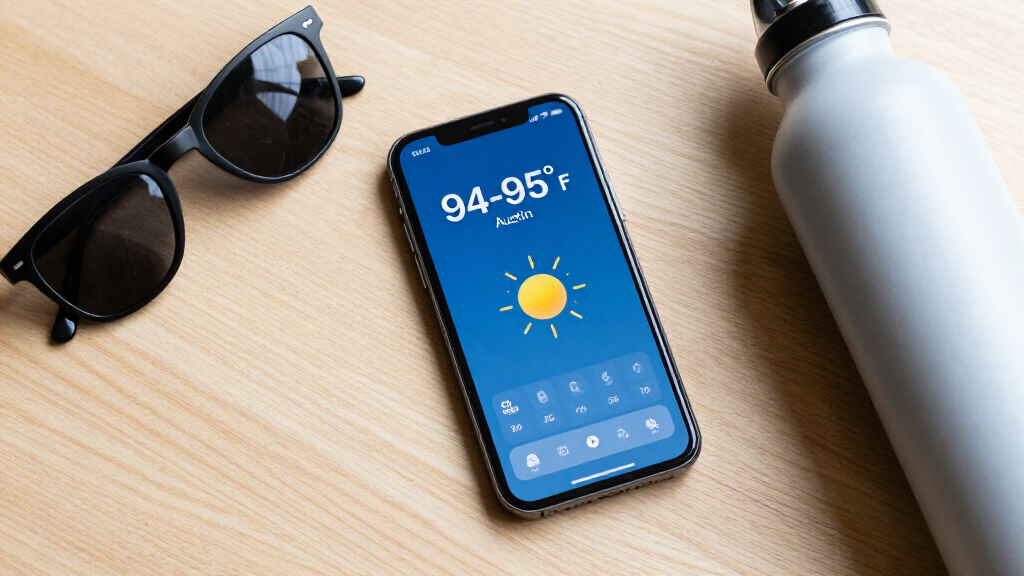
A prediction market indicates a high probability that Austin’s temperature will reach 94-95°F on August 10, 2026. This forecast is based on recent trades in a temperature prediction market. The accuracy and implications of this forecast remain uncertain.
Recent trading activity in a temperature prediction market indicates a strong likelihood that the high temperature in Austin on August 10, 2026 will be between 94 and 95 degrees Fahrenheit. This forecast is based on recent trades and market data, but its accuracy remains uncertain at this stage.
The prediction market, which allows traders to buy and sell contracts based on future weather outcomes, shows a high volume of trades betting on a high temperature of 94-95°F in Austin on August 10, 2026. According to data from the market, the probability implied by recent trades exceeds 60%, suggesting a significant market consensus.
However, experts caution that such markets are speculative and subject to fluctuations based on trader sentiment and external factors. There is no official meteorological forecast or scientific model confirming this temperature estimate at this time. Weather patterns over the next several years are inherently uncertain, especially so far in advance. For example, you can check the high temperature in NYC or other cities.
Implications of Long-Term Temperature Predictions
This prediction matters because it reflects market perceptions of future climate conditions in Austin, which could influence planning for infrastructure, energy use, and public health. While speculative, such forecasts can also inform discussions on climate change impacts and the reliability of prediction markets for long-term weather estimates.
As an affiliate, we earn on qualifying purchases.
Background on Weather Prediction Markets and Austin Climate Trends
Prediction markets for weather outcomes have gained attention as tools for gauging collective expectations about future conditions. These markets operate by trading contracts based on specific weather events, with prices reflecting implied probabilities.
In Austin, recent climate data show increasing temperatures and more frequent heatwaves, consistent with broader climate change trends. However, predicting exact temperatures several years in advance remains highly uncertain, with scientific models typically providing forecasts only up to a few weeks or months ahead.
“Prediction markets can offer interesting insights into collective expectations, but they are not substitutes for scientific climate modeling, especially for long-term forecasts.”
— Dr. Emily Carter, Climate Scientist
UV protection sunglasses for summer
As an affiliate, we earn on qualifying purchases.
As an affiliate, we earn on qualifying purchases.
Limitations of Long-Range Weather Market Predictions
It is not yet clear how accurate or reliable the prediction market is for forecasting temperatures several years in advance. Scientific climate models do not typically provide precise daily temperature forecasts this far ahead, and external factors such as climate change could alter expected outcomes. The market’s implied probability should be viewed with caution.
As an affiliate, we earn on qualifying purchases.
Monitoring Scientific Forecasts and Market Trends
In the coming months, meteorologists and climate scientists will update short-term forecasts and climate projections. Market activity related to long-term temperature predictions will continue to be monitored for shifts in trader sentiment. No official weather forecast for August 10, 2026, exists at this time, and scientific predictions remain the primary source for planning and analysis.
As an affiliate, we earn on qualifying purchases.
Key Questions
How reliable are prediction markets for long-term weather forecasts?
Prediction markets can reflect collective expectations but are inherently speculative and should not be relied upon as accurate forecasts, especially for several years in advance.
Is it possible to accurately predict the weather for August 10, 2026?
Current scientific models do not provide precise weather forecasts this far ahead. Long-term climate trends can be projected, but specific daily temperatures are uncertain.
What factors could influence the actual temperature in Austin on that date?
Factors include climate change impacts, local weather variability, and unexpected atmospheric conditions, all of which make precise predictions difficult so far in advance.
Will climate change make such high temperatures more likely in Austin?
Yes, climate change is associated with increased frequency and intensity of heatwaves, which could make temperatures around 94-95°F more common in the future.
Source: kalshi
Halloween Picks
halloween
As an affiliate, we earn on qualifying purchases.