
Heat pumps became a serious innovation story because they substantially improve energy efficiency while reducing environmental impact. Unlike traditional systems that generate heat, heat pumps transfer it, leading to lower energy bills and less reliance on fossil fuels. They adapt well to different climates, even cold regions, thanks to technological advances. Their role in supporting renewable energy makes them key in sustainable living efforts. Keep exploring to discover how these innovations are shaping a cleaner, greener future.
Key Takeaways
- Heat pumps significantly improve energy efficiency by transferring heat instead of generating it, reducing energy consumption.
- Technological advancements enable reliable performance in extreme climates, broadening their application scope.
- They support global renewable energy goals by decreasing reliance on fossil fuels and lowering greenhouse gas emissions.
- Innovations optimize integration with renewable sources, enhancing sustainability and environmental benefits.
- Policy incentives and growing environmental awareness have accelerated their adoption as a key sustainable technology.
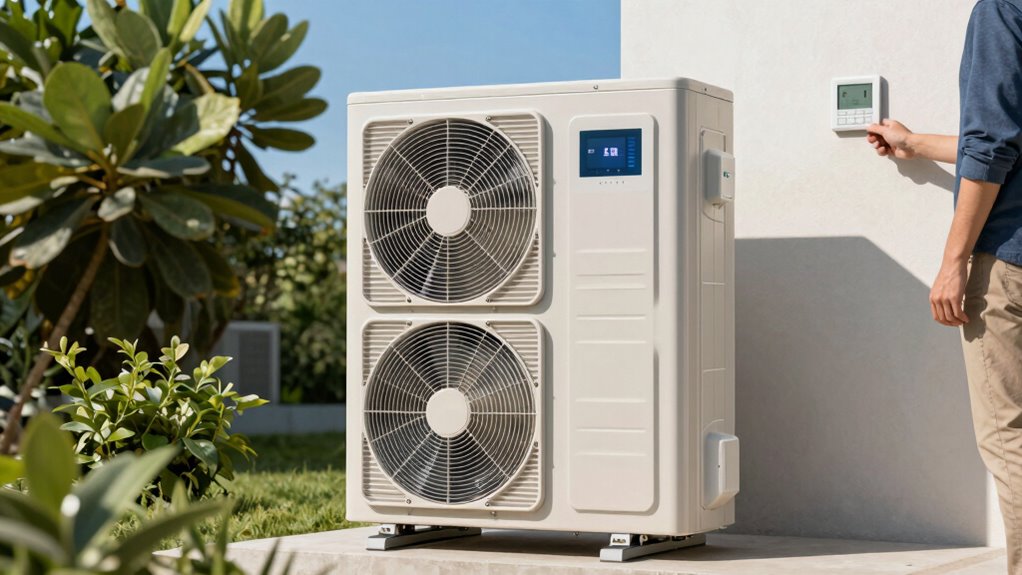
Heat pumps are revolutionizing the way we heat and cool buildings by providing an energy-efficient alternative to traditional systems. This shift is driven by the growing need for sustainable solutions that reduce our carbon footprint, making heat pumps a key player in the push toward renewable energy. Unlike conventional heating and cooling units, which rely heavily on fossil fuels, heat pumps harness existing environmental energy—air, ground, or water—to deliver comfort while consuming considerably less power. This approach aligns perfectly with global efforts to harness renewable energy sources and minimize greenhouse gas emissions.
Heat pumps offer an efficient, renewable way to heat and cool buildings, reducing reliance on fossil fuels and lowering emissions.
What makes heat pumps a serious innovation story is their impressive energy efficiency. Instead of generating heat or cold from scratch, they transfer it, which requires much less energy. This transfer process means you get more heating or cooling output for each unit of electricity used. As a result, your energy bills drop, and your environmental impact lessens. This efficiency gain is especially crucial today, as energy costs rise and sustainability becomes a top priority for homeowners and businesses alike. When you install a heat pump, you’re not just investing in comfort—you’re making a conscious choice to contribute to a cleaner, greener planet. Additionally, ongoing advancements in heat pump technology continue to improve their performance in various climates, making them an even more reliable and sustainable choice. These innovations are also exploring new ways to optimize performance in extreme conditions, further broadening their applicability.
Another reason heat pumps are considered revolutionary is their versatility. They can work across different climates and adapt to various building types. In colder regions, advanced models can still efficiently extract heat from the air, while geothermal heat pumps tap into the stable temperatures underground for reliable performance. This flexibility means that more people can access renewable energy solutions without sacrificing comfort, regardless of geographic location. As a result, heat pumps are helping accelerate the transition away from fossil fuels in residential, commercial, and industrial settings. Additionally, the technology behind heat pumps continues to evolve, making them even more sustainable and efficient. Innovations are improving their ability to operate in extreme conditions, further enhancing their environmental benefits. The development of renewable energy integration further amplifies their positive impact on energy sustainability. Governments and organizations are supporting this shift through incentives and policies that promote renewable energy adoption, which helps you see heat pumps not just as a technological upgrade but as part of a broader movement toward sustainable living. By choosing a heat pump, you’re embracing a cleaner energy future, reducing reliance on non-renewable resources, and championing a more energy-efficient lifestyle.

DIY Heat Pump Installation 2026: Save $2,500 Yearly on HVAC
As an affiliate, we earn on qualifying purchases.
As an affiliate, we earn on qualifying purchases.
Frequently Asked Questions
How Do Heat Pumps Compare to Traditional Heating Systems Financially?
Heat pumps are more energy-efficient than traditional heating systems, which can save you money on energy bills over time. Although the initial installation costs are higher, their lower operating costs often make up for it in the long run. You’ll benefit from reduced energy consumption and lower monthly expenses, making heat pumps a financially smart choice. Plus, incentives and rebates may help offset the upfront investment.
Are Heat Pumps Effective in Extremely Cold Climates?
Like a trusty explorer braving icy terrains, heat pumps can be effective in cold weather, especially recent models designed for such conditions. They maintain high energy efficiency even in extreme cold, making them a reliable choice. While traditional systems struggle in freezing temperatures, innovative heat pumps adapt well, providing consistent warmth. So, if you live in a chilly climate, modern heat pumps can still keep your home warm efficiently.
What Are the Environmental Impacts of Widespread Heat Pump Adoption?
Widespread heat pump adoption considerably reduces your carbon footprint by using renewable energy sources more efficiently. They emit fewer greenhouse gases compared to traditional heating systems, especially when powered by clean electricity. This shift helps combat climate change and decreases reliance on fossil fuels. As you switch to heat pumps, you’re supporting a greener future, promoting sustainable energy practices, and helping to protect the environment for future generations.
How Long Do Heat Pumps Typically Last Before Needing Replacement?
Heat pumps typically last around 10 to 15 years before needing replacement. Their longevity depends on proper maintenance and usage, but they’re known for excellent energy efficiency, which helps you save on energy bills. By investing in a high-quality model and keeping up with regular servicing, you can maximize their lifespan, ensuring ongoing cost savings and reliable heating and cooling for years to come.
What Are Common Maintenance Requirements for Heat Pumps?
Imagine your heat pump as a vigilant guardian, silently working to keep your home cozy. To uphold its system efficiency, you should regularly clean or replace filters, clear debris from the outdoor unit, and schedule annual professional check-ups. These simple steps keep maintenance costs low and guarantee your heat pump continues to operate smoothly. Think of it as giving your guardian a quick tune-up, so it’s always ready to serve.

Fundamentals of Geothermal Heat Pump Systems: Design and Application
As an affiliate, we earn on qualifying purchases.
As an affiliate, we earn on qualifying purchases.
Conclusion
So, next time you flip on your heater or AC, ask yourself: could this simple switch be part of a groundbreaking change? Heat pumps aren’t just about comfort—they’re transforming how we think about energy use and sustainability. Imagine a future where your home’s climate control helps heal the planet. With such innovation, isn’t it time you embraced this powerful, eco-friendly solution? After all, change starts with the choices you make today.

Heating and Cooling with Ground-Source Heat Pumps in Cold and Moderate Climates
As an affiliate, we earn on qualifying purchases.
As an affiliate, we earn on qualifying purchases.

Heating, Cooling, Lighting: Sustainable Design Strategies Towards Net Zero Architecture
As an affiliate, we earn on qualifying purchases.
As an affiliate, we earn on qualifying purchases.





![Navier-Stokes – Tristan Buckmaster [Pdf]](https://thegeniusfactory.net/wp-content/uploads/2026/09/navier-stokes-tristan-buckmaster-pdf-featured-260x140.jpg)