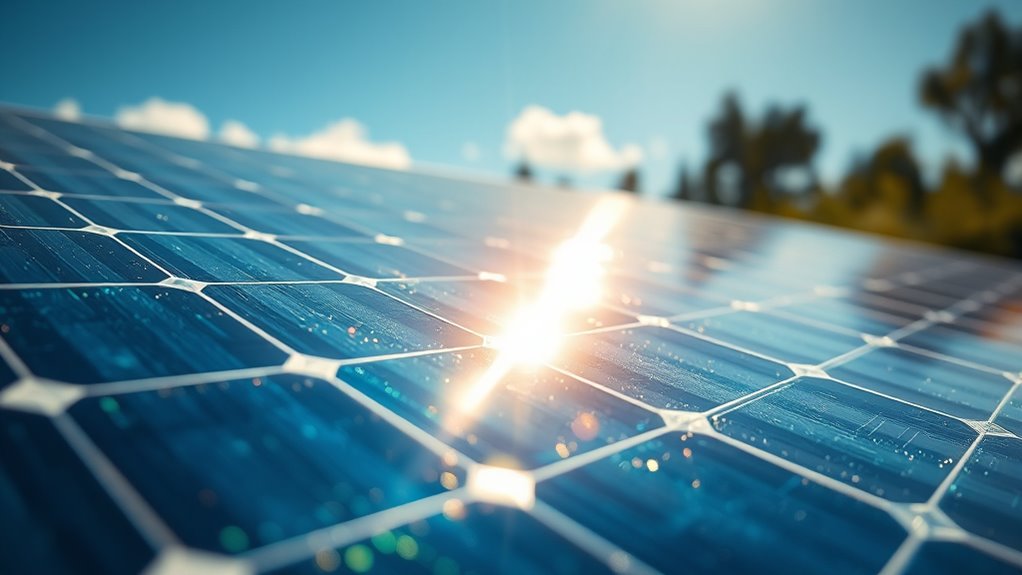

Perovskite solar cells are revolutionizing solar technology by achieving energy conversion rates that often exceed 25%. They’re made from abundant materials, making manufacturing simpler and more cost-effective. These cells require less material to generate more power, enhancing efficiency while reducing environmental impact. Plus, their flexibility in production allows for innovative designs that can democratize energy access. If you want to discover more about their potential and future advancements, keep exploring this exciting development in renewable energy.
Key Takeaways
- Perovskite solar cells offer high energy conversion rates, often exceeding traditional silicon panels in efficiency.
- Their flexible manufacturing options allow for thinner, lighter layers, enhancing performance and reducing material needs.
- Made from abundant resources, perovskite materials can be synthesized sustainably and may use recycled components.
- Lower manufacturing costs and simpler production techniques promote wider adoption and accessibility of solar energy.
- Ongoing advancements in technology are paving the way for next-generation solar panels with improved performance and sustainability.
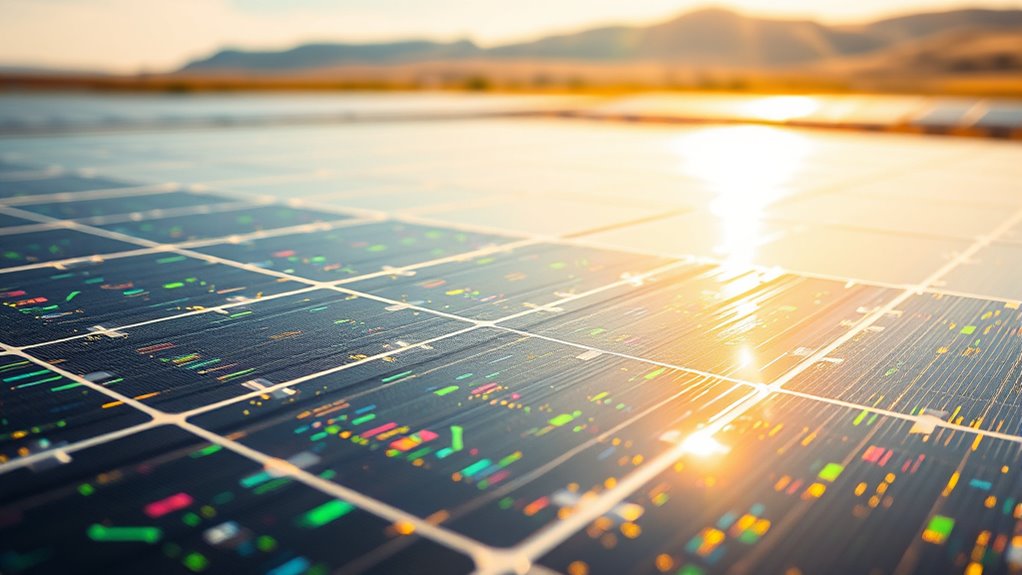
Have you ever wondered what makes perovskite solar cells stand out in the world of renewable energy? These innovative cells are rapidly gaining attention due to their unique properties and potential to revolutionize solar technology. Unlike traditional silicon-based solar panels, perovskite cells are made from a range of materials that can be produced using various manufacturing techniques. This flexibility not only enhances their performance but also paves the way for more efficient production processes, making them a viable alternative in the quest for sustainable energy solutions.
One of the most exciting aspects of perovskite solar cells is their remarkable efficiency. They can achieve high energy conversion rates, often surpassing those of conventional solar panels. You might be surprised to learn that through advancements in manufacturing techniques, researchers can create perovskite layers that are thinner and lighter than silicon layers, enabling these cells to absorb sunlight more effectively. This efficiency translates to generating more power from less material, which is a vital step toward reducing the environmental impact associated with solar panel production.
When considering the environmental impact of solar energy, it’s essential to evaluate the lifecycle of the materials used. Traditional silicon solar cells require extensive mining and processing, which can be detrimental to the environment. In contrast, perovskite materials can be synthesized from abundant resources, and some techniques even allow for the use of recycled materials. By adopting these innovative manufacturing methods, you’re not just investing in a more efficient energy source, but also supporting a more sustainable approach to energy production.
Moreover, the potential for low-cost production is another factor that sets perovskite solar cells apart. Many manufacturing techniques involve simpler processes, which can considerably lower the overall costs compared to traditional panels. This affordability may lead to wider adoption, making solar energy accessible to more people and communities. As you consider the future of renewable energy, it’s vital to recognize how perovskite solar cells could democratize energy access while minimizing their carbon footprint. Additionally, the advancements in color accuracy for these solar cells can further enhance their performance and energy yield.
Frequently Asked Questions
How Do Perovskite Solar Cells Compare to Traditional Silicon Cells?
When you compare perovskite solar cells to traditional silicon cells, you’ll notice significant differences. Perovskite cells often provide higher efficiency, converting more sunlight into energy. Plus, their manufacturing costs are generally lower, making them more accessible for widespread use. While silicon cells have a proven track record, you’ll find that perovskite technology is rapidly advancing, potentially reshaping the solar market with its promising performance and affordability.
What Is the Lifespan of Perovskite Solar Cells?
Perovskite solar cells typically have a lifespan of around 10 to 25 years, depending on various factors. Remarkably, some studies show that they can achieve around 80% efficiency after 1,000 hours of testing. However, durability concerns arise due to degradation mechanisms like moisture and thermal instability. To maximize their lifespan, you’ll want to ensure proper encapsulation and environmental protection, helping to mitigate these issues and enhance overall performance.
Are Perovskite Solar Cells Environmentally Friendly?
Yes, perovskite solar cells can be environmentally friendly. They often use eco-friendly materials, which contribute to their sustainability. Additionally, these cells allow for waste reduction during manufacturing and end-of-life processes. Their production typically requires less energy compared to traditional solar technologies, further minimizing environmental impact. By opting for perovskite solar cells, you’re choosing a cleaner energy solution that supports a greener future while helping to lower your carbon footprint.
Can Perovskite Solar Cells Be Recycled?
Yes, you can recycle perovskite solar cells! Imagine giving your old panels a second chance at life. Through innovative recycling processes, you can recover valuable materials, reducing waste and saving resources. It’s like turning yesterday’s technology into tomorrow’s treasures. You’ll be pleased to know that advancements in material recovery are making this more efficient, ensuring that your eco-friendly efforts don’t just stop when the panels do. It’s a win-win for you and the planet!
What Are the Main Challenges in Commercializing Perovskite Solar Cells?
The main challenges in commercializing perovskite solar cells are scalability issues and stability concerns. You’ll find that scaling production to meet demand is tough, as the manufacturing processes are still being refined. Additionally, these cells often degrade over time, especially under environmental stress, which raises doubts about their long-term performance. To succeed, you’ll need to address these hurdles and guarantee that perovskite technology can compete with established solar solutions.
Conclusion
Perovskite solar cells promise a powerful path to a sustainable future. With their potential for higher efficiency and lower costs, they’re set to transform the terrain of solar technology. As you explore these innovative panels, you’ll discover a dazzling dance of development, driving down energy expenses while enhancing environmental impact. Embracing this exciting evolution, we can all contribute to a cleaner, greener globe. Together, let’s harness the hopeful horizons of perovskite power!