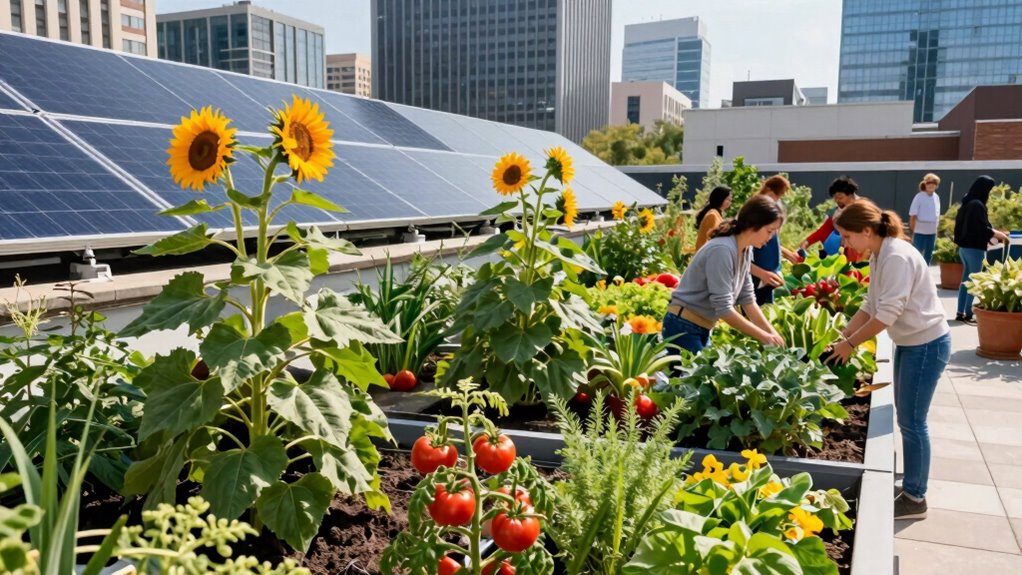

Localized environmental innovation often wins faster because you can act quickly without bureaucratic delays, thanks to community knowledge and understanding of local needs. You can design tailored solutions that address specific challenges, making them more effective and sustainable. By utilizing affordable technology and social media, you spread awareness and refine actions in real-time. This approach fosters community ownership and collaboration, leading to faster, lasting results. If you want to discover how these strategies can be applied, keep exploring this topic further.
Key Takeaways
- Local initiatives can bypass bureaucratic delays, enabling faster implementation of solutions.
- Community knowledge allows for tailored, effective interventions suited to specific local conditions.
- Use of affordable technology facilitates rapid data collection and real-time response.
- Strong community involvement ensures sustainability and quicker adoption of environmentally beneficial practices.
- Diverse stakeholder collaboration fosters innovative ideas and accelerates progress.

Have you ever wondered how small, community-driven efforts can make a big difference in protecting the environment? When local initiatives take charge, they often move faster than larger, bureaucratic organizations. This is because community engagement fuels a sense of ownership and urgency that’s hard to match at broader levels. People living in the area understand their environment intimately; they see what needs fixing and can act swiftly without waiting for approvals or extensive planning. By tapping into local knowledge and resources, these initiatives adapt quickly to changing conditions, making them highly responsive. They also often incorporate sustainable practices that are specifically suited to their local context, increasing their effectiveness. They’re more likely to utilize localized solutions that are tailored to their environment, which enhances their success rate. They don’t get bogged down by red tape, which means they can implement solutions almost immediately. This agility is one of the reasons why localized environmental innovation often wins faster. Additionally, the ability to leverage community knowledge allows these efforts to identify overlooked issues and develop creative solutions that larger entities might miss. Furthermore, technological adaptation plays a *pivotal* role in accelerating these community efforts. As new tools and digital platforms become more accessible, local groups can leverage technology to monitor environmental issues, spread awareness, and coordinate actions more efficiently. For example, using affordable sensors to track air or water quality allows communities to gather real-time data, making their interventions more targeted and effective. Social media platforms enable rapid dissemination of information, rallying volunteers and attracting support within hours. When communities embrace technology, they become more capable of addressing problems head-on, often ahead of larger institutions that may lag behind in adopting new methods. This synergy between community engagement and technological adaptation creates a feedback loop where solutions are quickly tested, refined, and scaled. Moreover, local solutions tend to be more tailored to specific environmental challenges, which increases their chances of success. When community members are directly involved, they design initiatives that fit their unique context—whether it’s restoring a local wetland, reducing plastic waste, or implementing sustainable farming practices. The familiarity with local conditions means these innovations are more effective and sustainable over time. Because they are rooted in the community, they also garner stronger support and participation, ensuring that efforts continue long after initial projects are completed. In addition, fostering a culture of innovation within communities can significantly boost these efforts by encouraging continuous improvement and creative problem-solving. A collaborative approach that involves stakeholders from diverse backgrounds can amplify impact and accelerate progress. In the end, the combination of active community engagement and technological adaptation makes localized environmental innovation a powerful force. It’s faster, more adaptable, and more likely to produce lasting results. When people who know their environment best come together with modern tools, they can solve problems swiftly and creatively. This approach demonstrates that even small, local actions can lead to significant environmental progress—often at a pace that larger organizations can’t match.
affordable water quality sensors
As an affiliate, we earn on qualifying purchases.
As an affiliate, we earn on qualifying purchases.
Frequently Asked Questions
How Do Local Cultures Influence Environmental Innovation Strategies?
You find that local cultures greatly influence environmental innovation strategies through cultural adaptation and community engagement. By understanding local customs, beliefs, and values, you can tailor solutions that resonate with the community, increasing acceptance and effectiveness. Engaging community members early on fosters trust and collaboration, ensuring solutions are relevant and sustainable. This cultural sensitivity accelerates innovation adoption, making local efforts more successful and impactful in addressing environmental challenges.
What Funding Sources Support Localized Environmental Projects?
You can tap into diverse funding sources like government grants, private foundations, and international organizations to support your localized environmental projects. These funds often prioritize initiatives focused on green infrastructure and renewable energy, making your efforts more impactful. Think of it as a treasure chest waiting to open innovative solutions aligned with local needs, helping you turn sustainable ideas into reality faster and more effectively.
How Is Success Measured in Local Environmental Innovations?
You measure success in local environmental innovations through tangible outcomes like improved air or water quality, increased community engagement, and cost savings. Technological advancements play a key role, making solutions more efficient and scalable. Policy incentives motivate adoption and support ongoing efforts. When these factors align, you see faster progress, stronger community buy-in, and long-term sustainability, proving the effectiveness of localized approaches.
What Challenges Do Local Innovators Face Compared to Global Initiatives?
You face formidable hurdles like global collaboration gaps and technological barriers that challenge your local innovations. While global initiatives often struggle with synchronization and resource sharing, your localized efforts can swiftly adapt, but limited access to advanced technology can hinder progress. Overcoming these challenges demands dedicated determination, dynamic digital dialogues, and a deep understanding of local needs, ensuring your innovations flourish despite external obstacles.
How Can Communities Ensure Long-Term Sustainability of Innovations?
You can guarantee long-term sustainability of innovations by actively fostering community engagement and encouraging policy adaptation. Engage local residents in decision-making, so solutions meet actual needs and gain support. Work with policymakers to adapt regulations that support ongoing innovation and resilience. By building strong local partnerships and staying flexible with policies, you create a resilient foundation that sustains environmental improvements over time, ensuring lasting positive impacts within your community.
community environmental monitoring kits
As an affiliate, we earn on qualifying purchases.
As an affiliate, we earn on qualifying purchases.
Conclusion
By embracing localized environmental innovation, you tap into solutions that adapt swiftly and effectively to your community’s unique needs. These innovations don’t just make a difference—they revolutionize how we protect our planet, often outpacing global efforts by a mile. When you support local initiatives, you’re not just making a small change—you’re fueling a movement that could save the world faster than you ever imagined. Get involved now, because the future of our planet depends on it!
social media tools for environmental awareness
As an affiliate, we earn on qualifying purchases.
As an affiliate, we earn on qualifying purchases.
local environmental project supplies
As an affiliate, we earn on qualifying purchases.
As an affiliate, we earn on qualifying purchases.