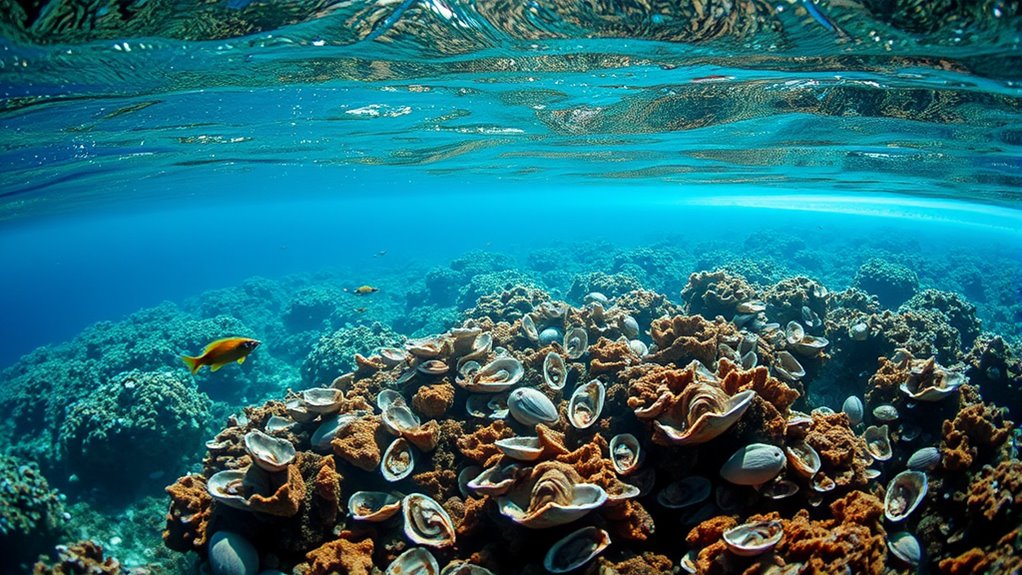

Oyster reefs act as natural barriers, breaking up incoming waves and reducing erosion along coastlines. They support marine biodiversity by providing habitats for fish and crabs, while also improving water quality through filtration. These living breakwaters offer a sustainable alternative to artificial structures, enhancing coastal resilience against climate change. By restoring these essential ecosystems, you can contribute to the health of marine environments and your community. Discover more about their incredible benefits and importance for our coastlines.
Key Takeaways
- Oyster reefs act as natural barriers, reducing wave energy and protecting coastlines from erosion and storm damage.
- They enhance coastal resilience, serving as sustainable alternatives to artificial shoreline structures.
- By filtering water, oyster reefs improve water quality, which is vital for maintaining healthy marine ecosystems.
- Restoring oyster reefs supports marine biodiversity, providing habitats for various species and nurseries for fish and crabs.
- Healthy oyster reefs can boost local economies by attracting tourism and promoting sustainable fishing and recreational activities.
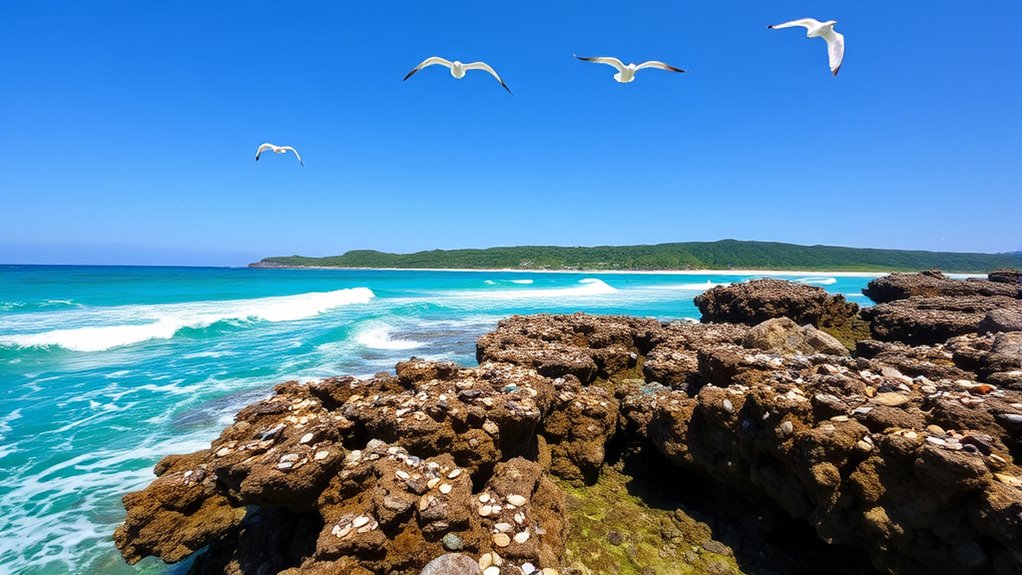
As climate change intensifies and coastal erosion accelerates, oyster reefs offer a natural solution to protect our shorelines. You might not realize it, but these underwater structures play a *pivotal* role in habitat restoration and enhancing marine biodiversity. By understanding how oyster reefs function, you can appreciate their significance in coastal ecosystems and the benefits they provide.
When you think about oyster reefs, imagine a thriving community of oysters working together to create a complex habitat. These reefs serve as nurseries for various marine species, providing shelter and food for fish, crabs, and other organisms. As the oysters filter water, they help maintain water quality, which is *indispensable* for the health of marine life. By fostering a diverse range of species, oyster reefs contribute to the overall resilience of coastal ecosystems.
Moreover, you’ll find that the presence of oyster reefs can *notably* reduce wave energy. They act as natural barriers, breaking up incoming waves and protecting shorelines from erosion. This is especially important as climate change leads to rising sea levels and increased storm intensity. You can see how investing in oyster reef restoration can offer a sustainable and effective approach to shoreline protection. Instead of relying solely on artificial structures, restoring these natural habitats can enhance both conservation efforts and coastal resilience.
If you’re concerned about the loss of marine biodiversity, supporting oyster reef projects is a proactive way to make a difference. These initiatives not only restore *indispensable* habitats but also promote the recovery of marine species that have faced decline due to overfishing, pollution, and habitat destruction. By engaging in local restoration efforts, you can help create a healthier environment for future generations of marine life.
In addition to their ecological benefits, oyster reefs can also have economic advantages. Healthy coastal ecosystems attract tourism and recreational activities such as fishing and diving. They can provide jobs and support local economies while fostering a connection to nature that’s increasingly important in our fast-paced world. By protecting and restoring oyster reefs, you’re investing in sustainable practices that benefit both the environment and your community. Furthermore, the restoration of these reefs can significantly contribute to environmental sustainability, ensuring a balanced ecosystem that supports diverse marine life.
oyster reef restoration kits
As an affiliate, we earn on qualifying purchases.
As an affiliate, we earn on qualifying purchases.
Frequently Asked Questions
How Do Oyster Reefs Improve Water Quality?
Oyster reefs improve water quality through effective water filtration and nutrient cycling. As you observe these reefs, you’ll notice oysters filtering out pollutants and excess nutrients from the water, which helps maintain a balanced ecosystem. They also create habitats that promote diverse marine life, further enhancing the water’s health. By supporting these natural processes, you’re helping guarantee cleaner, clearer water for both aquatic life and human activities in coastal areas.
What Marine Species Benefit From Oyster Reefs?
You reap what you sow, and oyster reefs really show that. These reefs create a thriving habitat for various marine species. Native fish like flounder and snapper find shelter and breeding grounds among the reefs, while numerous marine invertebrates, such as crabs and shrimp, thrive in this environment. By supporting these species, oyster reefs contribute to a balanced ecosystem, enhancing biodiversity and promoting healthier marine life all around.
How Long Do Oyster Reefs Last?
Oyster reefs can last anywhere from 10 to 30 years, depending on environmental conditions and human impacts. Their durability hinges on factors like water quality, temperature, and sedimentation. If you manage these factors well, you can substantially enhance oyster reef longevity. Healthy reefs not only provide habitat for marine life but also protect coastlines, showing that maintaining their integrity is vital for long-term benefits.
Can Oyster Reefs Be Man-Made?
Absolutely, you can create man-made oyster reefs! Constructing reefs as artificial habitats has become a popular way to enhance marine ecosystems. These engineered reefs provide shelter for oysters and other marine life, boosting biodiversity. You’ll find that these structures, often made from materials like rock or concrete, mimic natural reefs. So, if you’re looking to make a significant environmental impact, diving into the world of man-made oyster reefs is an exciting venture!
Are Oyster Reefs Effective Against Climate Change?
Yes, oyster reefs are effective against climate change. They play a vital role in oyster habitat restoration, enhancing coastal resilience strategies. By filtering water and providing habitat for marine life, they help maintain healthy ecosystems. When you support these natural structures, you’re contributing to carbon sequestration and reducing coastal erosion. Investing in oyster reef projects can greatly bolster your community’s defenses against rising sea levels and extreme weather events.

Camco Tastepure RV Water Filter – Advanced RV Inline Water Filter with Flexible Hose Protector – GAC & KDF Filtration – Made in USA – Camping Essentials for Fresh Drinking Water (40043)
Advanced 6-Step Filtration Technology: Discover the impressive power of the Tastepure RV water filter’s Hex-Flow Technology and its…
As an affiliate, we earn on qualifying purchases.
As an affiliate, we earn on qualifying purchases.
Conclusion
In a world where rising tides threaten our shores, living breakwaters like oyster reefs stand as modern-day guardians, reminiscent of the legendary Hercules battling the forces of nature. By harnessing the power of these natural filters, you’re not just protecting coastlines; you’re also nurturing ecosystems that sustain life. So, let’s embrace this innovative approach and become stewards of the sea, ensuring a resilient future for generations to come. Together, we can turn the tide in favor of nature.

Wesnoy 2 Pcs Sediment Filter Erosion Control Blanket Silt Fence Sock with Stuffers Drain Stormwater Sediment Filter for Erosion Control and Storm Drain Protection (5" x 15')
Enough and Practical: you will receive 2 rolls of sediment filter socks for drainage protection, which are very…
As an affiliate, we earn on qualifying purchases.
As an affiliate, we earn on qualifying purchases.

The Shell Connection | Oyster Shells 3" – 4" | 24 Pieces • Free Two Day Shipping
As an affiliate, we earn on qualifying purchases.
As an affiliate, we earn on qualifying purchases.