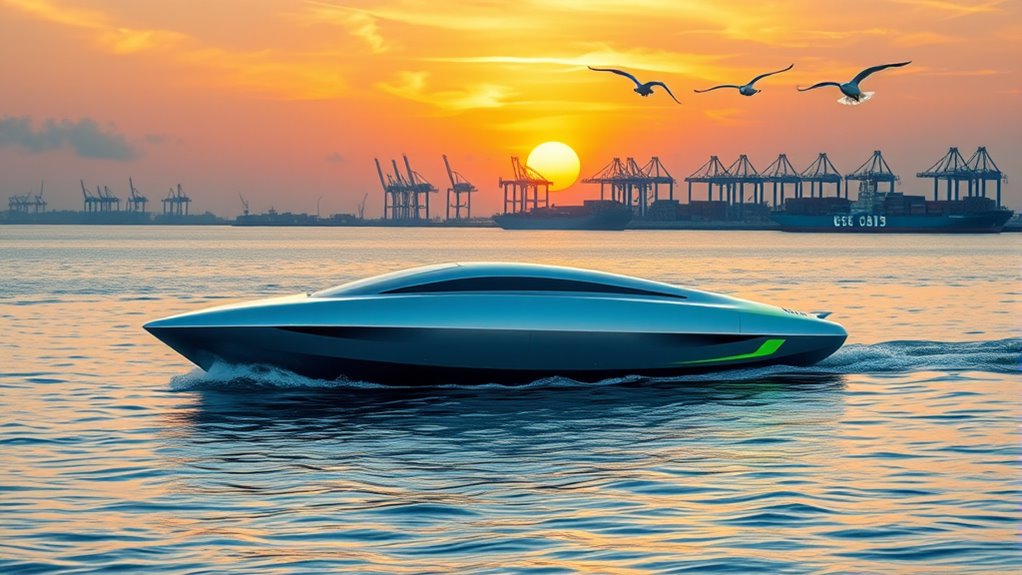

Hydrogen fuel cell ships are transforming maritime transport by cutting emissions and providing a sustainable alternative to diesel-powered vessels. They produce only water vapor, promoting healthier oceans and reducing air pollution. Using hydrogen from renewable sources boosts energy independence while enhancing vessel efficiency. Many shipping companies are embracing this technology, aligning with global climate goals. Want to discover more about the benefits and future potential of hydrogen fuel cell vessels? Keep exploring!
Key Takeaways
- Hydrogen fuel cell ships produce only water vapor, significantly reducing maritime emissions and contributing to cleaner oceans.
- They utilize renewable hydrogen sources, promoting a sustainable energy cycle within the maritime industry.
- Fuel cell technology enhances ship performance, offering a quieter and more efficient alternative to traditional diesel vessels.
- Many shipping companies are adopting hydrogen fuel cells, leading to lower operational costs and reduced industry emissions.
- The shift towards hydrogen fuel cell ships aligns with global climate goals, paving the way for a greener maritime transport future.

Hydrogen fuel cell ships are revolutionizing the maritime industry by offering a cleaner, more sustainable alternative to traditional diesel-powered vessels. With increasing awareness of the environmental impact of maritime emissions, you’re likely looking for innovative solutions that can help reduce the carbon footprint of shipping. Fuel cell technology is at the forefront of this shift, providing a way to power ships while minimizing harmful emissions that contribute to climate change and air pollution.
Hydrogen fuel cell ships are paving the way for a sustainable maritime future, reducing emissions and enhancing eco-friendly transport.
As you explore the world of hydrogen fuel cell ships, you’ll discover that they harness the power of hydrogen to generate electricity through an electrochemical process. This process produces only water vapor as a byproduct, which means you can enjoy cleaner oceans and a healthier planet. Unlike traditional ships that rely on fossil fuels, hydrogen fuel cell vessels operate quietly and efficiently, making them ideal for both coastal and deep-sea voyages. You’ll find that this technology not only contributes to the reduction of maritime emissions but also enhances the overall performance of ships.
Imagine being part of a movement that prioritizes sustainability and environmental responsibility. By adopting fuel cell technology, you’re aligning yourself with the future of maritime transport. Many shipping companies are already investing in hydrogen fuel cell ships, recognizing the long-term benefits they offer. These vessels can reduce operational costs dramatically due to lower fuel expenses and maintenance requirements. As more companies make the switch, the maritime industry can collaboratively lower its emissions and work towards meeting global climate goals.
As you consider the implications of this technology, think about the potential for innovation in fuel storage and distribution. Hydrogen can be produced from renewable sources, such as wind and solar energy, making it a truly green alternative. This means that not only does fuel cell technology help cut down on emissions, but it also promotes energy independence and resilience.
In a world increasingly focused on sustainability, you can’t afford to overlook the advantages of hydrogen fuel cell ships. Embracing this technology means you’re taking a proactive step toward a future where maritime emissions are markedly reduced. By opting for cleaner energy solutions, you’re part of a larger movement that prioritizes the health of our planet. Your choice to support or invest in hydrogen fuel cell technology not only transforms maritime transport but also sets a powerful example for others in the industry.

DDYWQCLMR Hydrogen Fuel Cell Regeneration Module Hydrogen-Oxyge Teaching Reversible Battery Physical Experimental Models
Electrolysis voltage: 1.5V-3.0V
As an affiliate, we earn on qualifying purchases.
As an affiliate, we earn on qualifying purchases.
Frequently Asked Questions
How Do Hydrogen Fuel Cells Work in Marine Applications?
Hydrogen fuel cells in marine applications convert hydrogen and oxygen into electricity, powering your vessel. You’ll find that they produce only water as a byproduct, enhancing marine safety. To make this technology viable, a robust fuel infrastructure is essential. You’ll need reliable refueling stations and storage solutions to support your operations. By adopting hydrogen fuel cells, you help reduce emissions and promote a cleaner, more sustainable maritime environment.
What Are the Main Challenges of Hydrogen Fuel Cell Ships?
You’re facing some big hurdles with hydrogen fuel cell ships! First up, storage challenges pop up like pesky weeds in a garden, making it tough to hold onto that precious hydrogen. Then, safety concerns loom like dark clouds, worrying everyone about leaks and explosions. Plus, the infrastructure for refueling isn’t quite ready to soar yet, leaving you scratching your head. It’s a wild ride, but overcoming these challenges could pave the way for greener seas!
How Are Hydrogen Fuel Cells Stored on Ships?
You store hydrogen on ships in high-pressure tanks or cryogenic containers, depending on the storage method chosen. High-pressure tanks keep hydrogen gas compressed, while cryogenic systems store it as a liquid at extremely low temperatures. Safety protocols are essential in this process; you’ll need to make certain proper ventilation, leak detection, and emergency response plans are in place to minimize risks. These measures help you safely and efficiently manage hydrogen storage onboard.
What Is the Lifespan of a Hydrogen Fuel Cell?
The lifespan of a hydrogen fuel cell typically ranges from 5 to 10 years, depending on fuel cell durability and maintenance requirements. You’ll find that proper upkeep can substantially extend its life. Regular inspections and timely replacements of components help keep everything running smoothly. By staying proactive with maintenance, you can guarantee ideal performance and longevity, making it a worthwhile investment for your energy needs.
How Does Hydrogen Fuel Compare to Traditional Marine Fuels?
Hydrogen fuel offers a much lower environmental impact compared to traditional marine fuels, as it produces only water vapor when burned. While the initial cost of hydrogen can be higher, ongoing operational expenses may balance out due to fewer emissions-related penalties and lower maintenance needs. As you explore options, keep in mind that investing in hydrogen technology can lead to long-term savings and a more sustainable marine industry.

Horizon Fuel Cell Technologies Solar Hydrogen Education Kit
Horizon puts renewable energy technology into the hands of our future scientists
As an affiliate, we earn on qualifying purchases.
As an affiliate, we earn on qualifying purchases.
Conclusion
As you sail into the future of maritime transport, think of hydrogen fuel cell ships as the lighthouse guiding us through the fog of pollution. Just like the first steamships transformed trade routes, these vessels promise cleaner oceans and a healthier planet. With over 90% of global trade carried by sea, shifting to hydrogen could cut emissions considerably. Embrace this change—it’s not just about reaching a destination, but ensuring the journey is sustainable for generations to come.

Compressed Hydrogen in Fuel Cell Vehicles
As an affiliate, we earn on qualifying purchases.
As an affiliate, we earn on qualifying purchases.

PEM Hydrogen Fuel Cell Proton Exchange Membrane Fuel Cell New Energy High School Laboratory Teaching Accessories 50x50MM
Name: Hydrogen Fuel Cell
As an affiliate, we earn on qualifying purchases.
As an affiliate, we earn on qualifying purchases.