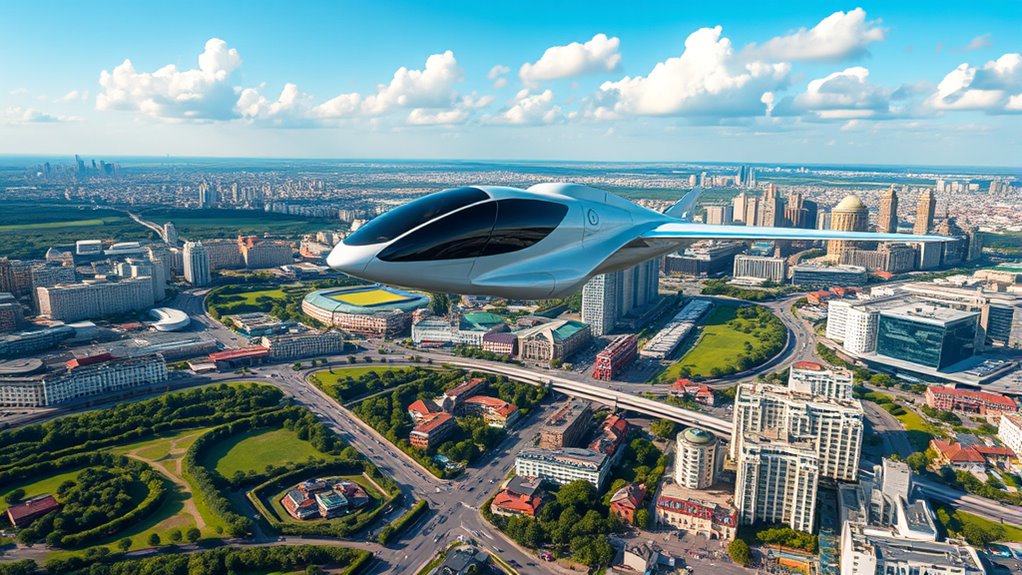

Electric air taxis can transform urban mobility by reducing congestion and offering a quicker, eco-friendly travel option. You’ll fly above city traffic in a sustainable way, ultimately reshaping how you commute. While they’re quieter than traditional helicopters, noise management is vital for community acceptance. New regulations and infrastructure, like vertiports, need to be developed to support their integration into urban environments. Discover how addressing these challenges can lead to a new era in urban transportation.
Key Takeaways
- Electric air taxis can alleviate urban congestion by providing a faster mode of transportation above traffic, enhancing travel efficiency.
- They offer a sustainable alternative to traditional transit, potentially reducing carbon footprints and environmental impacts of urban mobility.
- The implementation of electric air taxis requires careful noise management to address community concerns and gain public acceptance.
- Establishing necessary infrastructure, such as vertiports, is crucial for the successful integration of air taxis into urban environments.
- Regulatory frameworks must be developed to ensure safety and efficient air traffic management for electric air taxi operations.
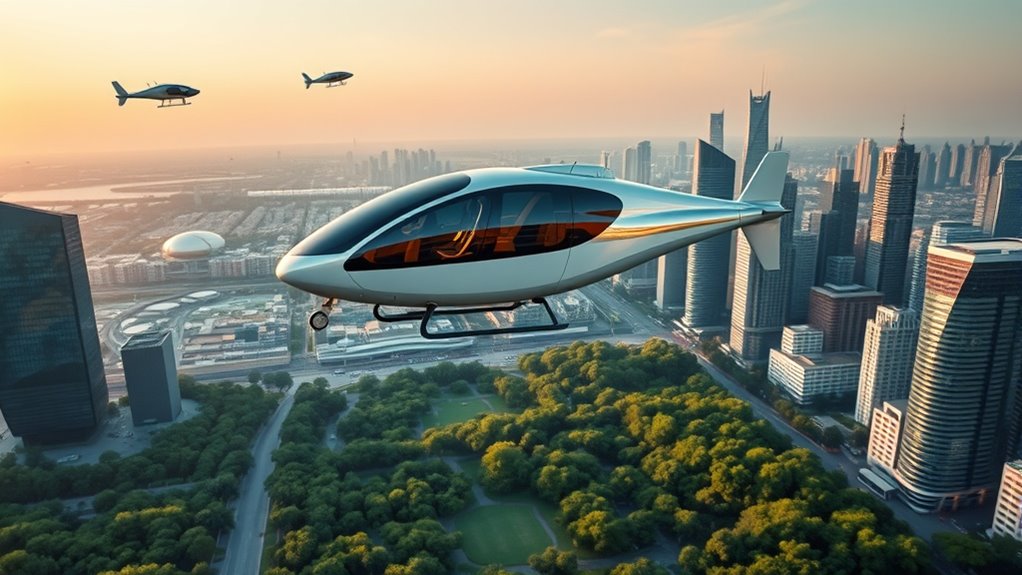
As urban congestion worsens, electric air taxis are emerging as a promising solution to revolutionize urban transportation. You might be wondering how this innovative mode of transport could alleviate the daily grind of traffic jams and long commutes. Imagine zipping through the skies above the city, avoiding the gridlock below. Electric air taxis not only promise quicker travel times but also aim to reduce the environmental impact of urban mobility.
Despite their potential, the path to widespread adoption isn’t straightforward. One major challenge is the issue of urban noise. While electric air taxis are quieter than traditional helicopters, they still produce noise that could disrupt communities. You may find yourself contemplating how these vehicles will be integrated into the urban landscape without contributing to the cacophony of city life. Addressing urban noise pollution will be essential for gaining public acceptance.
Then there are the regulatory hurdles that electric air taxis must overcome. Governments need to create new frameworks to ensure safety, air traffic management, and operational guidelines. This means balancing innovation with public safety and environmental concerns. You might think about how long it will take for regulations to evolve, but the good news is that many cities are already working on these frameworks. Collaboration between tech companies and regulatory bodies is vital for developing standards that ensure safe and efficient operations.
You might also be curious about the infrastructure needed for electric air taxis. Vertiports, or designated landing and take-off areas, will need to be established throughout urban centers. This requires significant investment and planning to ensure they’re conveniently located for passengers. You’ll want to stay informed about how these developments unfold, as they’ll shape the future of urban mobility. Additionally, considerations regarding power backup systems will be crucial for ensuring operational reliability during outages.
In the end, electric air taxis hold the promise of transforming how you navigate your city. They could provide a sustainable, efficient alternative to traditional transportation methods, helping to ease congestion and reduce carbon footprints. As these vehicles become more viable, it’ll be essential to address the challenges they face, from noise concerns to regulatory frameworks. You’ll want to keep an eye on this evolving landscape, as it could redefine your daily commute and reshape urban living for generations to come.
Frequently Asked Questions
How Much Do Electric Air Taxi Rides Cost Compared to Traditional Taxis?
Electric air taxi rides typically cost more than traditional taxis, especially in the early stages of their rollout. When considering a pricing comparison, factors like technology investment and infrastructure play a significant role. However, as the industry matures, you might see prices become more competitive. Affordability factors such as demand, location, and operational costs will also influence what you pay. So, keep an eye on the market for potential changes!
What Are the Safety Regulations for Electric Air Taxis?
Safety regulations for electric air taxis? Oh, just a casual mix of regulatory standards and certification processes, nothing too dramatic! You’ll find these flying marvels must meet stringent guidelines, ensuring they’re more reliable than your last blind date. They undergo rigorous testing and must be certified before taking to the skies. So, buckle up! You’re in for a ride that’s safer than most of your local taxi drivers.
How Do Electric Air Taxis Handle Bad Weather Conditions?
Electric air taxis are designed to handle bad weather conditions with advanced technology. They incorporate weather resilience features, such as real-time weather data monitoring and enhanced navigation systems. When flying in adverse conditions, these taxis prioritize flight safety, adjusting routes and altitudes to avoid severe weather. Additionally, they often undergo rigorous testing to guarantee they can cope with various environmental challenges, giving you peace of mind during your journey.
What Is the Expected Lifespan of an Electric Air Taxi?
You can expect an electric air taxi to have a lifespan of around 10 to 15 years, depending on its battery longevity and maintenance requirements. Regular checks and updates can enhance its durability, ensuring safety and performance. Batteries typically need replacement every few years, so keeping an eye on their condition is vital. By maintaining the vehicle properly, you’ll maximize its operational life and efficiency in urban settings.
How Will Electric Air Taxis Impact Existing Public Transportation Systems?
Electric air taxis could profoundly reshape existing public transportation systems. By alleviating urban congestion, they offer a faster alternative for short distances, reducing reliance on traditional buses and cars. As you embrace this new mode, you might notice a decrease in noise pollution compared to conventional transport options. However, it’s essential to integrate these taxis thoughtfully to guarantee they complement rather than disrupt current systems, creating a balanced urban mobility landscape.
Conclusion
As you glance up, you spot an electric air taxi gliding effortlessly above the bustling city streets, its sleek design shimmering in the sunlight. Coincidentally, it’s your commute day, and just like that, the future of urban mobility is unfolding before your eyes. With each flight, these eco-friendly vehicles promise to ease congestion and reduce pollution, transforming your daily journey into a seamless aerial escape. Embrace this change—it’s not just a ride; it’s a glimpse into tomorrow.