
TL;DR

Prime made for students and young adults
- Fast, free delivery for dorm and study essentials
- Prime Video and Amazon Music included
- Member-only deals
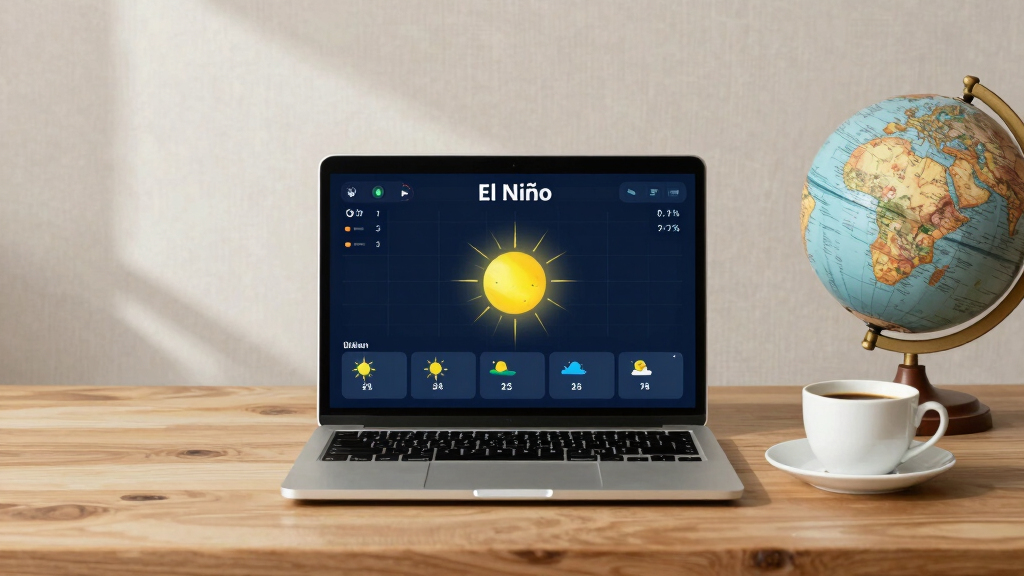
Meteorological agencies forecast a high probability of a significant El Niño event forming in 2024. This development could influence weather patterns worldwide, but precise timing and strength are still uncertain.
Meteorological agencies worldwide are increasingly confident that a significant El Niño event is likely to develop in 2024, with implications for global weather patterns. This forecast is based on current oceanic and atmospheric conditions, and it could influence climate-related events across multiple regions.
Multiple agencies, including the National Oceanic and Atmospheric Administration (NOAA) and the World Meteorological Organization (WMO), have issued updated forecasts indicating a high probability of El Niño forming in the coming months. NOAA’s Climate Prediction Center stated that there is a greater than 60% chance of El Niño conditions developing by mid-2024, with some models suggesting a strong event. These conditions are characterized by warmer-than-average sea surface temperatures in the central and eastern Pacific Ocean, which can disrupt typical weather patterns globally.While the forecast points toward El Niño formation, the exact timing, intensity, and duration remain uncertain. Experts caution that climate variability and ocean-atmosphere interactions make precise predictions challenging at this stage. Some models suggest development could occur as early as late spring or early summer, while others indicate a possibility of delay until late summer or early fall.
Impacts of a Potential El Niño on Global Weather
If an El Niño develops as forecasted, it could lead to increased droughts, heavy rainfall, and extreme weather events in different parts of the world. For instance, regions like Southeast Asia, Australia, and parts of South America could experience heightened risk of flooding and storms, while North America might see warmer winters and altered storm tracks. These changes can affect agriculture, water resources, and disaster preparedness efforts globally, making the forecast highly relevant for governments, farmers, and emergency services.
As an affiliate, we earn on qualifying purchases.
Recent Oceanic and Atmospheric Indicators Supporting the Forecast
Recent observations show that sea surface temperatures in the central and eastern Pacific Ocean have been gradually warming over the past few months. Atmospheric patterns, including weakened trade winds and changes in atmospheric pressure systems, are consistent with early signs of El Niño development. Historically, similar conditions have preceded past El Niño events, which tend to peak between late summer and early winter.
Climate models used by NOAA and other agencies have been increasingly aligning in predicting El Niño formation, although some variability remains. The last significant El Niño occurred in 2018-2019, which was associated with notable weather disruptions worldwide.
“Current oceanic and atmospheric conditions suggest a high likelihood of El Niño developing in 2024, but the exact timing and strength are still uncertain.”
— Dr. Emily Carter, NOAA Climate Scientist
emergency weather radio with alert
As an affiliate, we earn on qualifying purchases.
As an affiliate, we earn on qualifying purchases.
Remaining Uncertainties About El Niño Development
While forecasts indicate a high probability of El Niño forming in 2024, the precise timing, strength, and duration are still uncertain. Variability in oceanic and atmospheric interactions means predictions could change as new data emerges. Experts caution that some models suggest development could be delayed or that the event could be weaker or stronger than currently forecasted.
As an affiliate, we earn on qualifying purchases.
Monitoring and Updated Forecasts Expected in Coming Months
Meteorological agencies will continue to monitor oceanic and atmospheric conditions, issuing updated forecasts as new data becomes available. Key milestones include the upcoming spring and summer seasons, when early signs of El Niño typically become clearer. Governments and sectors affected by climate variability are advised to prepare for potential impacts based on evolving predictions.
As an affiliate, we earn on qualifying purchases.
Key Questions
What is El Niño and why does it matter?
El Niño is a climate pattern characterized by warmer-than-average sea surface temperatures in the central and eastern Pacific Ocean. It can disrupt global weather, causing droughts, floods, and storms, affecting agriculture, water supply, and disaster risk management worldwide.
When is El Niño expected to develop in 2024?
Most forecasts suggest development could occur as early as late spring or early summer 2024, but there is still uncertainty about the exact timing.
How strong could the El Niño be this year?
Current models indicate a potential for a strong El Niño, but the exact intensity remains uncertain until more data is collected and analyzed.
What regions will be most affected?
Regions like Southeast Asia, Australia, South America, and North America are expected to experience notable weather impacts, including droughts, heavy rainfall, and temperature anomalies.
Will this forecast change?
Yes, as oceanic and atmospheric conditions evolve, forecasts will be updated. Continuous monitoring is essential to refine predictions.
Source: google-trends
Halloween Picks
halloween
As an affiliate, we earn on qualifying purchases.