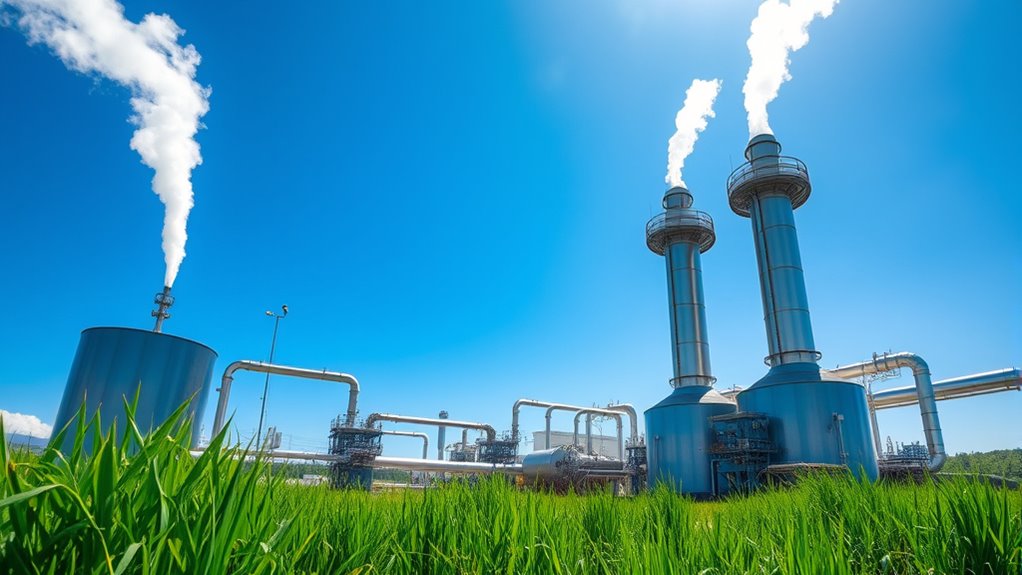

Carbon Capture and Storage (CCS) is a key technology that pulls CO₂ out of the air, helping fight climate change. It captures emissions from various sources and can even act like a giant vacuum cleaner, filtering CO₂ from the atmosphere. Once captured, the CO₂ is stored underground in secure geological formations, preventing it from re-entering the atmosphere. This approach supports a shift to cleaner energy while enabling continued fossil fuel use. There’s much more to discover about its potential benefits.
Key Takeaways
- Carbon Capture and Storage (CCS) technologies capture CO₂ emissions, helping mitigate climate change while allowing continued use of fossil fuels.
- Direct Air Capture functions like a vacuum, filtering CO₂ from the atmosphere and releasing clean air back.
- Captured CO₂ is stored underground in geological formations, preventing its return to the atmosphere and ensuring long-term sequestration.
- CCS serves as a bridge towards a low-carbon future, reducing the environmental impact of current energy systems.
- Supporting CCS involves investment, policy advocacy, and technological innovation to balance energy needs with environmental protection.

Have you ever wondered how we can combat climate change while still relying on fossil fuels? It might seem like a contradiction, but technologies like carbon capture and storage (CCS) offer a viable path forward. By capturing carbon dioxide (CO₂) emissions directly from the air or at their source, we can markedly reduce the amount of greenhouse gases in our atmosphere. This innovative approach allows you to enjoy the benefits of fossil fuels while actively working to mitigate their environmental impact.
Direct air capture is one of the most promising methods for pulling CO₂ out of the atmosphere. Imagine a giant vacuum cleaner that inhales air, filters out CO₂, and releases clean air back into the environment. That’s fundamentally what direct air capture does. This technology can be set up in various locations, including industrial sites or even integrated into urban landscapes. It’s like having a carbon sponge that absorbs emissions, helping to create a more sustainable future. By investing in and supporting these technologies, you can play a role in a cleaner environment.
Direct air capture acts like a giant vacuum, filtering CO₂ from the air to help create a sustainable future.
Once CO₂ is captured, the next step is storage. Various storage techniques are employed to guarantee that the captured carbon doesn’t re-enter the atmosphere. One popular method involves injecting the captured CO₂ into geological formations deep underground. These formations, often depleted oil and gas fields or saline aquifers, provide a safe and secure environment for long-term storage. By sealing off the CO₂ in these underground reservoirs, we can prevent it from contributing to climate change.
It’s crucial to understand that carbon capture and storage isn’t about eliminating fossil fuels altogether. Instead, it’s about making them cleaner. You can’t just wish away the infrastructure and energy systems that rely on fossil fuels; they’re deeply embedded in our societies. By adopting CCS technologies, you create a bridge to a low-carbon future while still utilizing existing resources.
The combination of direct air capture and effective storage techniques can turn the tide against climate change. As you learn more about these technologies, consider how you can support their development and implementation. Engaging in conversations, advocating for policies, or even investing in green technologies can make a difference. The path to a sustainable future lies in our hands, and with innovative solutions like CCS, we can navigate the complexities of our energy needs while protecting the planet.
Frequently Asked Questions
How Much Does Carbon Capture Technology Cost to Implement?
Implementing carbon capture technology can vary widely in cost, typically ranging from $50 to $100 per ton of CO₂ captured. However, economic feasibility improves as technological advancements continue to reduce costs and increase efficiency. You’ll find that investments in research and development are essential for driving these innovations. By staying informed about the latest technologies, you can better assess the long-term benefits and potential savings of adopting carbon capture solutions for your projects.
What Are the Environmental Impacts of Carbon Capture and Storage?
You’ll find that carbon capture and storage can have mixed environmental impacts. While it aims to improve air quality by reducing CO₂ emissions, it might also lead to ecosystem disruption if not managed properly. The process can affect land use and water resources, potentially harming local wildlife. Balancing these effects is vital; otherwise, the technology’s benefits might be offset by unintended consequences in the surrounding environment. So, careful planning is essential.
How Long Can Captured Co₂ Be Stored Safely?
Captured CO₂ can be stored safely for thousands of years, but long-term storage comes with safety concerns. You’ll want to guarantee that the storage sites are geologically stable and monitored to prevent leaks. Regular assessments and advancements in technology help mitigate risks, but it’s vital to maintain oversight. By addressing these concerns, you can confirm that the captured CO₂ remains secure and contributes to effective climate change mitigation over time.
What Are the Main Challenges Facing Carbon Capture Technologies?
One in three people still haven’t heard of carbon capture technologies, which highlights a major challenge: public acceptance. You’re facing technological limitations too; efficiency and cost-effectiveness remain obstacles. Many existing methods struggle with scalability and energy consumption. Additionally, misinformation about safety and effectiveness often hampers progress. To truly advance, you need to address these issues through education and innovation, ensuring broader support and understanding within communities.
Can Carbon Capture Affect Local Ecosystems or Wildlife?
Yes, carbon capture can affect local ecosystems and wildlife. When you implement these technologies, you risk disrupting local biodiversity. For instance, large installations might alter land use, impacting habitats and species. Additionally, if the captured CO₂ is stored underground, it could leak, potentially harming groundwater and surrounding ecosystems. It’s vital to take these factors into account to minimize ecosystem disruption and guarantee that carbon capture efforts support rather than harm environmental health.
Conclusion
As you ponder the future, consider this: every breath you take contributes to a world in peril. Carbon capture and storage might just be our lifeline, a way to pull CO₂ from the air and restore balance. But what if we fail to act? The clock’s ticking, and the stakes are higher than ever. Will you sit back and watch, or will you step up and be part of the solution before it’s too late?