Biochar is a stable, carbon-rich soil booster that can lock carbon in the ground for centuries, helping fight climate change. Created by heating organic waste without oxygen, it has a porous structure that supports beneficial microbes and enhances soil health. Its resistant carbon compounds prevent breakdown, ensuring long-term sequestration. If you want to understand how biochar can boost your soil while capturing carbon long-term, there’s more to discover below.
Key Takeaways
- Biochar’s porous, aromatic structure stabilizes carbon in soil, enabling it to sequester carbon for centuries.
- Pyrolysis conditions create resistant carbon compounds that resist microbial decomposition, ensuring long-term stability.
- Encapsulation of organic molecules and mineral interactions further enhance biochar’s durability in soil.
- Biochar’s chemical properties prevent leaching and oxidation, maintaining its carbon sequestration capacity over extended periods.
- Its natural stability makes biochar an effective, long-lasting method for locking carbon in soil and mitigating climate change.

The Andersons HumiChar Organic Soil Amendment with Humic Acid and Biochar Covers 12,000 sq ft (12 lb)
Improves soil health, lawn health, plant health, and reduce the use of fertilizers
As an affiliate, we earn on qualifying purchases.
As an affiliate, we earn on qualifying purchases.
Understanding Biochar: The Basics
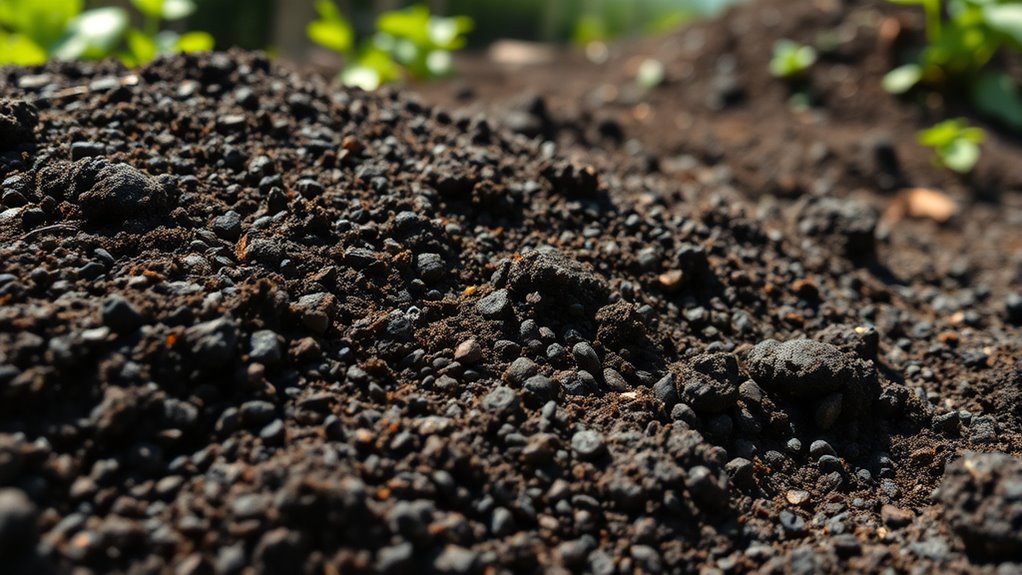
What exactly is biochar, and why is it gaining attention in agriculture? Biochar is a form of charcoal produced from organic waste through pyrolysis, a process that heats biomass without oxygen. Its appeal lies in biochar sustainability, as it can sequester carbon for centuries, helping combat climate change. As a soil amendment technique, biochar enhances soil fertility by improving water retention, aeration, and nutrient retention. Its porous structure creates a habitat for beneficial microbes, supporting plant growth. Farmers and gardeners are increasingly adopting biochar because it offers a natural, long-lasting way to boost soil health while reducing reliance on chemical fertilizers. Additionally, Honda Tuning highlights that biochar’s porous properties are similar to those engineered in high-performance air filters, which optimize airflow and efficiency. This combination of environmental benefits and improved crop yields makes biochar a promising tool in sustainable agriculture.

Char Bliss (24 Qts) – Organic Biochar for Plants – OMRI-Listed Biochar Soil Amendment Organic – Bio Char for Plants – Horticultural Charcoal for Plants, Potting Soil, Garden Soil, & Potting Mixes
100% Natural Soil Amendment for Plants – Plantonix Char Bliss is an organic soil conditioner that’s been ethically…
As an affiliate, we earn on qualifying purchases.
As an affiliate, we earn on qualifying purchases.
The Process of Creating Biochar

To create biochar, you’ll use a pyrolysis process that heats organic material in the absence of oxygen, transforming it into stable carbon. Preparing your feedstock involves drying and grinding it to guarantee consistent heating and quality. Understanding these steps helps you produce effective biochar that benefits your soil and plants. Additionally, controlling the temperature and duration of pyrolysis can significantly influence the quality and stability of the final biochar product.
Pyrolysis Technique Details
Pyrolysis is the core process used to produce biochar, involving the thermal decomposition of organic material in the absence of oxygen. This process relies on carefully controlled pyrolysis parameters, such as temperature, heating rate, and residence time, to maximize biochar quality. Proper control influences biochar activation, enhancing its porosity and nutrient retention. During pyrolysis, you’ll need to monitor key factors to ensure consistent results:
- Temperature settings, typically between 400-700°C
- Heating rate, affecting biochar structure and activation
- Residence time, determining carbon stability
- Oxygen levels, kept minimal to prevent combustion
Adjusting these parameters tailors biochar’s properties, making it more effective for soil enhancement and long-term carbon storage. Mastering the pyrolysis technique ensures you produce high-quality biochar with superior benefits.
Feedstock Preparation Steps
Preparing the feedstock is a vital step in producing high-quality biochar. Your choice of feedstock types—such as crop residues, wood chips, or manure—directly impacts the biochar’s effectiveness. Proper preparation techniques guarantee maximum carbon content and reduce contaminants. Start by drying your feedstock to minimize moisture, which improves pyrolysis efficiency. Then, chop or shred larger materials to increase surface area and uniformity. Here’s a quick overview:
| Feedstock Types | Preparation Techniques | Benefits |
|---|---|---|
| Crop residues | Air drying, shredding | Improves combustion |
| Wood chips | Chipping, drying | Increases surface area |
| Manure | Composting, drying | Reduces pathogens |
| Bark | Shredding, drying | Enhances carbon stability |
| Sawdust | Drying, screening | Guarantees uniform pyrolysis |
Additionally, choosing the right feedstock preparation method can significantly influence the quality and longevity of the biochar produced.
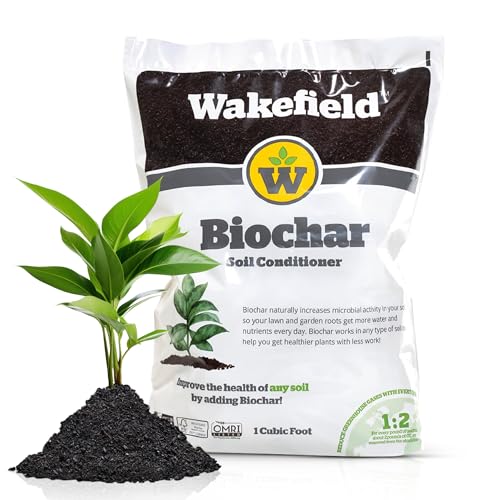
Wakefield BioChar – Premium Garden Soil Conditioner – OMRI Listed, Bio Char for Raised Gardens, Potting Mix, Lawns – 1 cu/ft (25 pounds)
– Premium garden soil conditioner and biochar
As an affiliate, we earn on qualifying purchases.
As an affiliate, we earn on qualifying purchases.
Environmental Benefits of Biochar Application

Applying biochar can greatly boost your soil’s health and stability. It helps trap carbon in the ground, reducing greenhouse gases in the atmosphere. Plus, it improves soil fertility, supporting healthier plant growth and crop yields.
Carbon Sequestration Potential
Have you ever wondered how biochar can help combat climate change? Its carbon sequestration potential is impressive because of its biochar longevity and high carbon storage capacity. When applied to soil, biochar can lock carbon away for centuries, preventing it from returning to the atmosphere. This process reduces greenhouse gases and mitigates global warming. To maximize its benefits, consider that biochar:
- Remains stable in soil for hundreds to thousands of years
- Acts as a long-term carbon sink
- Improves soil structure, keeping carbon trapped
- Supports sustainable climate strategies
Soil Fertility Enhancement
Ever wondered how biochar can boost soil fertility while benefiting the environment? When you add biochar to soil, it enhances soil microbial interactions, creating a healthier ecosystem that promotes plant growth. Its porous structure provides habitat for beneficial microbes, which improve nutrient cycling and availability. Biochar also employs effective nutrient retention strategies, preventing leaching of essential nutrients and maintaining soil fertility over time. This means your soil retains nutrients longer, reducing the need for chemical fertilizers and lowering environmental impact. Additionally, AI security technologies can monitor and optimize biochar application processes, ensuring maximum environmental benefits. By improving microbial activity and nutrient retention, biochar helps create more productive, resilient soils. As a result, crops grow better, yields increase, and you contribute to sustainable farming practices that protect the environment for future generations.

The Biochar Solution: Carbon Farming and Climate Change
Introduction by Vandana Shiva
As an affiliate, we earn on qualifying purchases.
As an affiliate, we earn on qualifying purchases.
Long-Term Carbon Sequestration Mechanisms

Long-term carbon sequestration in soils relies on the stability of biochar’s structure, which resists decomposition over time. This stability results from the complex carbon compounds formed during biomass conversion, making biochar resistant to microbial breakdown. These durable structures enable carbon to stay locked in the soil for centuries. Factors that enhance carbon stability include:
- Aromatic carbon structures formed during pyrolysis
- Minimal surface oxidation, maintaining stability
- Encapsulation of smaller organic molecules
- Interaction with soil minerals that protect biochar
- Thermal stability is essential for long-term sequestration, ensuring biochar remains intact over extended periods.
Practical Uses and Adoption in Agriculture

Practical adoption of biochar in agriculture offers a promising way to enhance soil health and boost crop yields. Farmer adoption depends on demonstrating clear benefits like improved fertility, drought resistance, and pest management. To encourage wider use, policy incentives such as subsidies, grants, and technical support can make biochar more accessible and cost-effective for farmers. Education also plays a crucial role; providing training on biochar production and application helps reduce uncertainty and misconceptions. Additionally, integrating biochar into existing farming practices ensures smoother adoption. As awareness grows about its environmental and economic advantages, more farmers are likely to embrace biochar. Policies that promote sustainable farming and carbon sequestration will further accelerate its adoption, making biochar a practical tool for modern agriculture. Understanding soil management techniques can also help farmers see how biochar fits into comprehensive soil health strategies.
Future Perspectives and Research Directions
As research into biochar continues, future studies will focus on optimizing production methods, understanding long-term soil impacts, and developing tailored application strategies for different crops and environments. You can expect advancements like innovative biochar coatings that enhance nutrient retention and microbial activity. Additionally, biochar policy development will become essential to regulate its use and promote sustainable practices. Research may explore:
- Improving biochar stability and integration with soil ecosystems
- Creating crop-specific application guidelines
- Evaluating environmental and economic benefits over decades
- Scaling up production through sustainable methods
- Exploring diverse beach experiences to understand how different ecosystems influence biochar’s performance and benefits.
These directions aim to maximize biochar’s potential for carbon sequestration, soil health, and agricultural productivity, ensuring its role in climate mitigation and sustainable farming becomes more effective and widespread.
Frequently Asked Questions
How Does Biochar Affect Soil Nutrient Availability Over Time?
You might wonder how biochar influences soil nutrient availability over time. It enhances soil fertility by improving nutrient retention, which means nutrients stay available longer for plant roots. As biochar remains stable in the soil, it helps maintain consistent nutrient levels, reducing leaching and runoff. Over time, this leads to healthier plants and more productive soil, making biochar a valuable tool for sustainable farming and long-term soil management.
Are There Any Potential Negative Environmental Impacts of Biochar Use?
Like a double-edged sword, biochar’s benefits come with risks. You should be aware of potential biochar toxicity, which can harm soil organisms and plants. Additionally, improper production might release air pollution, impacting air quality. While biochar can lock carbon and improve soil health, you must carefully manage its use to prevent environmental harm, ensuring it remains a sustainable solution rather than a hidden threat.
What Are the Costs Associated With Large-Scale Biochar Production?
When considering large-scale biochar production, you face significant costs related to production costs and scalability challenges. You need specialized equipment and resources, which can be costly initially. As you try to increase capacity, you might encounter difficulties in maintaining consistent quality and managing supply chains. These challenges can raise overall costs, making widespread adoption more complex and requiring careful planning to ensure economic viability.
Can Biochar Be Combined With Other Soil Amendments Effectively?
Ever wondered if you can boost your soil’s health by mixing biochar with other amendments? Absolutely! Combining biochar with crop rotation and organic fertilizers creates a synergistic effect, improving nutrient retention and soil structure. This effective strategy enhances plant growth, boosts fertility, and supports sustainability. You’ll find that integrating biochar with these practices makes your soil more resilient and productive, transforming your gardening or farming efforts naturally and efficiently.
How Does Biochar Influence Microbial Diversity in Soil Ecosystems?
You might wonder how biochar influences microbial diversity in soil ecosystems. It promotes microbial interactions by providing a stable habitat, which enhances soil ecosystem dynamics. Biochar’s porous structure offers niches for beneficial microbes, boosting diversity and activity. This improved microbial diversity helps break down organic matter more efficiently, supports plant health, and sustains soil fertility, making biochar a valuable amendment for fostering a resilient and thriving soil ecosystem.
Conclusion
By incorporating biochar into your soil, you’re planting seeds for a healthier planet, much like a gardener nurturing a delicate bloom. Its ability to lock carbon for centuries acts as a steadfast shield against climate change. As you adopt this ancient yet innovative practice, remember that each application is a step forward, turning your land into a powerful carbon sink. Together, we can cultivate a sustainable future, one soil amendment at a time.