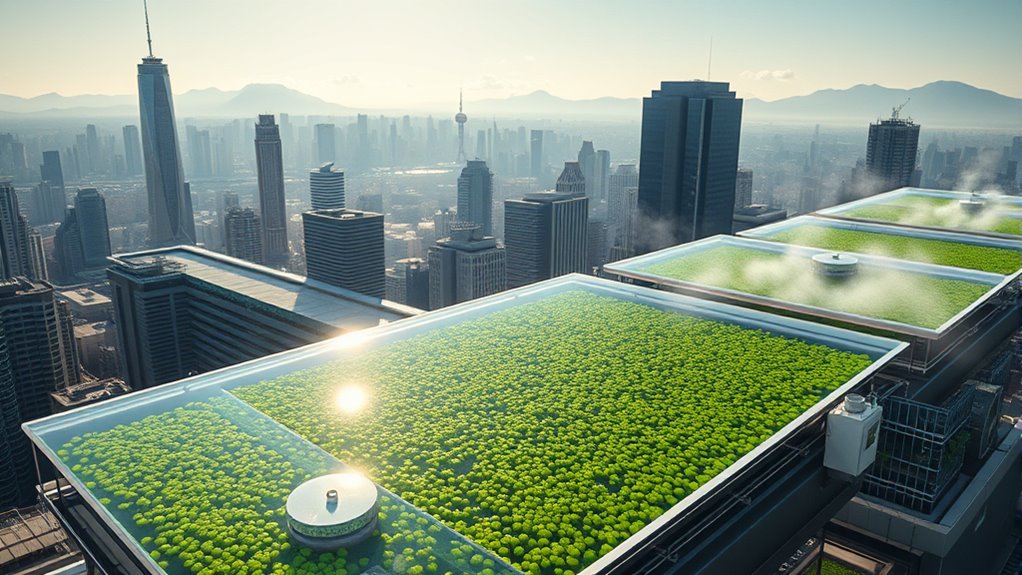

Rooftop algae bioreactors use natural photosynthesis to filter smog and harmful pollutants from urban air, turning them into oxygen and biomass. They absorb CO₂ and particulates, improving air quality while cooling the environment and adding greenery. Successful projects emphasize their scalability and eco-friendly benefits. Although there are challenges like installation costs and climate factors, ongoing innovations promise even more efficient air-cleaning solutions. Stick around to discover how these systems are transforming urban spaces.
Key Takeaways
- Algae bioreactors use photosynthesis to absorb CO₂ and pollutants from smog, converting them into oxygen and biomass.
- Installing rooftop algae systems reduces urban heat, improves air quality, and transforms rooftops into green, sustainable spaces.
- These bioreactors act as living filters, effectively removing harmful particles and gases from polluted city air.
- Successful projects in cities like Berlin and Singapore demonstrate scalable methods to turn smog into breathable air.
- Advances in algae cultivation and smart technology enhance efficiency, making rooftop bioreactors a promising urban air purification solution.
How Algae Bioreactors Work to Purify Urban Air
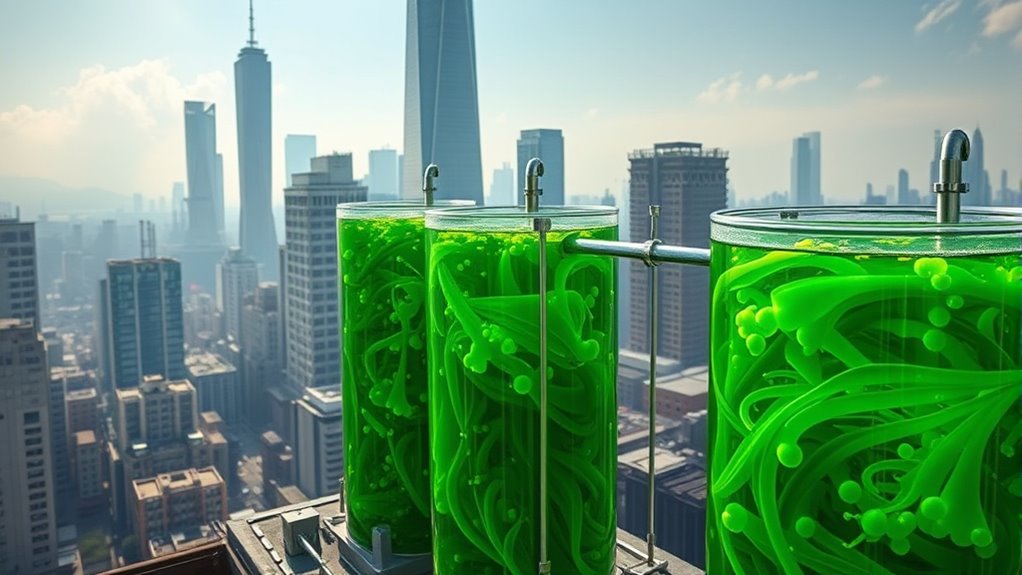
Algae bioreactors work to purify urban air by harnessing the natural process of photosynthesis. When you set up an algae cultivation system on a rooftop, it actively filters the air around it. As algae grow, they absorb carbon dioxide and other pollutants, converting them into oxygen and biomass. This process enhances air filtration by removing harmful particles and gases from the atmosphere. You control the environment within the bioreactor, optimizing conditions like light, temperature, and nutrients to maximize algae growth and efficiency. The algae’s ability to rapidly reproduce and absorb pollutants makes these systems effective at improving air quality. Fundamentally, algae bioreactors serve as living filters, transforming dirty urban air into cleaner, breathable oxygen through natural biological processes. Understanding photosynthesis is crucial for optimizing the system’s efficiency and ensuring maximum pollutant removal.
Benefits of Installing Rooftop Algae Systems
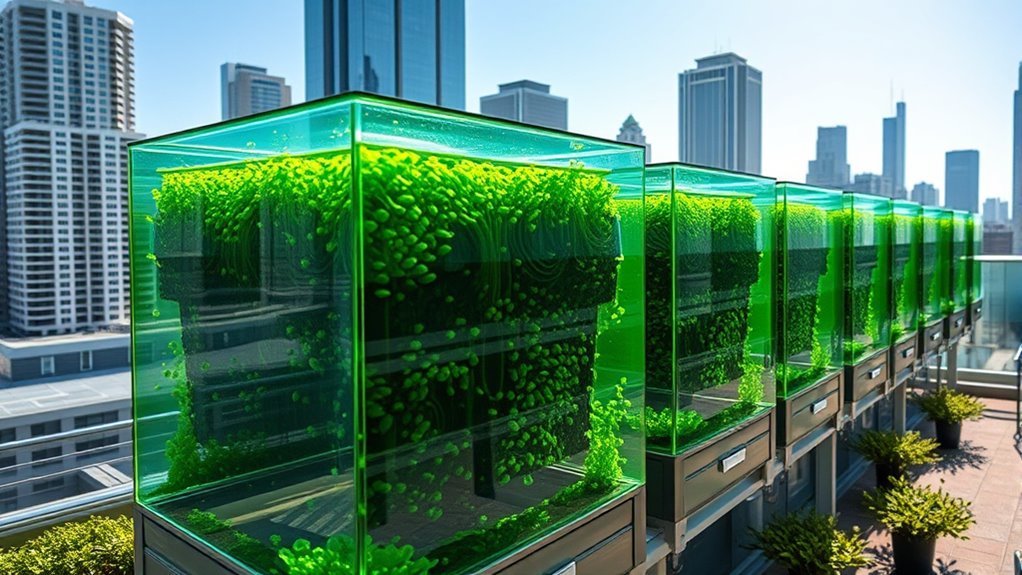
Installing rooftop algae systems offers several significant benefits for urban environments. They help reduce urban heat by cooling the air, making your city more comfortable. These systems also cut noise pollution by acting as natural sound barriers, creating a calmer space above. Plus, they turn smog into oxygen, improving air quality and public health. The visual appeal of lush algae adds greenery to concrete jungles, boosting morale. This eco-friendly solution promotes sustainability, lowers energy costs, and enhances overall well-being. Additionally, hydrogen fuel cells can play a role in clean energy production that complements such sustainable urban initiatives.
Examples of Successful Urban Algae Projects
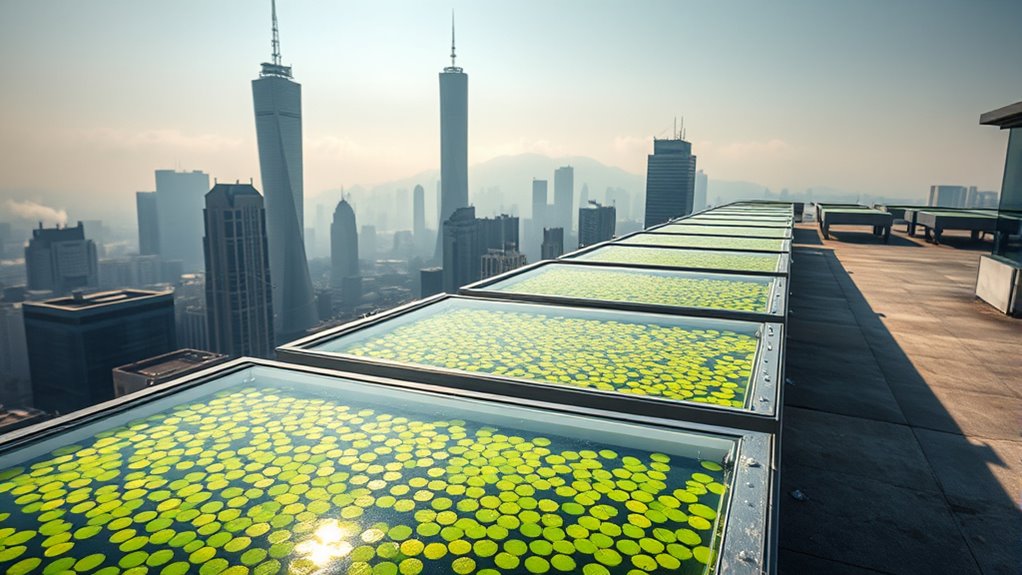
Across various cities worldwide, innovative algae rooftop projects demonstrate how these systems can transform urban spaces. In places like Berlin and Singapore, rooftop algae farms integrate seamlessly with green architecture, showcasing urban farming’s potential to enhance sustainability. These projects turn unused rooftops into productive green spaces that improve air quality and promote biodiversity. For example, the Urban Greenhouse in Singapore combines algae bioreactors with vertical gardens, creating a dual-purpose eco-system. Similarly, Berlin’s rooftop algae farms not only produce biomass for biofuels but also serve as educational hubs for sustainable urban development. These successful projects prove that algae-based systems can be practical, scalable, and visually appealing, inspiring other cities to adopt similar green architecture solutions that foster urban resilience and environmental health. Innovative urban farming methods continue to evolve, offering new ways to integrate algae bioreactors into city landscapes for greater environmental benefits.
Challenges and Considerations for Implementation
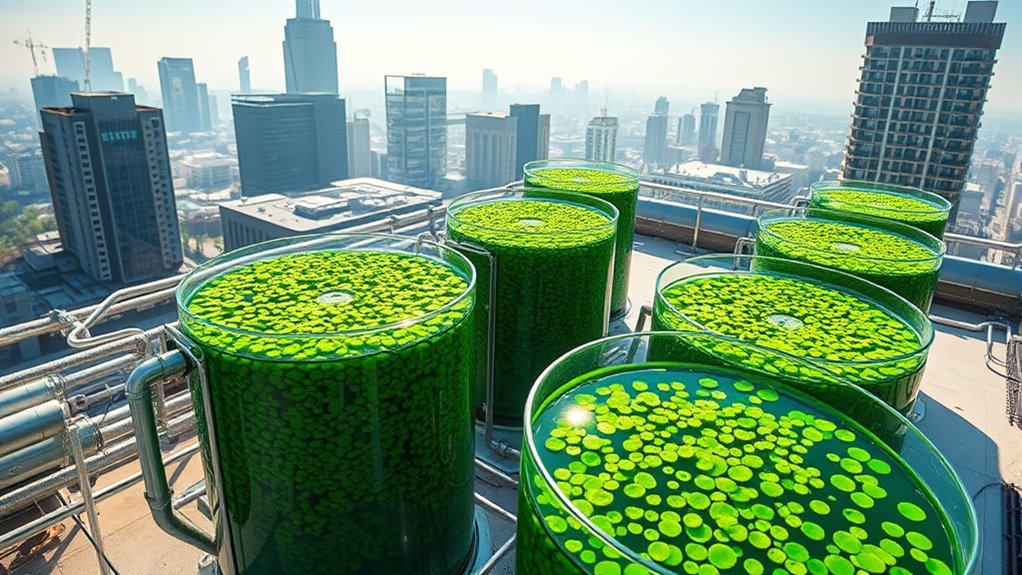
Implementing rooftop algae bioreactors presents several challenges that need careful planning and consideration. First, you must conduct a thorough cost analysis to ensure the project is financially feasible, including installation, maintenance, and energy costs. Second, regulatory hurdles can delay or complicate deployment; staying compliant with local building codes and environmental laws is essential. Third, you need to evaluate structural integrity to support the added weight and ensure safety standards are met. Fourth, climate factors like wind, sunlight, and temperature variations can impact algae growth and system efficiency. Addressing these challenges upfront helps you avoid costly setbacks and guarantees your project aligns with legal requirements and environmental goals. Proper planning maximizes the bioreactor’s benefits while minimizing risks.
Future Potential and Innovations in Algae-Based Air Quality Solutions

Advancements in algae bioreactor technology are paving the way for more efficient and versatile air quality solutions. With ongoing improvements in algae cultivation methods, you can expect higher productivity and better pollutant absorption. Innovations such as modular systems and smart controls allow for scalable deployment in urban spaces, enhancing air pollution mitigation efforts. Researchers are exploring genetically optimized algae strains that absorb more CO₂ and other pollutants, making bioreactors even more effective. Future developments may integrate algae bioreactors with renewable energy sources, reducing operational costs and environmental impact. Additionally, addressing regulatory compliance challenges will be essential to facilitate widespread adoption and ensure safety standards. As technology evolves, you’ll see these systems become more accessible and adaptable, transforming rooftops and urban landscapes into active air purification hubs. This progress holds significant promise for cleaner air and healthier cities worldwide.
Frequently Asked Questions
How Much Oxygen Can Rooftop Algae Bioreactors Produce Annually?
You might wonder how much oxygen rooftop algae bioreactors can produce annually. Based on algae growth rates and bioreactor efficiency, a well-designed system could generate thousands of liters of oxygen each year. The actual output depends on factors like algae species, sunlight, and system size. With optimized conditions, these bioreactors can considerably contribute to urban air purification, turning smog into breathable oxygen while supporting sustainable city living.
What Maintenance Is Required for Algae Bioreactor Systems?
Imagine you’re maintaining an algae bioreactor system, like in a recent case where regular upkeep increased efficiency. You’ll need to perform algae system cleaning to prevent buildup and guarantee ideal oxygen output. Also, bioreactor component inspection helps catch any wear or damage early. Routine checks and cleaning are essential to keep the system running smoothly, maximize oxygen production, and prolong its lifespan.
Are Algae Bioreactors Safe for Urban Wildlife?
You might wonder if algae bioreactors are safe for urban wildlife. They are designed to minimize risks and typically don’t disturb wildlife interaction or ecosystem balance. Proper installation and maintenance guarantee they won’t leak harmful substances or block natural habitats. When managed responsibly, algae bioreactors can coexist with local ecosystems, offering benefits like improved air quality without disrupting wildlife or compromising the delicate balance of urban ecosystems.
How Do Algae Bioreactors Impact Local Building Energy Efficiency?
You’ll find that algae bioreactors boost your building’s energy efficiency by enhancing urban air purification and supporting renewable energy integration. They help insulate your structure, reducing heating and cooling needs, which cuts energy costs. Additionally, they harness natural processes to clean the air, creating a healthier environment. This innovative approach not only optimizes your building’s performance but also contributes positively to sustainable urban development.
Can Algae Systems Be Integrated With Existing City Infrastructure?
Thinking about urban planning, you might wonder if algae systems can just slip into existing city infrastructure like a stubborn puzzle piece. Sure, with some clever infrastructure integration, you could turn rooftops and walls into tiny oxygen factories. It’s almost like giving your city a gust of fresh air—literally. While tricky, integrating algae bioreactors into current systems could revolutionize our urban environments, making them cleaner and greener without starting from scratch.
Conclusion
By harnessing rooftop algae bioreactors, you become a guardian of urban breathability, transforming smog into life-giving oxygen. These green sentinels act as your city’s lungs, quietly working to clear the haze and restore vitality. Embracing this innovative solution means planting seeds of change in concrete jungles, where each breath becomes a confirmation to human ingenuity. Together, you can turn rooftops into lush sanctuaries, breathing hope back into the city’s very soul.