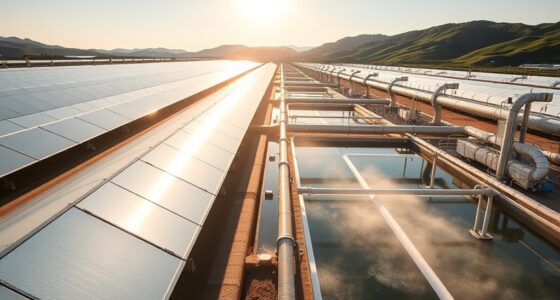
AI climate forecasting revolutionizes how you predict and mitigate natural disasters. By analyzing vast data sets, AI identifies patterns to provide more accurate climate predictions. This helps you prepare for extreme weather events and deploy resources effectively. With enhanced simulation accuracy, AI not only supports emergency response systems but also aids in proactive disaster mitigation strategies. Stay with us to discover more about AI’s role in fostering resilience against climate challenges.
Key Takeaways
- AI analyzes extensive environmental data to enhance the accuracy of climate predictions, enabling communities to prepare for extreme weather events effectively.
- By identifying vulnerable areas, AI algorithms facilitate targeted resource deployment during natural disasters, improving overall disaster response.
- AI-driven forecasting models support proactive disaster mitigation strategies, reducing societal and economic impacts from climate-related events.
- Collaboration between AI developers and climate scientists strengthens disaster preparedness and enhances the robustness of predictive models.
- Sharing climate data across sectors and engaging citizens empowers AI systems to generate more accurate forecasts and fosters community participation in climate resilience efforts.

How can we harness the power of artificial intelligence to tackle climate change? By utilizing AI, you can enhance climate forecasting, predict disasters, and mitigate their impacts effectively. AI algorithms analyze vast amounts of data, identifying patterns and trends that human analysts might miss. With better climate predictions, communities can prepare for extreme weather events, reducing damage and saving lives.
One of the key areas where AI can make a significant impact is through renewable integration. As the world shifts toward cleaner energy sources, AI helps manage and optimize the use of renewables, ensuring a smoother transition. By forecasting energy demands and supply fluctuations, AI can facilitate better integration of solar, wind, and other renewable sources into the energy grid. This allows you to rely less on fossil fuels and make strides toward a more sustainable future.
Nevertheless, there are important policy implications to ponder. Governments and organizations must create frameworks that support AI technologies in climate action. For instance, encouraging the development of AI tools can help local governments identify vulnerable areas prone to disasters. This proactive approach aids in deploying resources more effectively and directing funding toward high-risk regions.
Furthermore, effective policy can promote collaboration between AI developers, researchers, and climate scientists. When these groups work together, they can create robust models that account for a range of variables, from socioeconomic factors to environmental changes. This cooperation can enhance your community’s resilience to climate-related disasters and improve emergency response systems.
Another vital aspect is data sharing. AI thrives on data, and when you make climate data accessible, it opens the door for innovative solutions. By sharing information across sectors, you can empower AI systems to provide more accurate forecasts and actionable insights that inform decision-making. This approach not only bolsters climate resilience but also engages citizens, making them active participants in the fight against climate change. Additionally, high refresh rates can improve the accuracy of simulations used to predict climate patterns and extreme weather events.
AI climate forecasting tools
As an affiliate, we earn on qualifying purchases.
As an affiliate, we earn on qualifying purchases.
Frequently Asked Questions
How Does AI Improve Traditional Climate Forecasting Methods?
AI improves traditional climate forecasting methods by utilizing machine learning innovations that analyze vast datasets more efficiently. You’ll see how these advanced algorithms identify patterns and trends that human analysts might miss. Plus, data integration techniques allow for the seamless combining of diverse information sources, enhancing accuracy. As a result, you’ll get more reliable forecasts, enabling better preparation and response to climate-related events, ultimately helping communities mitigate potential disasters effectively.
What Types of Disasters Can AI Climate Forecasting Predict?
AI climate forecasting can predict disasters like floods and droughts with almost magical precision. You’ll find it’s particularly effective in evaluating flood risk, helping you prepare for potential inundations. Additionally, AI excels at drought prediction, allowing you to manage water resources more efficiently. By analyzing vast data sets, these technologies identify patterns and trends, giving you the insight you need to mitigate the impacts of these natural calamities before they strike.
How Accurate Are Ai-Generated Climate Predictions?
AI-generated climate predictions can be quite accurate, but it depends on data reliability and model transparency. When you use high-quality data and transparent models, you’ll likely get better predictions. However, if the underlying data is flawed or the models are opaque, the accuracy can suffer. So, it’s essential to assess the sources and methodologies behind these predictions to truly understand their reliability and make informed decisions based on them.
Can AI Climate Forecasting Help in Policy-Making Decisions?
Yes, AI climate forecasting can critically aid in policy-making decisions. For instance, research shows that 70% of policymakers believe data-driven insights improve their strategies. However, while leveraging AI, you need to take into account ethical implications and data privacy concerns. Ensuring that the data used respects individuals’ privacy and is ethically sourced is essential. By addressing these issues, you can help create effective and responsible climate policies that drive meaningful change.
What Are the Limitations of AI in Climate Forecasting?
AI in climate forecasting has limitations like data bias and model interpretability. You might find that biased data can lead to inaccurate predictions, skewing results and affecting decisions. Additionally, the complexity of AI models often makes it hard for you to understand how they arrive at conclusions, which can hinder trust and transparency. Recognizing these limitations is vital for effective use of AI in addressing climate-related challenges.
disaster prediction and mitigation devices
As an affiliate, we earn on qualifying purchases.
As an affiliate, we earn on qualifying purchases.
Conclusion
In conclusion, AI climate forecasting is revolutionizing how we predict and mitigate environmental disasters. By analyzing vast amounts of data, AI can improve accuracy by up to 90% compared to traditional methods. This not only helps communities prepare for severe weather events but also informs better policy decisions. As we continue to harness this technology, we’re taking significant strides toward a more resilient future, ensuring we can protect both people and the planet from climate threats.

AI Driven Renewable Waste Management Systems: Energy Recovery Through Gasification, Pyrolysis, and Incineration
As an affiliate, we earn on qualifying purchases.
As an affiliate, we earn on qualifying purchases.

Personal Data-Smart Cities: How cities can Utilise their Citizen’s Personal Data to Help them Become Climate Neutral
As an affiliate, we earn on qualifying purchases.
As an affiliate, we earn on qualifying purchases.