📊 Full opportunity report: Youth Basketball Highlights And Stats From Game Video on IdeaNavigator AI — validation score, market gap, and execution plan.

Prime made for students and young adults
- Fast, free delivery for dorm and study essentials
- Prime Video and Amazon Music included
- Member-only deals
TL;DR
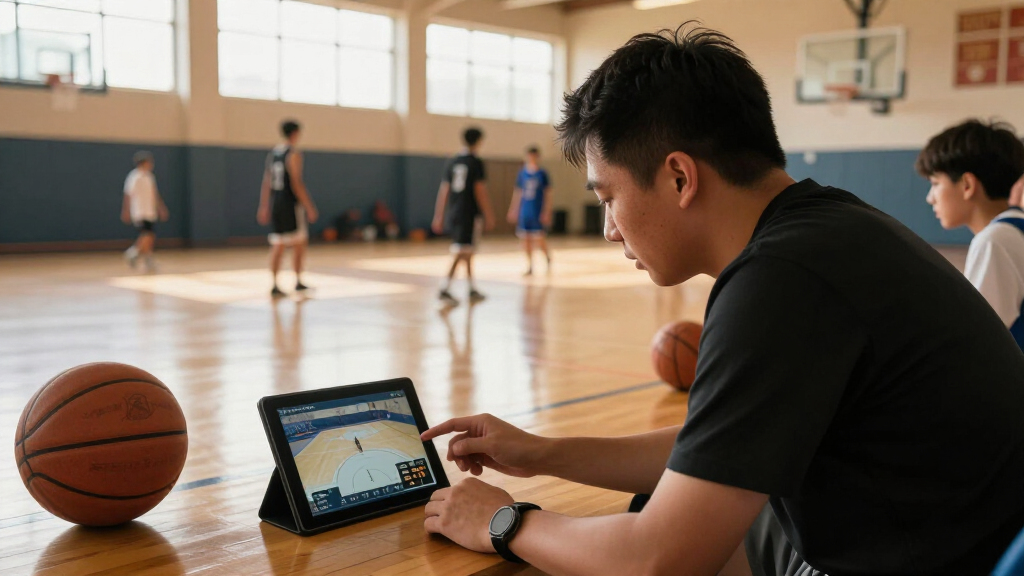
IdeaNavigator AI has outlined a business concept for an app that would use phone-recorded youth basketball games to create player-specific highlight reels and stat lines. The proposal is not a report of a launched product or validated results; it recommends testing the workflow on 100 games and measuring accuracy and subscription interest.
IdeaNavigator AI has proposed a basketball video app that would turn parents’ phone recordings of youth and recreational games into player-specific highlight reels and game statistics. The concept targets families without access to higher-cost team video services, but the proposal reports no existing product, accuracy results or paying customers.
The proposed app would let a family upload a game video and identify the player it wants to follow. It would then attempt to detect that player and basketball events such as shots, rebounds and steals, assemble selected clips into a highlight reel, add score overlays, and generate a stat line for the game. A shareable season profile would collect a player’s material across games.
The stated problem is that youth and recreational games are often recorded on phones, while turning those recordings into useful clips or statistics can take hours of manual work. IdeaNavigator AI frames the potential customer as a parent or player seeking highlights and stats without a program-level budget for established video services. The proposal suggests a family subscription for a season, alongside a possible charge for each exported reel.
For an initial test, the concept recommends processing 100 games recorded by parents, then measuring satisfaction with highlight accuracy and testing whether families would buy a season subscription at AAU tournaments. These are proposed validation steps, not completed trials. No pricing, technical performance figures or results from prospective customers are supplied.
A Lower-Cost Route to Game Footage
If the workflow proves reliable and affordable, it could make organized game records more accessible to families whose teams do not have dedicated filming or analysis systems. A searchable reel and consistent stat history may help players review performance and give families material to share with coaches or include in profiles. Those uses are possible outcomes, not demonstrated benefits of a product currently in operation.
The proposal’s practical test is whether automated processing can save enough time while identifying the right player and events accurately. Incorrect player tracking or event counts could make a reel misleading and weaken trust in the season profile. Willingness to pay is also unresolved: the suggested subscription and per-reel export model needs testing with families, rather than being treated as established demand.
Popular right now

Ninja CREAMi 7-in-1 Ice Cream Maker, NC301

Ninja NC501 CREAMi XL Deluxe 11-in-1 Ice Cream and Frozen Treat Maker

Dyson Cyclone V10 Origin Cordless Vacuum
As an affiliate, we earn on qualifying purchases.
From Phone Recording to Player Profile
The concept rests on a shift from manually reviewing game recordings toward using computer vision to identify people and events in video. IdeaNavigator AI says on-device vision models can track players and recognize events such as shots, rebounds and steals in ordinary phone footage. The proposal provides no benchmark, product demonstration or independent technical evidence for that capability in the varied conditions of youth games.
Its suggested workflow is narrower than a general sports analytics platform: families upload footage, select a player, and receive clips, a game stat line and an ongoing profile. That focus defines both the opportunity and the challenge. A system designed around one player still has to distinguish that player from teammates and opponents as they move, overlap, leave the frame or appear at different distances in recordings made from changing positions.
Accuracy, Costs and Demand Remain Open
The proposal does not establish whether the suggested vision system can consistently follow a selected player or correctly count events in typical phone recordings. It gives no accuracy rates, details about how stats would be checked, or explanation of how the app would handle obstructed views, poor lighting, camera movement or score information that is not visible in the footage.
It is also unclear whether processing would happen on a phone or on remote servers, what the service would cost to operate, how long families would wait for results, and how video and player data would be stored or shared. No company, launch schedule, subscription price, customer commitments or tournament partnerships are identified. Until a trial is completed, both the technical feasibility and the commercial opportunity remain unverified.
A 100-Game Trial Is Proposed
The next step laid out in the concept is to process 100 games filmed by parents and ask users whether the resulting highlights are accurate and useful. A meaningful evaluation would need to distinguish player-identification errors from missed or misclassified events, although the proposal does not specify a scoring method or acceptance threshold.
It also calls for testing season-subscription conversion at AAU tournaments. No dates or locations are given, and there is no indication that either test has begun. Until results or a product announcement are available, the idea should be understood as an early business proposal rather than a functioning service.
Source: IdeaNavigator AI
Key Questions
Is the basketball video app available now?
The material describes a proposed app concept. It does not provide a product launch, sign-up link or release date.
What would the app produce from a game video?
The proposed features include a selected player’s highlight reel, score overlays, game stat line and shareable season profile. None is reported as a tested product feature.
How would the concept be tested?
IdeaNavigator AI proposes processing 100 games filmed by parents, assessing satisfaction with highlight accuracy and testing season-subscription interest at AAU tournaments.
Are the player-tracking and statistics accurate?
No accuracy results are provided. The concept identifies tracking and event detection as intended capabilities, but their performance on ordinary youth-game footage remains unverified.
How would families pay for the service?
The proposed model combines a family subscription per season with possible per-reel export charges. The proposal does not give prices or evidence of customer conversion.
Source: IdeaNavigator AI