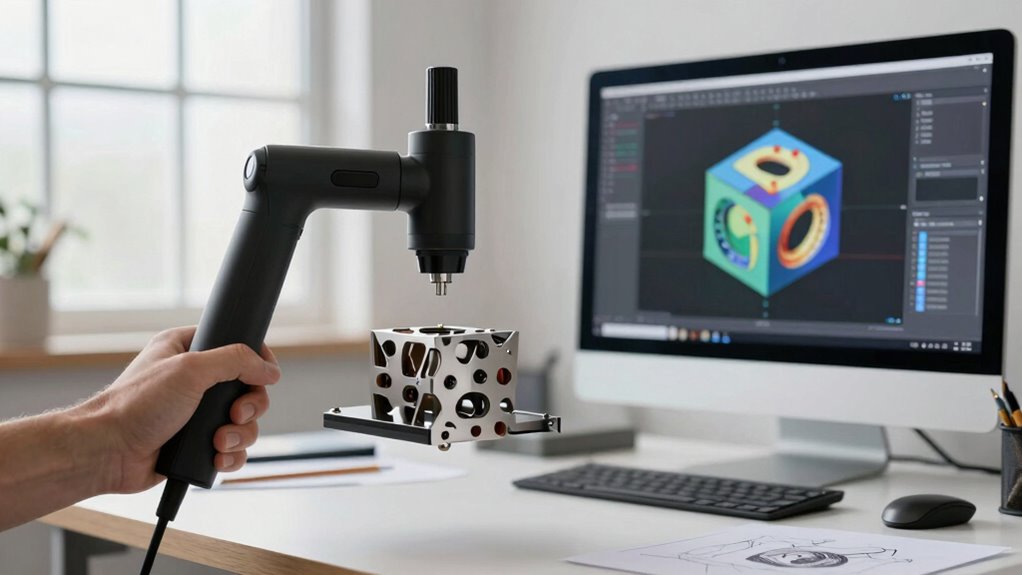

Looking for the best 3D scanners in 2026? The Creality CR-Scan Raptor stands out for its high accuracy and fast performance, making it ideal for detailed scanning tasks. The Revopoint POP 4 offers advanced AI segmentation for precise models, suitable for professional use. Meanwhile, the Creality Pika provides a compact, high-accuracy option with AI-powered features for on-the-go scanning. Choosing the right 3D scanner involves balancing factors like accuracy, speed, and ease of use, with tradeoffs often between price and performance. Continue reading for a detailed breakdown of these top picks and how they compare.

Prime made for students and young adults
- Fast, free delivery for dorm and study essentials
- Prime Video and Amazon Music included
- Member-only deals
Key Takeaways
- High-speed scanners like the Creality CR-Scan Raptor excel in capturing large objects quickly, but may sacrifice some detail compared to more precise models.
- AI features, seen in the Revopoint POP 4 and Pika, significantly enhance scan quality and post-processing ease, especially for complex surfaces.
- Entry-level options like the 3DMakerpro Fox provide great value for small projects but may lack the accuracy needed for professional manufacturing.
- Portability varies widely; compact scanners like the Creality Pika are ideal for fieldwork, while larger units tend to be more stable for detailed studio work.
- Many scanners struggle with reflective or transparent surfaces, so understanding your typical scan subjects helps avoid costly mistakes.


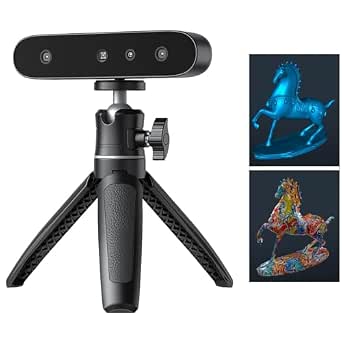


| 3d scanner | Accuracy | Resolution |
|---|---|---|
| Creality CR-Scan Raptor 3D Sca | — | — |
| 3DMakerpro Fox 3D Scanner | 0.07mm | — |
| Creality 3D Scanner CR-Scan Fe | — | 0.1 millimeters |
| Revopoint POP 4 3D Scanner | 0.03 mm | — |
| Creality CR-Ferret SE 3D Scann | 0.1mm | 0.16mm |
| Revopoint MetroY Ultra 3D Scan | 0.01 mm | 0.05 mm |
| Creality CR-Scan Ferret Pro 3D | 0.1mm | 0.16mm |
| 3DMakerpro Fox Entry-Level Med | 0.07mm | 0.10mm |
| Creality Pika Portable 3D Scan | 0.03mm | — |
| Revopoint MIRACO Plus 3D Scann | — | 2 Megapixels |
More Details on Our Top Picks
Creality CR-Scan Raptor 3D Scanner, 60fps Blue Laser & NIR, 0.02mm Accuracy, 24-Bit Color, Scans 5-2000mm Objects, Anti-Shake Tracking for Windows macOS
The Creality CR-Scan Raptor stands out for its exceptional 0.02mm accuracy, making it ideal for detailed industrial and medical applications. Its dual-mode blue laser and NIR technology allow flexibility, especially when compared to other high-precision scanners like the Revopoint POP 4, which offers slightly less accuracy but at a higher price point. The fast 60fps scan speed accelerates workflows, yet it demands a high-performance PC, limiting portability. Safety precautions due to blue laser exposure are necessary, and compatibility is limited to recent operating systems, which could be a barrier for some users. Overall, this model suits professionals who need detailed, large-scale scans and are prepared for the hardware requirements.
Pros:- Exceptional 0.02mm accuracy for detailed scans
- Versatile dual-mode laser and NIR operation
- Fast scanning with 60fps capture speed
- Suitable for objects from small to very large sizes
Cons:- Requires high-end PC hardware, limiting portability
- Blue laser safety precautions are necessary
- Limited OS compatibility to recent Windows and macOS versions
Best for: Professionals needing high-precision, large object scans in a studio or lab environment.
Not ideal for: Hobbyists or casual users seeking portability and simple setup, as it requires powerful hardware and safety measures.
- Scanning Accuracy:0.02mm
- Laser Lines:7 parallel blue laser lines
- Scan Speed:60fps (blue laser), 20fps (NIR)
- Object Size Range:5×5×5 mm to 2000×2000×2000 mm
- Safety Class:Class 1 Blue Light
- System Requirements:Windows i7-Gen7, Nvidia 6GB, 16GB RAM; macOS M/M2/M3, 16GB RAM
Our verdict“This scanner is best suited for professionals demanding high accuracy and versatility in a stable environment.”
3DMakerpro Fox 3D Scanner, 0.07mm Accuracy, Entry-Level for Small to Large Objects
The 3DMakerpro Fox offers a balanced entry into 3D scanning with a respectable 0.07mm accuracy and markerless tracking, making it a good choice for hobbyists and small-scale projects. Compared to the Revopoint POP 4, it provides similar export options and supports objects up to 1200mm, but its performance heavily depends on a capable PC with a dedicated GPU, and it has a steeper learning curve. While its software, JMStudio, is functional, beginners might find it less intuitive than handheld options like the Creality CR-Scan Ferret Pro. This model is a practical choice for those willing to invest time into learning the software for detailed, small-to-medium object scans.
Pros:- Decent 0.07mm accuracy for detailed models
- Markerless tracking simplifies setup
- Supports a wide range of object sizes up to 1200mm
- Multiple export formats for flexible use
Cons:- Performance depends on a capable PC with dedicated GPU
- Learning curve for software and operation
- Not as fast or intuitive as some handheld scanners
Best for: Hobbyists or small business owners needing accurate scans without professional-grade hardware investments.
Not ideal for: Users requiring ultra-high precision or easy plug-and-play operation, as setup and learning curve can be challenging.
- Accuracy:0.07mm
- Object Size Range:40mm to 1200mm
- Optimal Working Distance:150–400mm
- Software:JMStudio
- Export Formats:OBJ, STL, PLY, ASC
- Power:65W
Our verdict“This scanner is suitable for committed hobbyists and small-scale professionals comfortable with software learning curves.”
Creality 3D Scanner CR-Scan Ferret Pro for 3D Printing
The Creality CR-Scan Ferret Pro is designed with ease of use in mind, offering wireless, full-color scanning that appeals to hobbyists and newcomers. Its 0.1mm resolution balances detail with simplicity, and the included kit makes it straightforward to start scanning objects from 50mm to 2000mm. Compared to larger, professional-grade scanners like the CR-Scan Raptor, it sacrifices some precision for portability and user-friendliness. However, its surface limitations—such as difficulty capturing reflective or transparent objects—are notable drawbacks for more advanced projects. This model provides a good entry point for 3D printing enthusiasts looking for quick, colorful scans without heavy technical overhead.
Pros:- Easy to set up and operate for beginners
- Wireless, portable design for on-the-go scanning
- High-precision full-color 3D models
- Includes comprehensive accessories for versatility
Cons:- Limited effectiveness on reflective, transparent, or dark surfaces
- Not suitable for very small or highly detailed objects
- Dependent on compatible hardware and software for best results
Best for: Beginners or hobbyists seeking portable, full-color scans for 3D printing projects.
Not ideal for: Advanced users requiring high precision or scanning reflective, transparent, or highly detailed objects like jewelry.
- Scanner Type:3D handheld
- Resolution:0.1 millimeters
- Color Depth:24 bits_per_pixel
- Weight:105g
- Supported OS:Windows 10/11, macOS, Android 10+, iOS 15+
- Compatibility:iPhone 11+, Android devices
Our verdict“This scanner is ideal for newcomers wanting colorful, portable scans for general 3D printing applications.”
Revopoint POP 4 3D Scanner, AI Segmentation, for 3D Printing, Premium
The Revopoint POP 4 offers a combination of high accuracy (0.03mm) and rapid scanning speeds, making it well-suited for detailed reverse engineering and large model creation. Its AI segmentation feature streamlines post-processing, especially compared to the simpler software of the Creality Ferret Pro. With capabilities for outdoor and all-weather scanning, it broadens the use cases beyond typical indoor environments, although its software, Revo Scan 6, remains Windows-only and incurs additional costs. This model appeals to professionals who prioritize speed and precision but are prepared for the higher investment and software learning curve involved.
Pros:- High 0.03mm accuracy for precise modeling
- Fast scanning at 105 fps with high point cloud throughput
- AI segmentation simplifies cleanup and editing
- All-weather outdoor functionality
Cons:- Revo Scan 6 software is Windows-only and paid
- High cost may be prohibitive for casual users
- Advanced features require additional software purchases
Best for: Industrial designers and engineers needing high-accuracy scans for complex projects and outdoor environments.
Not ideal for: Casual hobbyists or users without a powerful Windows system, as the software and hardware requirements can be demanding.
- Accuracy:0.03 mm
- Volumetric Accuracy:0.03 mm + 0.05 mm x L
- Frame Rate:up to 105 fps
- Point Cloud Speed:5,000,000 points/sec
- Scan Volume:10x10x10 mm to 2x2x2 m
- Battery Life:up to 4 hours
Our verdict“This scanner is tailored for professionals needing rapid, precise, and versatile scanning in demanding environments.”
Creality CR-Ferret SE 3D Scanner for 3D Printing, Anti-Shake, 0.1mm Precision, 30FPS, Full-Color, Desktop 3D Scanner for Body Hair and Non-Reflective Objects
The Creality CR-Ferret SE offers a practical balance of 0.1mm accuracy and 30FPS speed, making it suitable for capturing full-color models of non-reflective objects like body parts or prototypes. Its anti-shake technology enhances stability, reducing errors in the final models. Compared to larger, more expensive scanners like the CR-Scan Raptor, it excels in desktop environments and for those who need colorful, detailed scans without the complexity of high-end equipment. Its limitations in handling reflective or dark surfaces mean it’s less suited for jewelry or metallic objects unless additional spray is used. For users focused on body modeling or artistic projects, this model provides a straightforward and reliable option.
Pros:- Good balance of accuracy and speed for detailed models
- Full-color capture with anti-shake technology
- Effective for black and metallic objects without spray
- Vibrant color reproduction enhances realism
Cons:- Limited effectiveness on reflective or transparent surfaces
- Not portable—desktop use only
- Requires good lighting and surface conditions for best results
Best for: Artists, body modeling enthusiasts, and hobbyists working with non-reflective objects in a desktop setting.
Not ideal for: Users needing to scan reflective, transparent, or highly detailed small objects like jewelry or tiny mechanical parts.
- Accuracy:0.1mm
- Resolution:0.16mm
- Scanning Speed:30FPS
- Color Camera:2MP
- Scanning Range:150mm to 2000mm
- Object Compatibility:Black and metal objects without spray
Our verdict“This scanner is ideal for artists and hobbyists seeking vivid, detailed color scans of non-reflective objects in a desktop setup.”
Revopoint MetroY Ultra 3D Scanner, Up to 90 FPS, for 3D Printing, Standard
The Revopoint MetroY Ultra stands out for its remarkable accuracy of up to 0.01 mm and blazing fast scanning speed of 90 FPS, making it ideal for capturing complex objects swiftly. Compared to the Creality CR-Scan Ferret Pro, which offers a slightly lower accuracy of 0.1 mm, the MetroY Ultra delivers finer detail, but this comes with higher hardware demands and weight. Its wireless control and ability to scan dark or shiny surfaces without spray make it highly versatile in the field. However, the need for high-performance hardware limits portability and accessibility, especially for casual users. This model makes the most sense for professionals working on detailed, rapid scans where accuracy and speed are priorities, and the environment can support its hardware requirements.
Pros:- Exceptional accuracy of 0.01 mm for detailed captures
- Fast scanning at 90 FPS saves time on complex objects
- No spray needed for reflective or dark surfaces
Cons:- Requires high-end hardware, limiting accessibility
- Relatively heavy at 450 g, affecting field portability
Best for: Industrial professionals and engineers needing high precision in demanding environments
Not ideal for: Hobbyists or casual users with less powerful hardware or portable needs
- Scanner Type:3D Scanner
- Connection Type:USB, Wi-Fi
- Resolution:0.05 mm
- Accuracy:0.01 mm
- Item Weight:450 g
- Minimum System Requirements:macOS: CPU M2 Pro, RAM ≥ 16 GB; Windows: CPU Intel i7 13th Gen or AMD Ryzen 7 5800, RAM ≥ 32 GB, GPU NVIDIA GeForce RTX 3060 (8GB)
Our verdict“This scanner is best suited for professionals who demand high accuracy and speed in controlled or well-equipped environments.”
Creality CR-Scan Ferret Pro 3D Scanner for 3D Printing
The Creality CR-Scan Ferret Pro offers a solid balance between accuracy (0.1 mm) and portability, with a 30 FPS scan rate that makes it suitable for quick outdoor or on-site captures. Unlike the Revopoint MIRACO Plus, which excels in photogrammetric detail, the Ferret Pro prioritizes ease of use and robustness in varied environments. Its wireless capabilities and support for multiple formats, including OBJ, STL, and PLY, make it versatile for reverse engineering and modeling tasks. However, it may struggle with highly reflective or transparent surfaces, similar to other handheld scanners. This model is ideal for contractors and field engineers who need reliable outdoor scans without sacrificing too much detail, but it’s less suited for ultra-fine work or complex reflective materials.
Pros:- Reliable outdoor performance in bright environments
- Wireless connectivity for easy mobility
- Supports multiple formats for diverse applications
Cons:- Limited to 0.1 mm accuracy, less detailed than high-end models
- May struggle with reflective or transparent objects
Best for: Field engineers and contractors needing portable outdoor scanning
Not ideal for: Studio professionals requiring ultra-high detail or working with transparent surfaces
- Accuracy:0.1mm
- Resolution:0.16mm
- Frame Rate:30FPS
- Wireless Technology:WiFi 6
- Weight:2.81 pounds
- Supported Formats:OBJ, STL, PLY
Our verdict“This scanner makes the most sense for professionals who prioritize portability and outdoor usability over ultra-fine resolution.”
3DMakerpro Fox Entry-Level Medium-Format 3D Scanner for 3D Printing
The 3DMakerpro Fox offers an accessible entry point into 3D scanning with a decent accuracy of 0.07 mm and resolution of 0.10 mm, making it suitable for hobbyists and small projects. Its markerless AI visual tracking simplifies the scanning process, and the integrated JMStudio software guides users through editing and optimization. Compared with more advanced models like the Revopoint MIRACO Plus, it lacks some professional-grade features but provides enough quality for educational or small-scale prototyping. Its performance, however, depends heavily on the user’s handling and environment, and it may not meet the demands of complex or highly reflective surfaces. This makes it ideal for beginners starting out but less suitable for detailed, industrial applications.
Pros:- High accuracy and resolution for a beginner-level device
- User-friendly with integrated software
- Markerless AI tracking simplifies operation
Cons:- Limited to basic features, lacking advanced professional tools
- Performance varies with environment and user skill
Best for: Hobbyists and beginners exploring 3D scanning for personal projects
Not ideal for: Professionals needing ultra-high precision or complex scanning workflows
- Accuracy:0.07mm
- Resolution:0.10mm
- Software:JMStudio
- Tracking:Markerless AI
- Item Dimensions:Unknown
- Item Weight:Unknown
Our verdict“This scanner suits beginners and hobbyists looking for a straightforward, affordable way to start 3D scanning projects.”
Creality Pika Portable 3D Scanner, 0.03mm High Accuracy, Dual-Mode 7 Blue Laser & NIR Structured Light, AI-Powered Body Completion & Retexturing, Marker-Free, 110 FPS, Wi-Fi 6, 3″ Touchscreen
The Creality Pika is a compact, lightweight scanner weighing just 260g, yet it offers impressive accuracy of 0.03 mm and a high frame rate of 110 FPS. Its dual-mode blue laser and NIR structured light enable detailed scans of complex surfaces, including bodies, with AI-powered body completion and retexturing features. Its portability makes it stand out among larger, less mobile units, and the 3-inch touchscreen provides quick access to controls. Compared to the Revopoint MIRACO Plus, which emphasizes versatility and color, the Pika excels in high-precision, marker-free scanning suited for detailed modeling on the go. Its cost can be a barrier for casual users, and the small touchscreen might be limiting for some. This product is best for professionals or advanced hobbyists who need high accuracy in a portable format.
Pros:- Exceptional accuracy of 0.03 mm in a portable form
- Fast scanning with 110 FPS for dynamic objects
- Supports dark and metallic surfaces without spray
Cons:- High cost relative to simpler portable scanners
- Small 3-inch touchscreen may limit detailed control
Best for: Mobile professionals and body scanning experts needing high precision in the field
Not ideal for: Casual users or those who prefer larger screens for detailed control
- Weight:260g
- Size:100x60x35mm
- Accuracy:0.03mm
- Frame Rate:110 FPS
- Display:3-inch HD touchscreen
- Connectivity:Wi-Fi 6
Our verdict“This scanner is ideal for professionals needing portable, high-precision scans with AI features, especially in body or artifact capture scenarios.”
Revopoint MIRACO Plus 3D Scanner, All-in-One Scan for 3D Printing
Compared to the Creality CR-Scan Ferret Pro, which is geared toward outdoor and quick scans, the Revopoint MIRACO Plus offers dual modes—photogrammetric and optical—for high-resolution, detailed color and geometry capture. Its portability and 2 MP resolution make it suitable for small to large objects, with the added advantage of color fidelity. However, its software, sold separately, and the need for a compatible x86_64 system can complicate setup for some users. This pick makes the most sense for professionals who need comprehensive, detailed scans for 3D printing or reverse engineering, but it may be overkill for casual or hobbyist users who do not require color or high-resolution detail.
Pros:- High-resolution color and geometric scanning
- Portable and lightweight with long battery life
- Supports multiple export formats and dual modes
Cons:- Revo Design software sold separately, adding cost and complexity
- Complex setup can challenge less experienced users
Best for: Professionals and advanced hobbyists focused on detailed 3D printing and reverse engineering
Not ideal for: Beginners or users with limited technical setup experience
- Scanner Type:3D Scanner
- Connection Type:USB
- Resolution:2 Megapixels
- Color Depth:24 bpp
- Light Source Type:Class 1 Infrared
- Item Weight:0.75 kg
Our verdict“This scanner fits those needing detailed, color-rich scans for professional 3D printing and reverse engineering, with a tradeoff of more complex setup and cost.”
How We Picked
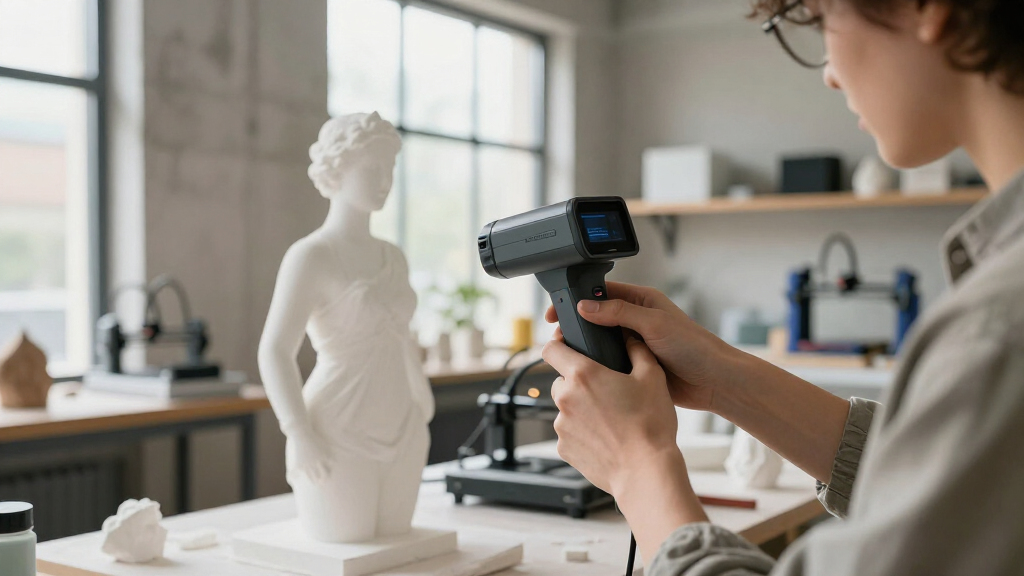
These 3D scanners were evaluated based on a combination of performance metrics, usability, build quality, and value for money. Scan accuracy and speed are the primary technical criteria, as they determine the detail and efficiency of each device. We also considered ease of setup, software support, and compatibility with common operating systems. Cost was a factor, but not at the expense of essential features, ensuring that both budget-friendly and premium options are fairly represented. Products were ranked to highlight those best suited for different use cases, from casual hobbyists to professional engineers.Factors to Consider When Choosing 3d Scanners
Choosing the right 3D scanner involves more than just looking at specs. It’s important to understand your specific needs, whether for hobbyist projects, professional manufacturing, or something in between. Factors like accuracy, speed, and ease of use can influence how well a scanner fits your workflow. Additionally, consider the types of objects you’ll scan and the environment you’ll work in, as these can dramatically impact performance. Being aware of common pitfalls, such as overpaying for unnecessary features or selecting a device incompatible with your setup, can save both time and money.Accuracy and Resolution
The precision of a 3D scanner determines the level of detail captured, which is crucial for applications like reverse engineering or quality control. High-accuracy devices can capture details down to 0.02mm, but often come at a higher price and may require more training. Conversely, entry-level models with 0.1mm accuracy are suitable for less detailed projects but may not suffice for professional manufacturing. Balancing accuracy with your project needs helps avoid overspending on features you won’t use.
Speed and Workflow Efficiency
Scan speed impacts how quickly you can complete projects, especially with large or multiple objects. Faster scanners, like those with 60+ fps, reduce wait times and increase productivity but might compromise some detail or require more sophisticated processing. Slower devices can produce higher-quality models but may lengthen project timelines. Understanding your throughput requirements ensures you select a scanner that aligns with your operational pace.
Ease of Use and Software Support
User-friendly interfaces and robust software are essential for minimizing learning curves and reducing errors. Some scanners come with dedicated apps that simplify calibration and post-processing, while others require more technical expertise. Compatibility with commonly used CAD or 3D printing platforms adds convenience, especially for those integrating scanning into broader workflows. Investing in a device with active software support can save headaches down the line.
Object Size and Surface Types
The size of objects you intend to scan influences scanner choice—small, handheld units excel with detail, while larger stationary models are better for bigger items. Surface reflectivity and transparency can hinder scanning accuracy, so it’s important to consider whether you’ll often scan reflective metals or glass. Some scanners include features like anti-shake or special lighting to improve results on challenging surfaces, which can be a worthwhile investment for specific use cases.
Portability and Setup
If you frequently need to scan on location, a portable, lightweight device becomes essential, like the Creality Pika. For studio environments, stability and setup time may take precedence, favoring larger, more robust scanners. Consider your environment—are you working in a controlled space or out in the field? The right balance between portability and stability ensures efficient workflows and reduces user fatigue.
Frequently Asked Questions
How accurate does a 3D scanner need to be for professional manufacturing?
For professional manufacturing, a scanner with at least 0.02mm accuracy is generally recommended to capture fine details and ensure precise reproductions. Higher accuracy models reduce the need for extensive post-processing or corrections, which can save time and improve quality. However, the choice also depends on the specific application; for example, reverse engineering may demand more detail than conceptual prototyping. Always match your scanner’s specs to your project’s tolerance requirements.
Can I scan transparent or reflective objects with these scanners?
Scanning transparent or highly reflective objects remains a challenge for most 3D scanners. Many models include features like anti-shake, special lighting, or structured light to mitigate these issues, but results may vary. For problematic surfaces, applying a temporary matte spray or coating can improve scan quality, though this adds extra steps. Knowing your typical object materials helps select a scanner with appropriate features or plan for post-processing adjustments.
Is it worth investing in a portable 3D scanner?
Portability is highly valuable if your work involves frequent site visits or on-location scanning. Portable scanners like the Creality Pika or Revopoint POP 4 enable quick, on-the-fly captures without sacrificing too much detail. However, these models often have slightly lower accuracy or slower speeds compared to stationary units. Weigh your need for mobility against your precision requirements to decide if a portable device offers sufficient performance for your projects.
What is the typical learning curve for new users?
The learning curve varies depending on the complexity of the scanner and its software. Entry-level models often feature simplified interfaces and automated calibration, making them accessible for beginners. More advanced scanners with complex features might require some technical knowledge or training to operate effectively. Choosing a device with comprehensive tutorials and user support can significantly shorten this learning period, especially for those new to 3D scanning.
How does price correlate with scanner performance?
Generally, higher-priced scanners offer better accuracy, faster speeds, and more advanced features like AI segmentation or multi-surface compatibility. However, this isn’t always necessary for casual users or hobbyists; many mid-range models provide sufficient quality for non-professional projects. Carefully assess your project needs and budget to avoid overspending on features you’ll never use or underinvesting in a device that hampers your workflow.
Conclusion
For those seeking the best overall performance, the Creality CR-Scan Raptor offers a balanced combination of speed, accuracy, and features. Budget-conscious buyers will find the 3DMakerpro Fox provides excellent value for small to medium projects. Professionals or serious enthusiasts aiming for top-tier quality should consider the Revopoint POP 4 or Creality Pika for their advanced features and portability. Beginners or casual users will benefit from easier-to-use, less expensive options like the entry-level 3DMakerpro Fox or the compact Creality Pika, depending on their specific needs. Understanding your workflow and project scope will help narrow down the ideal choice.
As an affiliate, we earn on qualifying purchases.Fall Picks
fall essentials