
TL;DR

Prime made for students and young adults
- Fast, free delivery for dorm and study essentials
- Prime Video and Amazon Music included
- Member-only deals
Hugging Face unveiled Microduck, a small, affordable robot designed for open reinforcement learning, aiming to democratize physical AI development. The device combines playful design with serious infrastructure, raising industry and privacy questions.
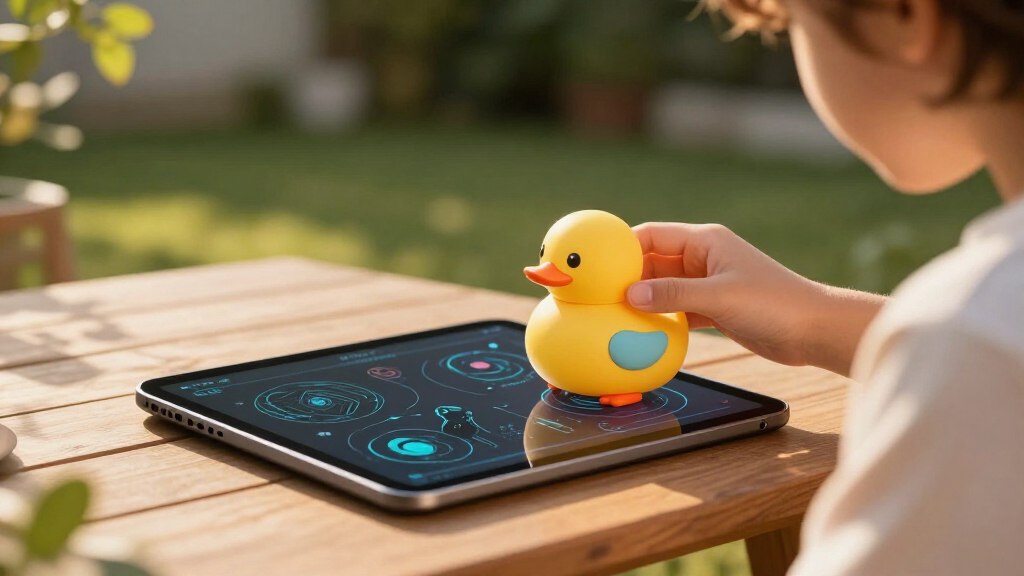
Hugging Face has introduced Microduck, a $399, open-source, programmable robot designed to facilitate reinforcement learning and physical AI experimentation. The device, built in partnership with Pollen Robotics, emphasizes accessibility and community involvement, marking a strategic shift in robotics development.
Microduck is a small, bipedal robot approximately 25 centimeters tall and weighing under 800 grams. It features 15 motors, dual IMUs for balance, a camera, microphone, speaker, WiFi, Bluetooth, and a LiDAR sensor. Capable of waddling, sitting, recovering from falls, and even rollerblading in demos, it serves as both a toy and a development platform. Preorders opened on Thursday, with shipments expected before Christmas, and the device is priced at $399.
Despite its playful appearance, Microduck is engineered for reinforcement learning research, with its hardware designed to tolerate falls and failures, enabling trial-and-error training. The device’s full SDK, simulation environment, and training stack are open-source on GitHub, allowing developers to read, fork, and retrain the system, emphasizing Hugging Face’s commitment to open, accessible AI infrastructure.
Open, Affordable Robotics for Broader AI Development
This launch represents a deliberate move to democratize physical AI development, making embodied reinforcement learning accessible to a broader community beyond well-funded labs. By providing an open, affordable platform, Hugging Face aims to accelerate innovation and experimentation in robotics, similar to its impact on language models. The approach could reshape how physical AI behaviors are developed, tested, and shared, fostering a more inclusive ecosystem that could lead to new applications and breakthroughs.programmable robot for reinforcement learning
As an affiliate, we earn on qualifying purchases.
As an affiliate, we earn on qualifying purchases.
Hugging Face’s Shift Toward Open-Source Physical AI
Hugging Face, known for popularizing open model weights and democratizing software AI, has recently expanded into robotics with the acquisition of Pollen Robotics in April 2025. The company’s previous robot, Reachy Mini, focused on communication, but Microduck marks a strategic pivot toward movement and embodied AI. The release comes amid broader industry discussions about the balance between open infrastructure and security, especially following recent breaches at other AI firms. The company is reportedly nearing acquisition by Nvidia at a valuation around $13 billion, which underscores its growing influence and the strategic importance of its open approach to AI and robotics development.“Microduck is made to move, ready to fall, and designed to make reinforcement learning accessible and safe at a small scale.”
— Clem Delangue, CEO of Hugging Face
As an affiliate, we earn on qualifying purchases.
Security and Privacy Risks of Open Physical AI
It remains unclear how Hugging Face plans to address potential security vulnerabilities inherent in open, network-connected robots like Microduck. The company’s recent breach at OpenAI highlights risks associated with open infrastructure, and similar concerns apply here, especially given the device’s data collection capabilities and home deployment.As an affiliate, we earn on qualifying purchases.
Next Steps for Microduck and Open-Source Robotics
Hugging Face will likely release further updates to the SDK and simulation environment, encouraging community experimentation and development. Monitoring how developers adopt Microduck and how security concerns are managed will be crucial. Additionally, the company’s ongoing negotiations or developments related to its potential acquisition by Nvidia could influence its strategic direction and resource allocation for open robotics projects.
As an affiliate, we earn on qualifying purchases.
Key Questions
What is Microduck designed for?
Microduck is designed as an open-source platform for reinforcement learning and physical AI experimentation, enabling developers to teach robots new behaviors in a safe, fall-tolerant form factor.
Can Microduck perform household chores?
No, Microduck is a toy-scale device meant for research, education, and experimentation, not for household tasks.
What are the privacy implications of Microduck?
The device includes cameras, microphones, and sensors that collect data in home environments. Users should consider privacy and security risks associated with networked, data-collecting robots.
How does open-source hardware impact robotics development?
Open-source hardware lowers barriers to entry, fosters community collaboration, and accelerates innovation by allowing developers to read, modify, and share designs and code, much like open-source software.
Will Hugging Face’s acquisition by Nvidia affect Microduck?
It is not yet clear how the potential acquisition will influence the open-source approach to Microduck and related projects, but Nvidia’s support could provide additional resources and industry integration.
Source: ThorstenMeyerAI.com
Fall Picks
fall essentials
As an affiliate, we earn on qualifying purchases.