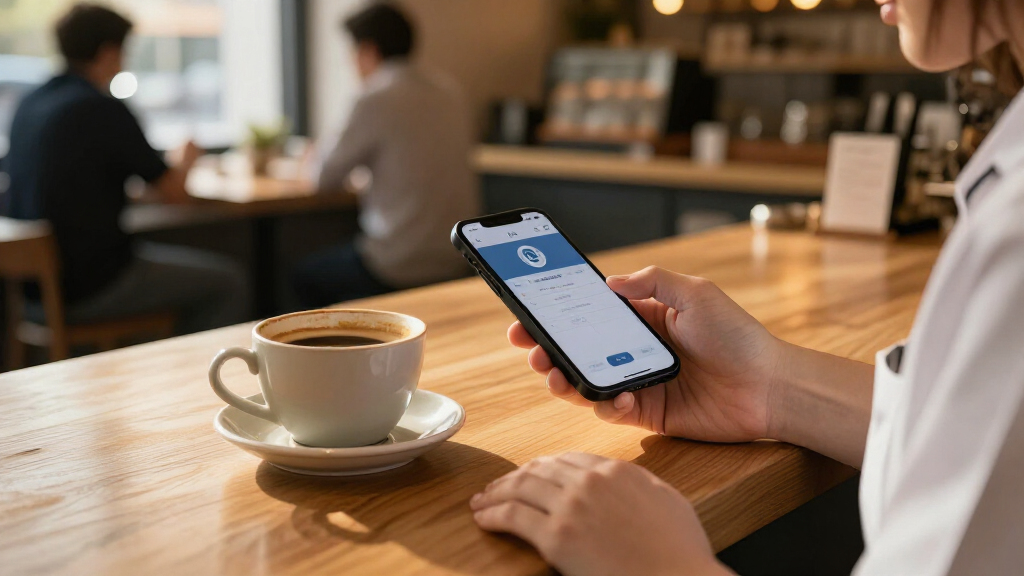

🔍 Read the full analysis: The Mechanics Of ChatGPT Wallet And AI Agent Payments on ThorstenMeyerAI.com

Prime made for students and young adults
- Fast, free delivery for dorm and study essentials
- Prime Video and Amazon Music included
- Member-only deals
TL;DR
OpenAI says ChatGPT Wallet launched for eligible U.S. ChatGPT Pro subscribers aged 18 and older, initially for purchases made by its dots agents. Users must review and approve each transaction; the wallet uses a payment token rather than sharing the actual card number with the agent or merchant. Spending limits, wider availability and some details about consumer protections remain unsettled.
The initial rollout is limited to ChatGPT Pro subscribers aged 18 or older in the United States with eligible U.S.-issued cards, and purchases are available through dots rather than ordinary ChatGPT chats. OpenAI says the wallet was built in partnership with American Express, Mastercard and Visa. The launch is limited while the company works with businesses, banks and payment networks on compatibility and reliability.
The user first saves an eligible card. A dot can then find an item and reach checkout through ChatGPT’s cloud browser on a retailer’s existing website, or through a retailer plugin, according to OpenAI’s merchant documentation. Before payment, the user reviews the items, total and selected card, then approves that specific purchase using a security check such as Face ID or a fingerprint scan.
After approval, the payment network supplies a token for that transaction, with payment credentials that substitute for the actual card details. OpenAI says neither the agent nor the business receives the real card number. The retailer still receives order information and may receive fraud-screening signals, including an IP-based country and the user’s time zone. OpenAI says a token cannot be saved or reused for a separate purchase. Recurring billing may be possible where a retailer supports it and the customer consents.
Explained in motion
How a ChatGPT Wallet purchase works
An agent called a “dot” shops on the business’s website. You approve every purchase, and a payment token stands in for your card.
AskYou ask your dot to buy something.
ShopYour dot finds the item and fills the cart on the shop’s own website.
ReviewWallet shows the items, the total and the card it will use.
ApproveYou confirm with a security check such as Face ID or a fingerprint.
TokenThe card network issues a payment token with its own card number, security code and expiry date.
PayThe shop’s checkout charges the token. Neither the shop nor the agent sees your real card number.
RecordYour approval leaves a record of the purchase you authorised.
AfterReturns and service stay with the shop. Eligible disputes use your card’s existing protections.
Planned, not available yet: letting the agent buy on its own within limits you set, such as spending limits, purchase categories or time periods.
Source: OpenAI, “Introducing ChatGPT Wallet” and Commerce Partner Playbook (“Accept payments”), November 13, 2026. At launch: ChatGPT Pro, US, through dots only.
Graphic: Powered by Thorsten Meyer AI
How Agent Purchases Reach Checkout
The launch adds a payment step to an agent that can already research products and fill a cart. If the service works reliably, a dot could handle more of a shopping task, while requiring a person to authorize the final transaction. That distinction matters: this is not permission for an agent to spend freely or make purchases without the user’s approval.
Tokenization is intended to keep the actual card number out of the agent’s and merchant’s hands, while retaining payment through existing card networks. But it does not remove the retailer from the transaction or settle questions about the quality of an agent’s choices. Websites and fraud systems may block or decline agent-made purchases, and the user remains involved at checkout under the current design.
Responsibility after payment is also divided. OpenAI says returns and customer service remain with the merchant, while disputes use the card’s existing protections. The company’s merchant guidance says, “Customers are ultimately responsible for the actions they take.” That places importance on what users can review before approval and how existing card rules apply when an agent selects the wrong item or a purchase is disputed.
Popular right now

Ninja Air Fryer XL with MaxCrisp, 6.5 Qt, 6-in-1, Dark Grey (AF181)

Bose QuietComfort Headphones – Wireless Bluetooth Over-Ear Noise Cancelling Headphones, Petal Pink Limited Edition

Ninja Foodi Smart 6-in-1 Indoor Grill and Air Fryer, 4 qt, FG551
As an affiliate, we earn on qualifying purchases.
From Product Research to Payment
OpenAI describes a dot as an always-on agent that runs in the cloud with its own computer and browser, allowing it to continue working while the user’s computer is off. Before Wallet, a dot could research products and prepare a cart, but it could not complete payment on the user’s behalf. The new feature addresses that last step, subject to a fresh user authorization for each purchase.
The company has previously tested shopping features. IBTimes reported that OpenAI introduced Instant Checkout in September 2025, enabling purchases of selected products directly in chat. The Decoder reported that OpenAI later scrapped the feature because it was not flexible enough and developed Wallet instead. Those accounts provide background on the product’s evolution; OpenAI’s current launch announcement describes the new service as a wallet for agent purchases.
OpenAI says 1.2 billion people use ChatGPT each week and that many use it to research and compare products. That is the company’s stated rationale for adding commerce, not a measure of Wallet adoption. The limited Pro-only rollout means the launch does not yet show how broadly users or merchants will use agent-led checkout.
““An agent making a purchase should strengthen, not bypass, the trust built into payments.””
— Sherri Haymond, Mastercard’s head of digital commercialization
Limits and Protections Still Pending
OpenAI has not said when Wallet will reach users outside the initial U.S. Pro subscriber group, or when it may become available in ordinary ChatGPT chats or ChatGPT Work. Its announcement says spending limits and pre-approved purchases are expected “over time,” but gives no release date or details about how those controls will work.
Compatibility is another open issue. OpenAI says agent purchases may be blocked or declined by websites and fraud systems, but has not provided a success rate or a list of retailers where the feature works. The exact set of eligible cards and merchants may also vary; the launch announcement names the card-network partners, but does not establish universal acceptance.
The service’s use of payment tokens does not mean no information is shared. OpenAI says merchants receive order details and may receive signals used for fraud checks. The company has not provided, in the supplied launch material, a full account of data retention or how responsibility would be handled in every type of purchase dispute. Its statement that existing card protections apply is not a guarantee that every dispute will be resolved in the customer’s favor.
Rollout Depends on Checkout Reliability
OpenAI says it is starting with limited availability so it can learn from real-world use and work with businesses, banks and payment networks to improve compatibility and reliability. The next developments to watch are whether more merchants accept agent-led checkouts, whether declines become less common, and whether OpenAI adds the spending controls it says it expects to offer later.
The company has not announced a timetable for expanding access or releasing those controls. For now, Wallet remains a per-purchase approval system: users must inspect the proposed order and authorize it before the payment token is used. Wider availability and any changes to that model will depend on further announcements from OpenAI and its payment partners.
Key Questions
Who can use ChatGPT Wallet at launch?
OpenAI says access starts with U.S. ChatGPT Pro subscribers aged 18 or older who have eligible U.S.-issued cards. The initial rollout is for purchases through dots, not ordinary ChatGPT chats.
Can a dot buy something without the user approving it?
Not under the launch flow OpenAI describes. The user must review the items, total and selected card, then complete a security check for each purchase.
Does the merchant get the user’s real card number?
OpenAI says the payment network supplies a transaction token instead of sharing the actual card details with the merchant or agent. The merchant still receives order details and may receive fraud-check signals.
Are spending limits or pre-approved purchases available?
No. OpenAI says those controls are expected over time, but has not announced when they will arrive. The current system asks for approval before each purchase.
Who handles returns or a disputed purchase?
OpenAI says returns and customer service remain with the retailer, while disputes go through the card’s existing protections. The outcome of an individual dispute depends on the applicable card rules and circumstances.
Source: ThorstenMeyerAI.com