📊 Full opportunity report: The Continual Learning Research Map: Where the Memento Constraint Stands in May 2026 on ThorstenMeyerAI.com — validation score, market gap, and execution plan.
TL;DR
As of May 2026, research confirms the Memento Constraint remains a significant bottleneck for truly continual AI. Multiple architectural approaches are advancing, but no solution is yet ready for production. Expected timeline for reliable continual frontier models is 2028-2030.
As of May 2026, the research community confirms that the Memento Constraint remains a fundamental bottleneck preventing truly continual learning in frontier AI models, with no current approach ready for widespread deployment.
Since the initial identification of the Memento Constraint in late 2025, five primary research directions have emerged to address continual learning challenges: in-weight learning, rehearsal-based methods, external memory systems, post-training mitigation techniques, and architectural modifications. Learn more about the Memento Constraint. None of these approaches alone has produced a fully reliable, production-ready solution, though progress is evident.
Empirical evidence shows that current frontier models suffer from catastrophic forgetting, with performance drops of 40-80% on prior tasks after fine-tuning. Sparse memory fine-tuning, for example, has demonstrated significantly reduced forgetting—only 11% performance degradation—highlighting that some methods are promising but not yet scalable to large models.
Experts estimate that the first genuinely continual frontier models—capable of learning over time without forgetting—are unlikely before 2028-2030, with initial limited versions appearing around 2027-2028. The ongoing research aims to combine multiple approaches, such as sparse memory, external episodic memory, and reinforcement learning refinement, to approximate human-like continual learning.
Five categories. One bottleneck.
Where the Memento Constraint stands in May 2026. Mechanism understood. Solution still 2028-2030.
In-weight learning · rehearsal-based · external memory · post-training mitigation · architectural. None solves the problem alone. Combinations are necessary. Sparse memory fine-tuning produced the most promising recent result: 89% forgetting → 11% on the canonical TriviaQA / NaturalQuestions split.
Five categories. Twenty methods. Where the research stands.
Each category addresses a different aspect of the continual learning problem. None is sufficient alone; combinations are necessary. External memory is most production-mature; sparse memory fine-tuning is the most promising emerging result.
Five tiers. Five timelines.
Honest assessment of when each tier of continual learning capability reaches production deployment. Sholto Douglas-Trenton Bricken framing applies: broken early versions before genuine versions.
Deployed
at scale
Emerging
+ early prod
Emerging
scaling up
First versions
research
Possibly 32-35
+ research
Different labs. Different strategies.
No lab is dominantly leading on continual learning. Capability is being developed in parallel across multiple research programs. The lab that wins durable CL advantage by 2028-2030 will combine multiple approaches.
The AI capability frontier has bifurcated. On dimensions that scale with parameters and compute, the frontier advances on the 2024-2026 timeline. On dimensions that require architectural breakthrough, the timeline is materially slower.
Four assignments. By role.
Continue the multi-approach strategy.
No single category will solve continual learning; combinations are necessary. Sparse memory fine-tuning is the most promising recent in-weight result; integrate with external memory and post-training RL. Publish methodology so the community can reproduce. The lab that ships first credible continual learning at frontier scale captures durable capability advantage.
Treat external memory as approximation, not solution.
Plan for memory pollution to compound over deployment time. Implement memory hygiene (periodic summarization, retrieval-quality monitoring, hierarchical memory) as default operational practice. Do not rely on production agents to “learn” from deployment in any meaningful sense — they cannot, yet. Hierarchical memory is the production hedge against the 2030 timeline.
Submit to FMAI / FAGEN.
Continue work on sparse memory fine-tuning at scale — most promising in-weight direction. Develop consolidated continual learning benchmark suites; current fragmentation slows community progress. Mechanistic understanding (Jan 2026 paper and follow-on work) is the foundation for targeted interventions.
Treat CL as 2028-2030 capability.
First broken versions 2028-2030; reliable production 2030+. Do not factor genuine continual learning into 2026-2027 strategic plans; do factor it into 2028-2030 plans. The lab that ships first will capture meaningful market-share advantage; bet accordingly. The bifurcation between scaled-frontier and continual-frontier capability is the structural fact to absorb.
Implications of the Continued Memento Constraint for AI Development
The persistence of the Memento Constraint directly impacts the timeline for autonomous, adaptable AI systems, as discussed in our article on the challenges of continual learning. Without breakthroughs in continual learning, frontier models will remain limited to static knowledge, requiring costly retraining cycles that hinder real-time adaptation and deployment at scale. Achieving genuine continual learning could unlock new capabilities, reduce costs, and accelerate AI deployment across industries.

Continual and Reinforcement Learning for Edge AI: Framework, Foundation, and Algorithm Design (Synthesis Lectures on Learning, Networks, and Algorithms)
As an affiliate, we earn on qualifying purchases.
As an affiliate, we earn on qualifying purchases.
Progress and Challenges in Continual Learning Research as of May 2026
The concept of catastrophic interference has been understood since the late 1980s, but recent empirical studies—such as the October 2025 Sparse Memory Finetuning paper—have quantified the extent of forgetting in large models, demonstrating that methods like full fine-tuning cause severe performance degradation. Multiple research approaches are exploring solutions, but none have yet achieved the robustness needed for production use.
Current efforts include in-weight learning techniques like Elastic Weight Consolidation (EWC) and Synaptic Intelligence (SI), external memory systems such as ALMA and Evo-Memory, and architectural innovations like mixture-of-experts (MoE) models. While some methods show promise at small scales, scaling to trillion-parameter models remains a significant challenge.
“The bottleneck of continual learning is real, and the research community is converging on multiple approaches, but none are yet ready for deployment. The timeline for reliable models is 2028-2030.”
— Thorsten Meyer
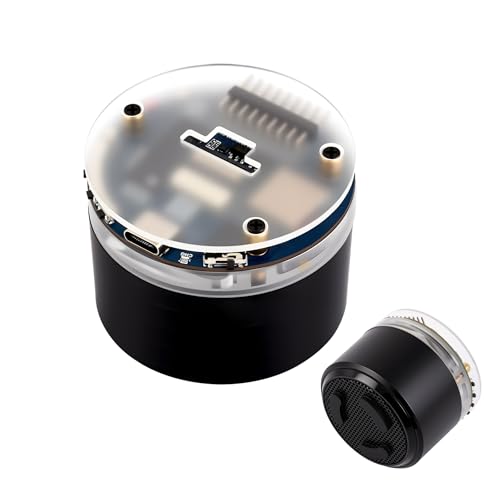
ESP32-S3 AI Smart Speaker Development Board, Dual Microphones, Noise Reduction&Echo Cancellation, RGB Lighting, ESP32 Audio, Support Connect External Displays & Cameras, Support AI Speech Interaction
- Processor: Dual-core Xtensa 32-bit LX7, 240MHz
- Connectivity: Wi-Fi 2.4GHz and Bluetooth 5 (LE)
- Memory: 512KB SRAM, 384KB ROM, 8MB PSRAM, 16MB Flash
As an affiliate, we earn on qualifying purchases.
As an affiliate, we earn on qualifying purchases.
Unresolved Challenges in Achieving Fully Continual AI
It is not yet clear which combination of approaches will yield a scalable, reliable solution for continual learning at the frontier scale. The precise timeline remains uncertain, and breakthroughs could accelerate or delay deployment timelines.
As an affiliate, we earn on qualifying purchases.
Next Steps in Continual Learning Research and Development
Research efforts will focus on integrating multiple approaches—such as sparse memory, external episodic memory, and reinforcement learning—to develop more robust models. For an in-depth analysis, see our discussion on continual learning bottlenecks. Expected milestones include initial prototypes by 2027-2028, with more reliable systems emerging by 2028-2030. Industry deployment will likely continue to rely on approximate methods until then.

NVIDIA Jetson Orin Nano Super Developer Kit
- High AI Performance: Up to 40 TOPS AI processing power
- Compact and Versatile Design: Includes a reference carrier board and multiple connectors
- Powerful Hardware: Features Ampere GPU and 6-core ARM CPU
As an affiliate, we earn on qualifying purchases.
As an affiliate, we earn on qualifying purchases.
Key Questions
Why is continual learning important for AI?
It enables AI systems to learn and adapt over time without forgetting previous knowledge, making them more autonomous and capable in dynamic environments.
What are the main approaches to solving the Memento Constraint?
Researchers are exploring methods such as in-weight parameter modifications, rehearsal-based techniques, external memory systems, and architectural changes like mixture-of-experts models.
When can we expect truly continual frontier AI models?
Based on current progress, reliable, fully continual models are unlikely before 2028-2030, with initial limited versions possibly appearing around 2027-2028.
What are the main challenges remaining?
Scaling methods to large models, integrating multiple approaches effectively, and ensuring stability and reliability in real-world deployment remain key hurdles.
How does this impact AI deployment today?
Current models rely on periodic retraining and external memory, limiting real-time learning. Advances in continual learning could transform deployment practices in the coming years.
Source: ThorstenMeyerAI.com