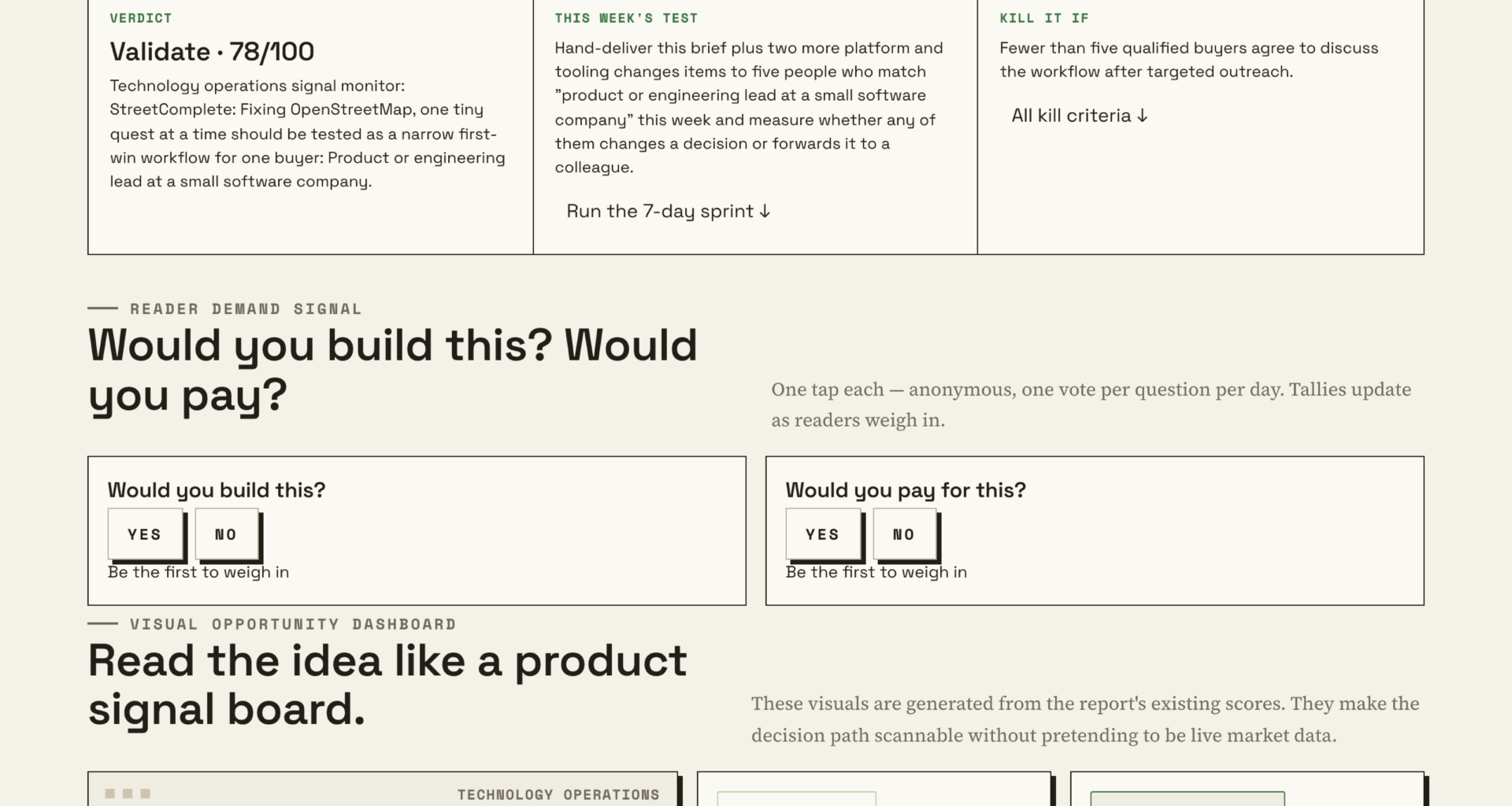

📊 Full opportunity report: StreetComplete Makes OpenStreetMap Contributions Feel Like A Game on IdeaNavigator AI — validation score, market gap, and execution plan.

Prime made for students and young adults
- Fast, free delivery for dorm and study essentials
- Prime Video and Amazon Music included
- Member-only deals
TL;DR
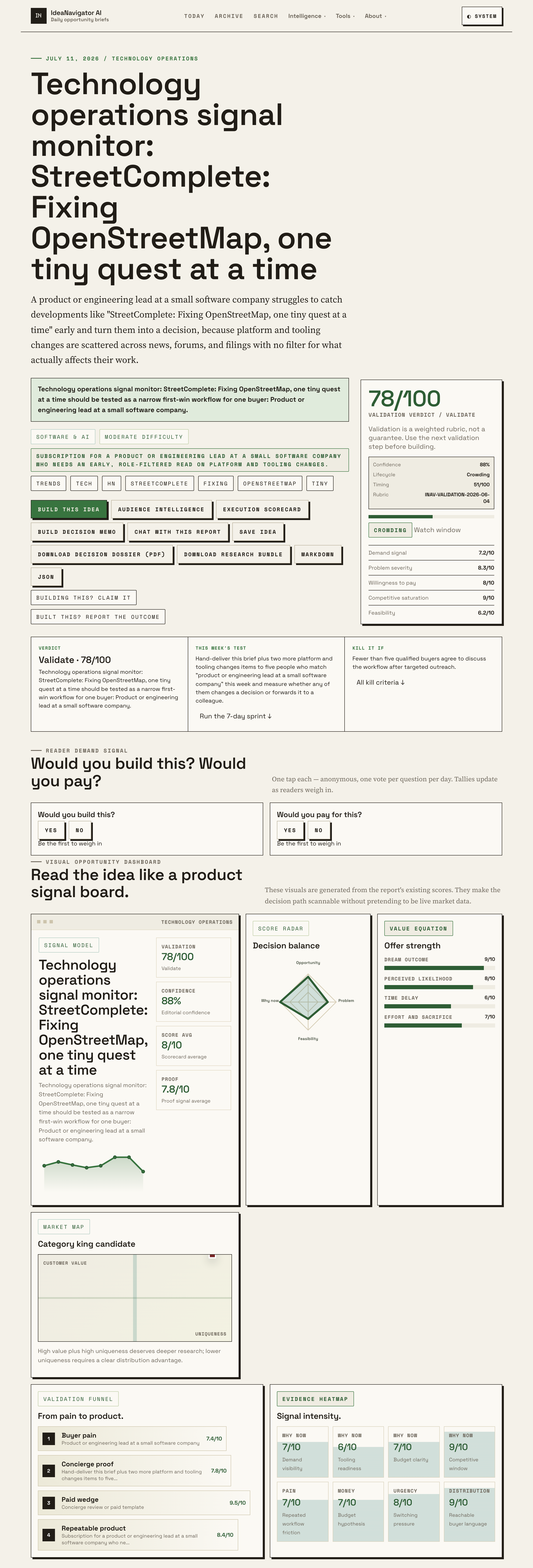
A technology operations brief has flagged StreetComplete’s quest-based approach to OpenStreetMap contributions as a development to monitor. The supplied information does not establish a new release or provide product details, user data or evidence of impact.
StreetComplete, an app associated with small, quest-like tasks for contributing to OpenStreetMap, has been flagged in a technology operations monitoring brief as a development for product and engineering leads to track. The brief does not identify a new release, feature announcement or measured change in how many people contribute.
The item appears in an IdeaNavigator AI brief aimed at product or engineering leads at small software companies. It describes StreetComplete as a way to approach OpenStreetMap contributions “one tiny quest at a time” and frames the concept as a possible first-win workflow: a focused, manageable task that can make a larger activity feel easier to start. The brief provides no technical description of the app or examples of specific quests.
The monitor says Hacker News surfaced the item with an 88/100 signal. That score is reported by the brief, but its scale, calculation and comparison with other items are not explained. It should not be read as an adoption figure or as evidence that users changed their behavior.
IdeaNavigator AI proposes a service that watches Hacker News and similar feeds, filters developments for a defined professional role, then turns relevant items into short summaries of what changed, why it matters and what to do. It suggests testing that business idea by hand-delivering the StreetComplete brief and two other platform or tooling items to five people matching the target role and checking whether any recipient changes a decision or forwards a brief.
Small Tasks, Focused Monitoring
The item connects two practical questions for small software teams: how people are invited to contribute to a shared project, and how busy technical leads keep up with changes that may affect their work. StreetComplete’s quest framing, as described in the brief, offers an example of breaking participation into small, discrete tasks. The monitoring proposal applies a similar constraint to information: surface a limited set of role-relevant developments instead of asking leads to follow every feed.
That potential usefulness remains a proposition, not a demonstrated result. The brief names a target audience and a way to test whether the summaries affect decisions, but it reports no completed interviews, subscriptions, forwards or decision changes. For readers evaluating the idea, the key question is whether timely filtering saves enough attention to be useful—and whether the underlying item contains a concrete change worth acting on.
From Feed Signal to Test
The brief presents StreetComplete as an example inside a broader technology operations signal monitor concept, rather than as a standalone report on an app announcement. Its stated problem is that platform and tooling developments are scattered across news sites, forums and filings, making it difficult for a product or engineering lead at a small company to identify relevant changes early.
The proposed response is a role-filtered reading service, potentially sold by subscription. The suggested validation is deliberately small: deliver three briefs to five people who match the intended audience during one week, then observe whether the information prompts a decision or gets shared with a colleague. No result from that proposed test is included, and no evidence is supplied that the service has been built or launched.
Release and Impact Remain Unspecified
The available brief does not say whether StreetComplete recently changed, when any relevant development occurred, or which app version or features are involved. It also provides no statements from the app’s developers, no usage figures and no independent assessment of whether the quest format increases contributions to OpenStreetMap.
The monitoring score’s meaning is unclear because no baseline or scoring method is given. The subscription concept is also unvalidated in the information provided: there are no reported customer responses, willingness-to-pay findings or evidence that a filtered brief led to a decision. Those gaps mean the item can be described as a signal to investigate, but not as proof of product impact or market demand.
A Five-Person Validation Test
IdeaNavigator AI’s proposed next step is to send this brief and two other platform or tooling updates to five product or engineering leads at small software companies during one week. The test would track whether recipients change a decision or forward an item to a colleague. No start date, findings or follow-up milestone are provided, so whether the test will happen and what it shows remain unknown.
For StreetComplete itself, the brief names no upcoming release or announcement. Further reporting on the app would need a dated product update or direct developer information, along with evidence about how the quest format is used and whether it changes contribution activity.
Source: IdeaNavigator AI
Key Questions
What is the reported development?
A technology operations brief flagged StreetComplete’s small-task, quest-like approach to OpenStreetMap contributions as an item for product and engineering leads to monitor. It does not report a specific new release.
What does the 88/100 score mean?
The brief says Hacker News surfaced the item with an “88/100 signal.” It does not explain how the score is calculated or what it measures, so it cannot be interpreted as a user or impact statistic.
Has the monitoring service launched?
No launch is reported. IdeaNavigator AI describes a proposed service that would filter platform and tooling updates for a specific professional audience and turn them into short action-oriented briefs.
How would the proposed service be tested?
The brief proposes delivering three relevant briefs to five product or engineering leads at small software companies over one week, then checking whether a brief changes a decision or is forwarded to a colleague. No test results are provided.
Source: IdeaNavigator AI
Fall Picks
fall essentials
As an affiliate, we earn on qualifying purchases.