
🔍 Read the full analysis: Stay Ahead With These 5 AI Productivity Tools In 2026 on ThorstenMeyerAI.com

Prime made for students and young adults
- Fast, free delivery for dorm and study essentials
- Prime Video and Amazon Music included
- Member-only deals
TL;DR
In 2026, five AI productivity tools stand out for enhancing work efficiency across roles. They range from easy-to-use prompts to strategic frameworks, helping users stay ahead in a competitive landscape.
Five AI-powered productivity tools have emerged as essential resources for professionals seeking to improve efficiency in 2026. These tools, ranging from simple prompt collections to comprehensive strategic frameworks, are designed to help users automate tasks, optimize workflows, and make smarter decisions. These tools, ranging from simple prompt collections to comprehensive strategic frameworks, are designed to help users automate tasks, optimize workflows, and make smarter decisions. Their adoption is driven by an increasing integration of AI into daily work routines, making this a pivotal year for productivity technology. For a detailed overview, see the original analysis.
The selection of these five tools was based on their practical applicability, ease of use, and ability to deliver measurable productivity gains. Among them, ‘AI Productivity Made Easy’ provides straightforward strategies suitable for beginners, while ‘The AI-Powered Project Manager’ offers advanced features for managing complex workflows. Additionally, tools focusing on prompt engineering, strategic leadership, and collaborative AI are gaining popularity. Each tool caters to different roles—from individual contributors to organizational leaders—highlighting the diverse landscape of AI-driven productivity solutions in 2026. Experts note that the best tools balance accessibility with real impact, often prioritizing ready-to-use prompts and frameworks over technical complexity, to accommodate users with varying levels of AI familiarity.Market analysis indicates that organizations increasingly adopt these tools to streamline operations, reduce manual effort, and foster innovation. Learn more about emerging AI tools in Stay Ahead In AI With These Portable SSDs In 2026. However, the landscape remains dynamic, with new entrants and updates constantly emerging. While many tools promise quick wins, the effectiveness depends on proper integration and user training. It is also noted that some solutions may require a learning curve, especially those emphasizing prompt engineering or strategic AI deployment, which may be more suitable for advanced users or teams.
The 5 picks
- 1
 The AI-Powered Project Manager: The Ultimate Playbook to Save Dozens of Hours…View on Amazon →
 - 2
 The AI-Driven Leader: Harnessing AI to Make Faster, Smarter DecisionsView on Amazon →
 - 3
 AI Productivity Made Easy: Do More in Less Time, Stress Less, and Reclaim You…View on Amazon →
 - 4
 The AI-Powered Professional: How to Work with AI as a Thinking Partner, Not J…View on Amazon →
 - 5
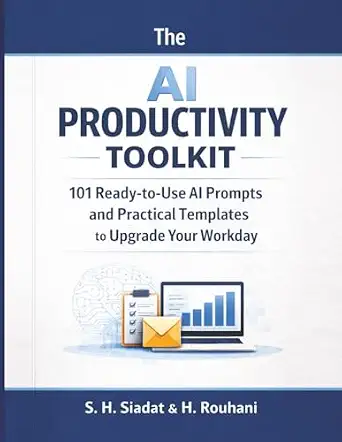 The AI Productivity Toolkit: 101 Ready-to-Use AI Prompts and Practical Templa…View on Amazon →
Why These AI Tools Are Game-Changers in 2026
These five AI productivity tools are shaping the future of work by enabling faster decision-making, automating routine tasks, and fostering collaboration. For individual workers, they offer quick wins that can significantly reduce time spent on repetitive activities. For managers and leaders, they provide strategic insights and project oversight capabilities that can improve organizational agility. As AI becomes more embedded in work routines, selecting the right tools can be a decisive factor in maintaining competitiveness and fostering innovation. The widespread adoption of these tools indicates a shift toward smarter, more efficient workflows across industries, making this a critical development for professionals aiming to stay ahead in 2026.
Evolution of AI in Workplace Productivity
Over the past few years, AI has transitioned from experimental technology to a core component of workplace productivity. Early tools focused on automation and basic data analysis, but recent developments have introduced sophisticated frameworks for strategic decision-making, prompt engineering, and collaborative AI. In 2026, the market is witnessing a proliferation of solutions that cater to diverse needs, emphasizing ease of use and immediate impact. Leading companies and individual users increasingly rely on these tools to handle complex projects, streamline communication, and enhance creativity. This evolution reflects a broader trend of AI integration across all levels of work, driven by advances in machine learning, natural language processing, and user-centered design.
“The tools emerging in 2026 are designed to be accessible yet powerful, enabling users at all skill levels to harness AI for tangible productivity gains.”
— Thorsten Meyer, AI Productivity Expert
Remaining Questions About AI Tool Adoption in 2026
While these tools show promise, several uncertainties remain. It is not yet clear how quickly organizations will fully integrate these solutions into their workflows or how user training will impact effectiveness. Additionally, the long-term impact on job roles and organizational structures is still evolving. Some tools may require significant adaptation, and the balance between automation and human oversight remains a topic of debate. Furthermore, the pace of innovation suggests that new tools could emerge, potentially shifting the landscape before year’s end. The actual adoption rate and real-world impact will become clearer as more users deploy these solutions in varied contexts.
Next Steps for Users and Developers in 2026
In the coming months, expect further updates and new releases of these AI productivity tools, with increased focus on integration, customization, and user training. Organizations should evaluate their workflows to identify where AI can deliver the most value and invest in training to maximize benefits. Developers are likely to refine features based on user feedback, emphasizing ease of use and tangible outcomes. Industry analysts predict a growing ecosystem of complementary tools and services that will enhance the core offerings. As adoption accelerates, case studies and best practices will emerge, guiding users on how to best leverage these solutions for maximum productivity gains.
Key Questions
Are these AI productivity tools suitable for beginners?
Many of the highlighted tools are designed with accessibility in mind, offering ready-to-use prompts and straightforward strategies that require minimal technical knowledge. Beginners can start with these options to see immediate benefits without a steep learning curve.
Can these tools deliver quick productivity improvements?
Yes, especially those providing templates, prompts, or strategic frameworks. Users report noticeable efficiency gains within days or weeks, particularly when applying tools to routine tasks like scheduling, planning, or decision-making.
Do I need technical expertise to use these tools effectively?
It varies. Tools emphasizing practical prompts and strategies are generally non-technical, while those focusing on prompt engineering or AI customization may require some familiarity with AI concepts. Selecting user-friendly options is advisable for those with limited technical skills.
Are these tools suitable for team use?
Many tools, especially prompt collections and workflow templates, can be scaled for team use to improve collaboration and standardize processes. Organizational tools and strategic frameworks are more suited for leadership and decision-makers.
Will AI tools replace my current workflow?
Most are designed to complement and enhance existing workflows rather than replace them. They automate routine tasks and support decision-making, freeing up time for more strategic activities.
Source: ThorstenMeyerAI.com
Fall Picks
fall essentials
As an affiliate, we earn on qualifying purchases.