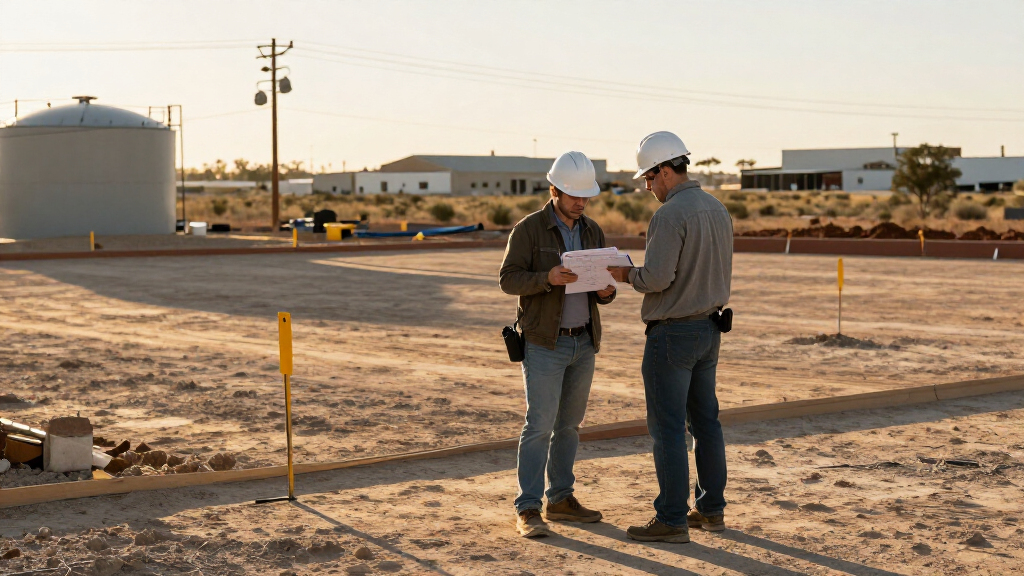

🔍 Read the full analysis: SpaceX’s AI Campus Plans Bring Power And Water Questions on ThorstenMeyerAI.com

Prime made for students and young adults
- Fast, free delivery for dorm and study essentials
- Prime Video and Amazon Music included
- Member-only deals
TL;DR
SpaceX says it is advancing AI computing projects near Starbase, Texas, and in Cochise County, Arizona, with planned investment exceeding $74 billion. The Arizona application specifies a six-gigawatt grid connection and low estimated water use; key Texas facility details, the Texas tax abatement and Arizona power arrangements remain unsettled.
SpaceX said November 12 it is advancing two AI “supercompute” projects in Texas and Arizona, with more than $74 billion in planned investment. The plans would bring a gas-fired power plant and computing facility near Starbase, Texas, and a large grid-connected campus to Cochise County, Arizona; both face local review of their effects on electricity, water and public finances.
SpaceX puts the Texas project at more than $24 billion. A Starbase City notice describes an approximately 444-acre site between Boca Chica Boulevard and the Port of Brownsville, with an estimated $24 billion in capital investment for initial phases and possible later expansion. The city describes the proposal as a gas-fired power plant and supercompute facility. SpaceX says the site will generate its own electricity rather than draw from the public grid, but the city notice does not state the plant’s capacity.
Local outlet The 956 Report, citing an air-registration filing SpaceX submitted to the Texas Commission on Environmental Quality, reported a proposed interim configuration of 35 natural-gas turbines totaling about 748 megawatts, followed by eight larger turbines totaling about 708 megawatts. Those figures come from the outlet’s account of the filing, not the city notice. SpaceX says the facility will train advanced AI systems and support work on technologies for space-based computing. It projects more than 3,000 construction jobs to date and over 500 permanent positions once the facility is operating.
The Arizona proposal is described by SpaceX as a roughly $50 billion campus. A Cochise County application filed by Tombstone Resources L.L.C. covers about 747 acres near Cochise and calls for up to nine computing buildings, each about 493,000 square feet. The county documents do not name SpaceX; the connection is supported by SpaceX’s project page and Tombstone Resources’ statement about a community town hall hosted by SpaceX. The application describes four construction phases, with the first requiring about 1,500 megawatts and full build-out requiring approximately six gigawatts of grid power, plus a 24-gigawatt-hour battery system.
SpaceX’s AI Campus Plans Bring Power and Water Questions
SpaceX says it is advancing AI computing projects in Texas and Arizona, with more than $74 billion in planned investment. Local reviews will weigh electricity, water and public costs.
Two sites, different power plans
The plans would put large energy needs before local decision-makers.
- Gas-fired power plant and computing facility near Starbase.
- SpaceX says the site will generate its own electricity.
- Plant capacity and facility water use remain undisclosed.
- Grid-connected campus in Cochise County.
- Application estimates six gigawatts at full build-out.
- Dry cooling and low estimated water use are proposed.
Water claims need context
Regional infrastructure commitments do not specify each facility’s direct water consumption.
Dry cooling proposed
The application estimates seven to 10 acre-feet of water annually, mostly for staff.
Facility use unknown
SpaceX cites regional water infrastructure spending but has not disclosed the computing facility’s own use.
What local reviews will test
Both projects remain proposals, and key terms and approvals are unresolved.
Cochise County’s Planning and Zoning Commission is scheduled to hear the application on December 9, 2026.
Starbase City Commission is scheduled to consider a property-tax abatement on December 9, 2026.
Arizona utility arrangements and promised bill effects need approval; Texas capacity, water needs and tax terms need clarity.
Local Utilities Face Billion-Dollar Loads
The proposals bring the infrastructure demands of large-scale AI computing directly to local decision-makers. In Arizona, the application’s six-gigawatt full-build estimate would make the campus a major electricity customer, with power routed through Sulphur Springs Valley Electric Cooperative and Arizona Electric Power Cooperative to a utility-owned substation. Whether the arrangements and promised effects on local bills receive regulatory approval is not yet clear.
Water is a different question at each site. SpaceX says Arizona’s buildings will use dry cooling without cooling towers; the application estimates annual water use of seven to 10 acre-feet at full build-out, mostly for staff. In Texas, SpaceX has described regional water infrastructure spending but has not disclosed how much water the computing facility itself would use. That distinction matters to residents weighing a company’s regional investment against the direct resource needs of the project.
The proposals also put public benefits and local costs into the same debate. Starbase officials are due to consider a property-tax abatement, while Arizona residents and officials will assess a large energy project and its promised bill effects. The figures and commitments now available describe plans, not completed construction or final local approvals.
Popular right now

Vitamix Touch & Go Advance 32-Ounce Bar Blender, White

Dyson V8 Cordless Vacuum

KitchenAid Artisan 5-Qt Tilt-Head Stand Mixer, KSM150PS, Almond Cream
As an affiliate, we earn on qualifying purchases.
Two Sites, Different Power Plans
The Texas plan is presented as a facility with its own electricity generation. SpaceX says it is planning more than $24 billion in new infrastructure in the Rio Grande Valley, while Starbase’s notice gives approximately $24 billion for initial phases. SpaceX also says the land moved from Brownsville into Starbase as part of a water agreement. The city notice confirms a gas-fired plant but does not provide its generating capacity.
For water infrastructure in Texas, SpaceX says it committed $220 million to expand water and wastewater systems in Brownsville and Cameron County, including $40 million it says it has already provided. The company says the planned projects would add about 20 million gallons per day from sources independent of the Rio Grande. It also says it is not acquiring water rights, prepaying utility rates or receiving preferential access to regional water. These statements concern regional infrastructure and water arrangements; they do not specify the computing facility’s own consumption.
Arizona’s submitted application gives more detail on the campus’s cooling and water estimates. It says the facility would use air-based dry cooling and estimates seven to 10 acre-feet of water per year at full build-out. The application compares that amount with 400 to 600 acre-feet used annually by a center-pivot field on a 160-acre quarter section. It estimates about 5,500 construction workers at peak, around 250 staff when the first buildings open and roughly 1,000 employees at full build-out.
““Together, they represent more than $74 billion in planned American investment.””
— SpaceX
Capacity, Water and Approvals Remain Open
Several material details are still missing from the available documents. For Texas, the city notice does not specify the plant’s generating capacity, and SpaceX has not stated the computing facility’s water consumption. The turbine configuration and emissions information reported by The 956 Report are based on its review of an air-registration filing; they are not figures provided in the city notice.
The size and terms of any Starbase tax abatement have not been established in the source material. In Arizona, the application estimates power demand and describes a route through the two cooperatives, but it remains unclear whether the relevant utility arrangements will be approved or whether SpaceX’s promised reductions in local power bills will follow. The county application is filed under Tombstone Resources, and county documents cited here do not name SpaceX.
Both proposals remain subject to local processes. The announced investment totals and projected jobs are company or application estimates; they do not show how much construction will proceed, when the facilities might open, or whether the projects will be built to their proposed full scale.
December Hearings Set Project Tests
Both projects have local proceedings scheduled for December 9, 2026. The Cochise County Planning and Zoning Commission is due to hold a hearing on the Arizona application. In Texas, the Starbase City Commission is scheduled to consider a property-tax abatement. Those proceedings can provide a clearer record on land-use conditions, the proposed public support and questions raised by residents.
Further detail may also come from utility and environmental filings. For Arizona, a key point to watch is whether the electricity arrangements behind the campus and any promised local bill cuts receive the necessary approvals. In Texas, the project’s generating capacity, water needs and final tax terms remain central unanswered questions. The available source material does not provide a construction timetable or a date when either site would begin operating.
Key Questions
How much is SpaceX planning to invest?
SpaceX says the two projects represent more than $74 billion in planned investment: more than $24 billion for Texas and roughly $50 billion for Arizona. These are announced plans, not confirmed completed spending.
How will the Arizona campus get electricity?
The county application describes power delivered from the grid through Sulphur Springs Valley Electric Cooperative and Arizona Electric Power Cooperative to a utility-owned substation at the site. It estimates demand of about 1,500 megawatts in the first phase and approximately six gigawatts at full build-out.
How much water would the projects use?
The Arizona application estimates seven to 10 acre-feet per year at full build-out, mostly for staff, and says the buildings would use dry cooling. SpaceX has not disclosed the Texas computing facility’s own water use; its stated spending and supply figures concern regional water and wastewater infrastructure.
When will local officials review the proposals?
The Cochise County Planning and Zoning Commission is scheduled to hear the Arizona proposal on December 9, 2026. The Starbase City Commission is scheduled that day to consider a property-tax abatement for the Texas project.
Source: ThorstenMeyerAI.com