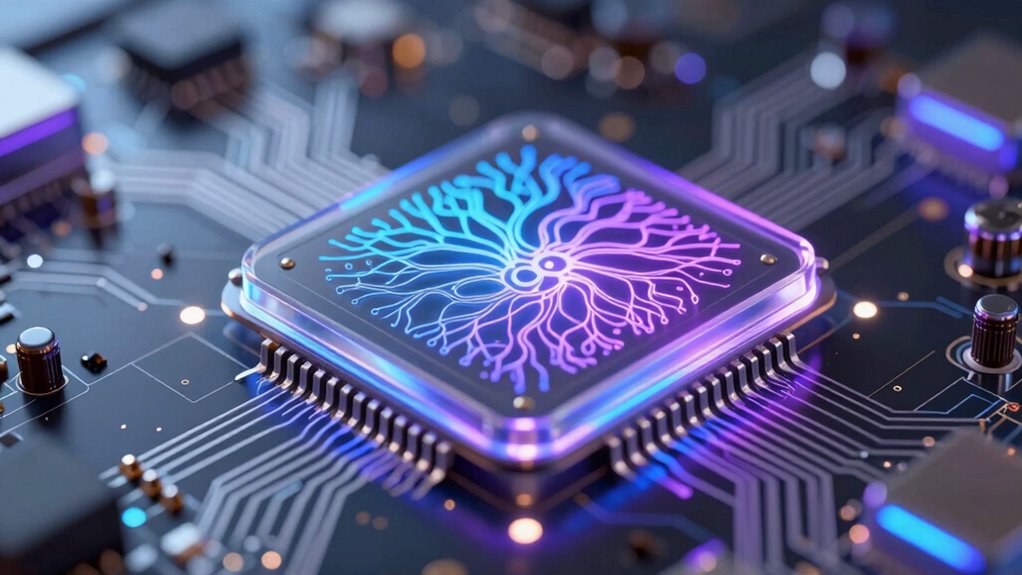

Neuromorphic hardware could unleash next-level AI capabilities by mimicking the human brain’s structure, allowing you to process complex sensory data in real time with much less energy. It enables machines to learn and adapt on the fly, making robotics more autonomous and responsive. This breakthrough can improve medical diagnostics, smarter autonomous systems, and seamless human-machine interactions. If you’re curious about how this technology could reshape your world, there’s more to discover ahead.
Key Takeaways
- Enabling ultra-low-power, real-time AI processing for mobile devices and IoT applications.
- Facilitating advanced sensory integration for autonomous systems, enhancing perception and environmental awareness.
- Supporting adaptive learning and memory in robotics for more autonomous and flexible behaviors.
- Improving medical diagnostics through rapid, on-device analysis of complex data like imaging and signals.
- Advancing human-like artificial intelligence capable of understanding context, meaning, and nuanced interactions.
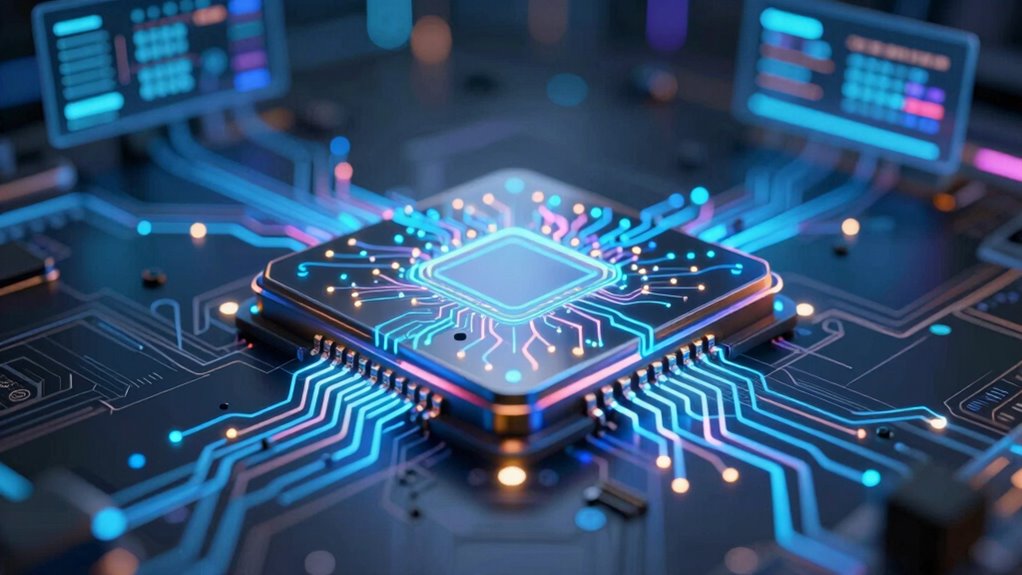
Neuromorphic hardware is revolutionizing the way computers process information by mimicking the structure and function of the human brain. This approach, rooted in brain-inspired architecture, allows machines to handle complex tasks more naturally and efficiently. Unlike traditional computers that rely on linear processing and separate memory units, neuromorphic systems integrate processing and memory in a way that closely resembles neural networks. This integration enables faster, more adaptive responses, opening doors to breakthroughs in artificial intelligence, robotics, and sensor technology.
One of the most promising aspects of neuromorphic hardware is its potential for energy-efficient computing. Because it processes information in a manner similar to biological brains, it requires significantly less power than conventional systems. This efficiency is crucial when deploying AI in mobile devices, autonomous vehicles, or large-scale data centers where energy consumption is a major concern. By leveraging brain-inspired architecture, neuromorphic chips can perform complex computations with a fraction of the energy typically needed, making sustainable, high-performance AI more accessible and scalable. Additionally, these systems are designed to operate in real-time, which is essential for applications requiring immediate data processing and response. energy-efficient computing is further supported by advancements in hardware design that optimize power consumption without sacrificing performance.
Looking ahead, neuromorphic hardware could unlock capabilities we’ve only begun to imagine. For example, real-time sensory processing could become vastly more advanced, allowing machines to interpret visual, auditory, or tactile data as seamlessly as humans do. This would enhance autonomous systems, giving them a more intuitive understanding of their environment and enabling safer, more responsive interactions. In healthcare, neuromorphic devices might someday analyze medical data on the fly, offering instant diagnostics or personalized treatment plans by mimicking the brain’s ability to recognize patterns quickly and accurately. Researchers are also exploring how biological neural networks can inspire new algorithms that further improve the adaptability of these systems.
Furthermore, neuromorphic systems could catalyze new forms of learning and memory that surpass current AI models. Because of their brain-inspired architecture, these chips could adapt to new information without needing extensive retraining, much like humans do. This adaptability could revolutionize robotics, making machines more autonomous, flexible, and capable of learning from their experiences in real-time. Additionally, the development of brain-inspired architecture is driving a shift in how we approach complex computational problems, emphasizing efficiency and adaptability over raw processing speed. As research continues, the potential for these systems to mimic human cognition more closely becomes increasingly feasible.
Ultimately, the next frontier for neuromorphic hardware lies in building more human-like intelligence—machines that don’t just process data but understand and learn from it in a meaningful way. As research advances, you’ll see more devices that capitalize on brain-inspired architecture to deliver smarter, more energy-efficient solutions, transforming everything from personal assistants to large-scale AI systems. This evolution promises a future where technology integrates more naturally into daily life, driven by the same neural principles that power the human mind.
neuromorphic hardware development kit
As an affiliate, we earn on qualifying purchases.
As an affiliate, we earn on qualifying purchases.
Frequently Asked Questions
How Does Neuromorphic Hardware Compare to Traditional Computer Architectures?
You’ll find that neuromorphic hardware, inspired by the brain, differs from traditional architectures by using silicon neurons to mimic neural processes. Unlike conventional computers that process tasks sequentially, neuromorphic systems operate in a highly parallel, energy-efficient way, allowing faster processing of complex, real-world data. This brain-inspired design enables smarter, more adaptive AI, revealing potential for advanced robotics, sensory processing, and autonomous systems that traditional CPU or GPU architectures can’t efficiently achieve.
What Are the Main Challenges in Developing Neuromorphic Chips?
You face main challenges in developing neuromorphic chips, primarily due to biological inspiration and hardware scalability. Replicating the brain’s complex, efficient neural processes in hardware is tough, especially ensuring scalability for larger systems. Designing components that mimic biological neurons and synapses while maintaining power efficiency and robustness complicates development. Overcoming these hurdles requires innovative materials and architectures to make neuromorphic hardware practical and adaptable for real-world applications.
Can Neuromorphic Systems Learn in Real-Time Like the Human Brain?
Imagine your brain as a bustling city, constantly adapting to new traffic patterns. Neuromorphic systems, inspired by biology, can indeed learn in real-time, mimicking this adaptive learning. They process information dynamically, adjusting their connections much like synapses do in the human brain. This biological inspiration allows them to respond swiftly to new data, enabling applications like real-time pattern recognition, autonomous decision-making, and seamless interaction with changing environments.
What Industries Could Benefit Most From Neuromorphic Hardware?
You’ll find industries like healthcare, automotive, and robotics benefit most from neuromorphic hardware. These systems excel at sensory processing and brain-inspired algorithms, enabling real-time data analysis and decision-making. In healthcare, they improve diagnostics; in automotive, they enhance autonomous vehicle perception; and in robotics, they foster more adaptive, efficient machines. By mimicking brain functions, neuromorphic hardware unleashes smarter, faster responses, transforming how these sectors operate and innovate.
How Energy-Efficient Is Neuromorphic Computing Compared to Existing Options?
Neuromorphic computing is markedly more energy-efficient than traditional systems, offering substantial energy savings and improved power efficiency. You’ll notice it consumes far less power because it mimics the brain’s neural processes, reducing unnecessary computations. This efficiency not only lowers operational costs but also enables longer battery life for devices. As a result, neuromorphic hardware is ideal for applications requiring high performance with minimal energy use, like IoT and autonomous systems.
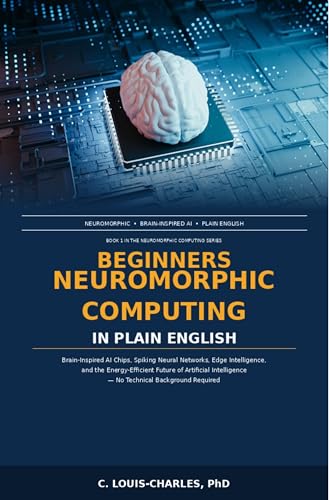
Beginners Neuromorphic Computing in Plain English: Brain-Inspired AI Chips, Spiking Neural Networks, Edge Intelligence, Energy-Efficient Future of Artificial … Neuromorphic Computing Book 1)
As an affiliate, we earn on qualifying purchases.
As an affiliate, we earn on qualifying purchases.
Conclusion
Imagine a future where neuromorphic hardware truly mimics the brain’s efficiency and adaptability. While some skeptics argue it’s just a promising theory, ongoing advancements suggest we’re on the cusp of revealing revolutionary AI capabilities. If these chips can emulate neural processes accurately, they could transform everything from robotics to medicine, making machines smarter and more energy-efficient. The truth may be closer than you think — neuromorphic hardware could soon reshape how we interact with technology daily.
As an affiliate, we earn on qualifying purchases.

Neuromorphic Computing – Brain-Inspired Hardware Engineering T-Shirt
- Design for AI and neuroscience enthusiasts: Perfect for brain-inspired AI engineers and neuroscientists
- Mimics neural structures for efficiency: Features cognition-modeled hardware with adaptive learning
- Comfortable classic fit: Lightweight with double-needle sleeve and hem
As an affiliate, we earn on qualifying purchases.
As an affiliate, we earn on qualifying purchases.