
TL;DR

Prime made for students and young adults
- Fast, free delivery for dorm and study essentials
- Prime Video and Amazon Music included
- Member-only deals
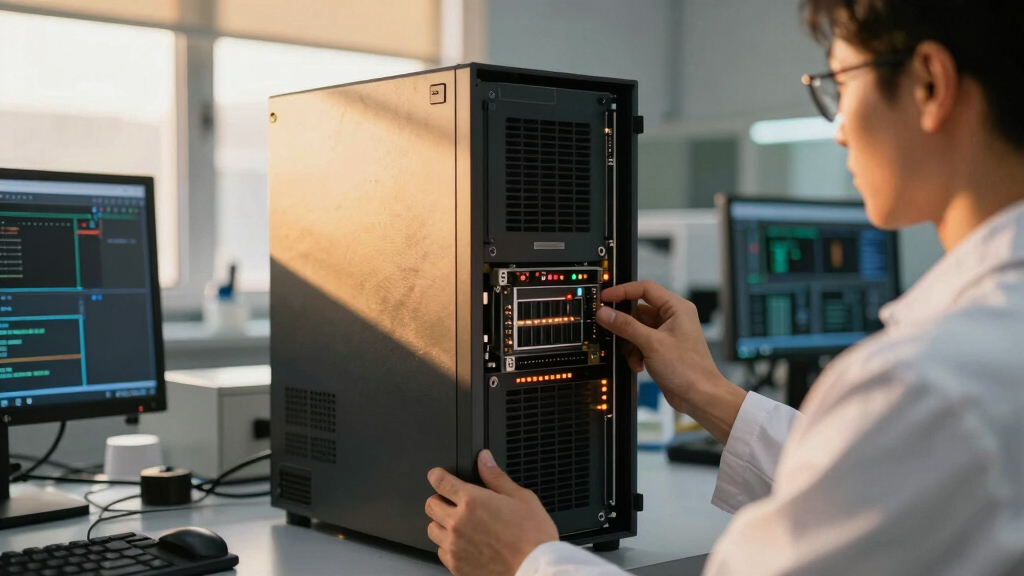
SpaceX’s Colossus 1 supercomputer, leased to Anthropic, suffers from low GPU utilization due to its heterogeneous architecture. This inefficiency explains Musk’s decision to lease the system to a rival AI firm. The development highlights challenges in large-scale AI infrastructure management.
SpaceX’s Colossus 1 supercomputer, recently leased to AI firm Anthropic, is experiencing significant efficiency issues due to its mixed GPU architecture, leading to underutilization of the system’s capacity.
Anthropic announced last week that it had leased the entire Colossus 1 data center, which contains over 220,000 GPUs and 30 megawatts of compute power, to address its growing demand for AI inference capacity. The move aims to alleviate bottlenecks in the company’s Claude ecosystem, which has faced restrictions on usage and API requests due to limited compute resources.
Recent reports from Mirae Asset Securities indicate that Colossus 1’s architecture is heterogeneous, comprising roughly 150,000 H100 GPUs, 50,000 H200s, and 20,000 GB200s, all running under one system. This mixed configuration was assembled rapidly as supply chain constraints allowed, rather than through deliberate design, resulting in significant inefficiencies. The slower GPUs cause the faster ones to wait, creating a bottleneck known as the straggler effect, which reduces GPU utilization to approximately 11%, far below industry standards of 40% or higher.
Why It Matters
This inefficiency impacts the economic and operational viability of large AI data centers, as unused GPUs represent wasted investment and energy consumption. For Anthropic, this lease provides immediate compute capacity but underscores challenges in scaling AI infrastructure efficiently. For Musk and SpaceX, it reveals limitations in their first-generation supercomputing efforts, which may influence future AI hardware deployment strategies.
As an affiliate, we earn on qualifying purchases.
Background
SpaceX’s Colossus 1 was assembled rapidly, featuring a mix of GPU generations from Nvidia, including H100, H200, and GB200 models. The cluster was initially seen as a sign of Musk’s ambitions to compete with major AI players like OpenAI and Google. However, the heterogeneous architecture was not optimized for AI training or inference, leading to low utilization. Anthropic’s demand for high compute capacity has grown rapidly, driven by its expanding user base and the need to lift usage restrictions, prompting the lease of the supercomputer.
“The heterogeneous GPU configuration results in significant inefficiency, with utilization around 11%.”
— Mirae Asset Securities
“The system was assembled quickly to meet immediate demand; optimization efforts are ongoing.”
— SpaceX/XAI spokesperson
As an affiliate, we earn on qualifying purchases.
What Remains Unclear
It remains unclear whether SpaceX plans to upgrade or reconfigure Colossus 1 to improve efficiency, or if future systems will adopt more homogeneous architectures. Details about the long-term use of the supercomputer and its impact on SpaceX’s AI ambitions are still emerging.
high performance GPU for AI inference
As an affiliate, we earn on qualifying purchases.
As an affiliate, we earn on qualifying purchases.
What’s Next
Next steps include potential hardware reconfiguration or upgrades to enhance GPU utilization. Monitoring SpaceX’s plans for future supercomputers, such as Colossus 2, will clarify how they intend to address these inefficiencies and scale their AI infrastructure.
GPU heterogenous architecture hardware
As an affiliate, we earn on qualifying purchases.
As an affiliate, we earn on qualifying purchases.
Key Questions
Why does the mixed GPU architecture cause inefficiency?
Different GPU generations have varying processing speeds. When combined in one system, faster GPUs must wait for slower ones to complete tasks, leading to low overall utilization.
How does this inefficiency affect Anthropic’s AI services?
Low GPU utilization limits the amount of compute available for AI inference, causing restrictions on user requests and slowing down service improvements.
Will SpaceX upgrade Colossus 1 to fix these issues?
It is not yet clear whether SpaceX plans hardware upgrades or reconfiguration. Ongoing discussions suggest optimization efforts may be underway.
What does this mean for Musk’s AI ambitions?
The inefficiencies highlight challenges in scaling large AI systems quickly and cost-effectively, which could impact future projects like Colossus 2 and Musk’s broader AI strategy.
Halloween Picks
halloween
As an affiliate, we earn on qualifying purchases.