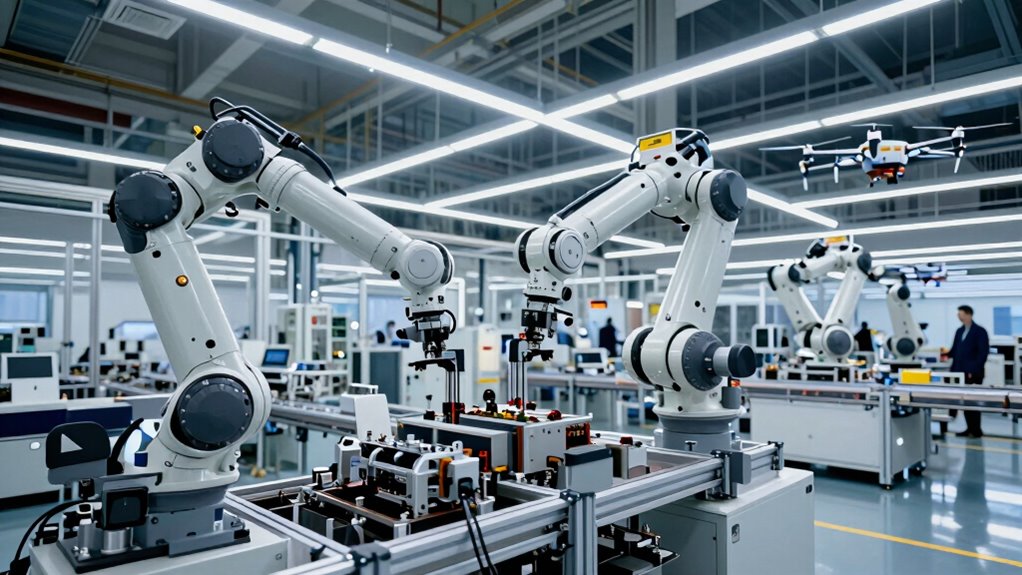

Intelligent automation is expanding beyond offices because it helps you streamline physical operations, improve customer experiences, and increase efficiency across environments. From robotics in warehouses to sensors in retail stores, automation now manages inventory, enhances checkout processes, and personalizes in-store interactions. This shift allows your business to control quality, speed, and responsiveness better. As automation becomes more integrated, you’ll discover new ways to stay competitive and innovative—keep exploring to see how this transformation can benefit you.

Get school and study supplies delivered free — and shop member deals
- Fast, free delivery on millions of items
- Access to Prime Big Deal Days deals on October 6–7
- Prime Video, Amazon Music and more included
Key Takeaways
- To enhance customer engagement through personalized, real-time interactions in physical environments like retail and warehouses.
- To improve operational efficiency, quality control, and speed across physical spaces with automation tools.
- To create integrated ecosystems that unify digital and physical processes for seamless workflow management.
- To support strategic business growth by scaling operations beyond traditional office settings.
- To gain competitive advantage through innovation, improved customer experiences, and greater operational resilience.
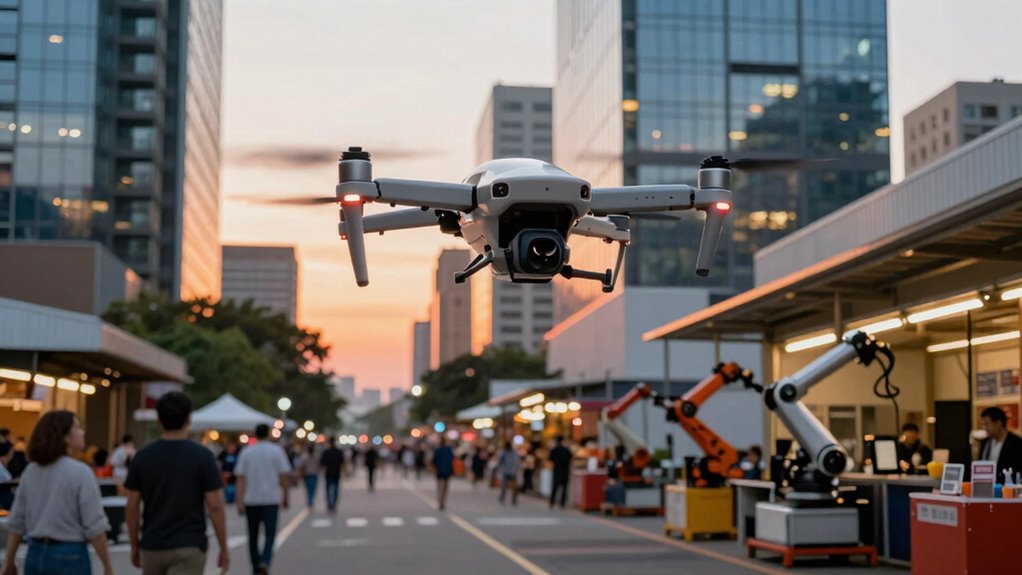
Customer engagement is another area where intelligent automation’s expansion makes a significant impact. You can leverage AI-driven chatbots, virtual assistants, and real-time analytics to provide seamless, personalized interactions. Customers today expect quick responses and tailored experiences, and automation helps you meet those expectations effortlessly. This continuous, real-time engagement not only boosts satisfaction but also builds loyalty. When your automation tools can anticipate customer needs and provide proactive support, your brand becomes more approachable and trustworthy.
Furthermore, automation’s expansion into non-office environments enhances your operational resilience. In a warehouse, for example, automated robots can manage inventory, streamline logistics, and reduce errors. In retail settings, sensors and automation systems monitor stock levels, improve checkout processes, and personalize in-store experiences. These improvements directly influence how well you meet customer expectations while maintaining smooth, scalable operations. As your automation tools become more embedded in physical spaces, you gain better control over quality, speed, and consistency. Additionally, digital content and research enhance decision-making and innovation across these environments. Incorporating automation technology can further optimize workflows and increase efficiency. Moreover, integrating physical automation systems with digital tools allows for a more cohesive operational strategy, leading to a more integrated automation ecosystem. Embracing emerging AI-driven solutions can also open new avenues for innovation and competitive advantage.
Ultimately, the move beyond office boundaries isn’t just a trend — it’s a strategic shift. You harness the power of intelligent automation to boost business scalability, enabling your organization to grow faster and more efficiently. Simultaneously, your ability to engage customers in meaningful, personalized ways deepens loyalty and satisfaction. As automation continues to evolve and expand into all facets of your operations, you’re better positioned to compete in a rapidly changing marketplace, providing innovative experiences while scaling seamlessly.
As an affiliate, we earn on qualifying purchases.
Frequently Asked Questions
How Does Intelligent Automation Impact Remote Work Environments?
Intelligent automation enhances remote work environments by streamlining processes and boosting efficiency. You’ll notice improved remote collaboration as automation integrates tasks seamlessly, reducing manual effort and errors. It allows you to focus on strategic work while routine tasks are handled automatically. This integration fosters smoother communication and project management, making remote teams more productive and connected, ultimately transforming how you work from anywhere.
What Industries Benefit Most From Automation Outside Office Settings?
Think of industries like manufacturing and healthcare as vast gardens where automation acts as a diligent gardener. You’ll find they benefit most outside office environments because they face industry-specific challenges and automation adoption barriers. Robots and AI streamline production, improve patient care, and reduce manual errors. This expansion helps overcome traditional hurdles, making processes more efficient, safe, and responsive—transforming these sectors into thriving, automated ecosystems.
Are There Security Concerns With Deploying Automation in Non-Office Areas?
Yes, there are security concerns when deploying automation outside office settings. You need to prioritize data privacy and guarantee proper access control, preventing unauthorized access to sensitive information. Automated systems in non-office areas can be vulnerable to cyber threats or physical breaches. By implementing strict access controls and safeguarding data privacy, you can reduce risks and ensure your automation solutions operate securely across all environments.
How Does Automation Improve Customer Service Outside Traditional Offices?
You’ll see automation boosting customer service outside traditional offices, with over 70% of businesses reporting quicker response times. It enhances customer engagement by providing instant, 24/7 support through chatbots and self-service portals. Automation also enables service personalization, tailoring interactions based on customer data. This creates a seamless experience, making customers feel valued and understood, ultimately increasing satisfaction and loyalty beyond the office environment.
What Skills Are Needed for Automation in Non-Office Roles?
To excel in automation skills for non-office roles, you need a mix of technical and soft skills. Focus on understanding automation tools, data analysis, and programming basics. You should also develop problem-solving abilities and adaptability to handle diverse tasks. Strong communication helps you collaborate with teams. These skills enable you to implement and manage automation effectively, boosting productivity and efficiency beyond traditional office settings.
As an affiliate, we earn on qualifying purchases.
Conclusion
As you see, intelligent automation is transforming industries beyond traditional office settings. Did you know that by 2025, 70% of organizations will have adopted some form of intelligent automation? This shift means you’re likely to experience smarter, more efficient processes in areas like manufacturing, healthcare, and logistics. Embracing this change now positions you at the forefront of innovation, ensuring you stay competitive and adaptable in an ever-evolving landscape. The future of automation is closer than you think.
AI-powered customer service chatbots
As an affiliate, we earn on qualifying purchases.
As an affiliate, we earn on qualifying purchases.
As an affiliate, we earn on qualifying purchases.
Halloween Picks
halloween
As an affiliate, we earn on qualifying purchases.