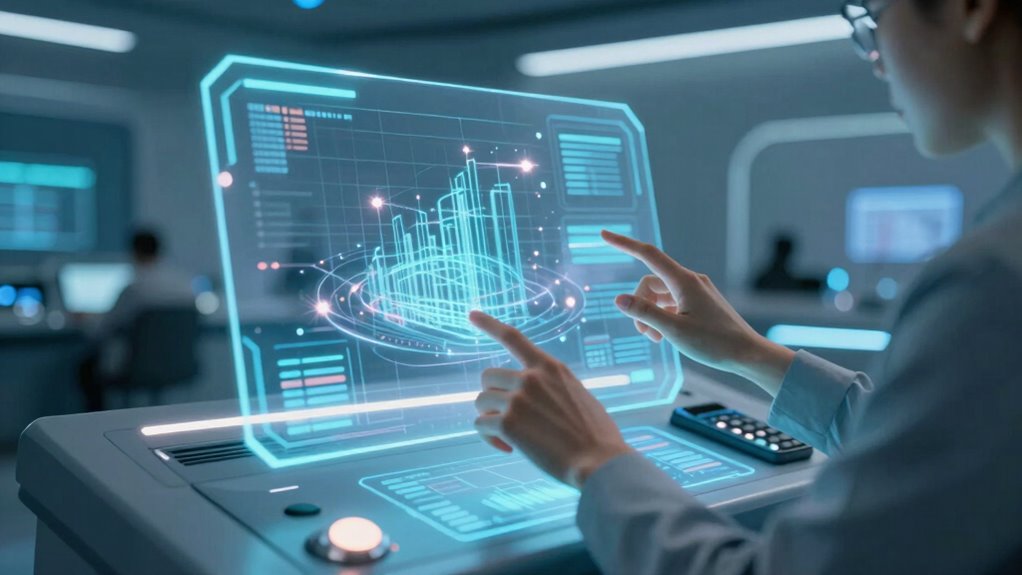

Emerging interfaces like gesture recognition and brain-computer systems are changing how you control machines by making interactions more natural and intuitive. Instead of pressing buttons or typing, your body movements and thoughts directly command devices, improving accessibility and efficiency. These innovations enable seamless human-machine collaboration across industries, from gaming to manufacturing. If you keep exploring, you’ll discover how these breakthroughs are shaping a smarter, more connected future for everyone.

Get school and study supplies delivered free — and shop member deals
- Fast, free delivery on millions of items
- Access to Prime Big Deal Days deals on October 6–7
- Prime Video, Amazon Music and more included
Key Takeaways
- Gesture recognition enables intuitive, contactless control, reducing reliance on physical buttons and enhancing immersive user experiences.
- Brain-computer interfaces directly translate neural signals into commands, increasing independence for mobility-impaired users.
- Personalized interfaces adapt to individual needs, improving accessibility and customizing human-machine interactions.
- Advancements in neural signal processing enhance the accuracy and responsiveness of brain-machine communication systems.
- Emerging interfaces transform industries by enabling remote manipulation, smarter environments, and more efficient industrial and entertainment operations.

As technology rapidly advances, emerging interfaces are transforming how humans interact with digital systems, granting greater control and new possibilities. You now have the ability to command machines through simple gestures or even thought alone, which fundamentally changes the way you engage with technology. Gesture recognition, for instance, allows you to control devices by moving your hands or body in specific ways. This technology captures your movements through cameras or sensors and translates them into commands, making interactions more intuitive and natural. Instead of pressing buttons or typing on screens, you can wave, swipe, or point to operate devices seamlessly. This creates a more immersive experience and reduces the reliance on traditional input methods, especially in environments where physical contact is limited or undesirable. Emerging interfaces are also making interactions more accessible for people with disabilities, opening new avenues for independence and communication. As these interfaces become more sophisticated, they can adapt to individual user needs, enhancing usability and personalization. Additionally, ongoing research in neural signal processing is driving innovations that improve the accuracy and responsiveness of brain computer interfaces, further expanding their practical applications.
Alongside gesture recognition, brain computer interfaces (BCIs) push the boundaries even further by directly linking your brain activity to digital systems. With BCIs, you’re no longer limited by physical actions; instead, your thoughts can become commands. This technology detects electrical signals from your brain, interprets your intentions, and translates them into actions on a computer or robotic system. Imagine controlling a wheelchair, a prosthetic limb, or even a computer just by thinking about it. This level of control opens doors for individuals with mobility impairments, offering newfound independence and enhancing quality of life. For you, it means a future where your mind becomes a direct interface for technology, eliminating delays and physical barriers. Neural interfaces are also paving the way for more integrated and seamless human-machine collaborations across various fields.
These emerging interfaces are also transforming industries by enabling faster, more precise operations. In manufacturing, for instance, gesture recognition allows workers to manipulate machinery or review digital blueprints without touching screens or controls, boosting efficiency and safety. In gaming and entertainment, intuitive controls create more engaging experiences by reacting instantly to your movements and thoughts. As you adapt to these interfaces, you’ll find that your interactions become more fluid, less constrained by physical limitations. They also pave the way for smarter environments, where your gestures or brain signals can automate tasks, adjust settings, or even communicate your needs without verbal commands.
As an affiliate, we earn on qualifying purchases.
Frequently Asked Questions
How Do Emerging Interfaces Impact User Privacy and Data Security?
Emerging interfaces can both enhance and threaten your privacy and data security. They often collect more personal data, making data encryption essential to protect your information from breaches. You should also review privacy policies carefully, as they detail how your data is used and shared. By staying informed and using strong security measures, you can better safeguard your privacy while benefiting from new, innovative interfaces.
What Are the Accessibility Challenges With New Human-Machine Interfaces?
Think of emerging interfaces as a bridge to a new world; if built without care, it can be a shaky crossing. Accessibility barriers in these interfaces challenge many users, especially those with disabilities. You need to embrace inclusive design, ensuring everyone can navigate easily. Without it, the promise of innovation is limited, leaving some behind. Prioritizing accessibility turns the bridge into a passage everyone can confidently cross.
How Do Cultural Differences Influence Interface Adoption and Usage?
You’ll find that cultural differences considerably influence interface acceptance and adaptation. When designing interfaces, consider cultural adaptability to guarantee users feel comfortable and confident using the technology. In some cultures, users prefer visual cues, while others rely more on text or voice commands. Recognizing these preferences helps you create more inclusive, user-friendly interfaces, fostering better engagement and smoother adoption across diverse cultural backgrounds.
What Are the Long-Term Psychological Effects of Using Advanced Interfaces?
You might think advanced interfaces make life easier, but they also trigger unexpected psychological effects. You’ll experience cognitive adaptation, where your brain adjusts to new controls, and emotional responses that could range from excitement to frustration. Ironically, as you become more dependent on these interfaces, your ability to control your own thoughts and emotions might weaken, subtly reshaping your long-term mental resilience and self-awareness in ways you never anticipated.
How Will Emerging Interfaces Affect Job Roles and Workforce Dynamics?
You’ll see emerging interfaces revolutionize job roles by demanding workforce adaptation and skill transformation. As technology evolves, you’ll need to learn new tools and methods, shifting traditional tasks to more advanced, automated processes. This change encourages continuous learning, creating a dynamic work environment. Your ability to adapt and develop new skills will be essential, fostering collaboration between humans and machines, ultimately leading to more efficient, innovative workforce dynamics.
As an affiliate, we earn on qualifying purchases.
Conclusion
As you embrace emerging interfaces, you find yourself bridging the gap between human intuition and machine precision. While these innovations promise seamless control, they also challenge your understanding of interaction, blending the familiar with the unknown. In this dance of technology and humanity, progress offers both opportunity and uncertainty. Ultimately, it’s your adaptability that will determine whether these interfaces serve as tools or transformation, shaping a future where control feels both instinctive and revolutionary.
neural signal processing headset
As an affiliate, we earn on qualifying purchases.
As an affiliate, we earn on qualifying purchases.
As an affiliate, we earn on qualifying purchases.
Fall Picks
fall essentials
As an affiliate, we earn on qualifying purchases.