🔍 Read the full analysis: 10 Best Mesh Wi-Fi Systems For Better Coverage In Every Corner In 2027 on ThorstenMeyerAI.com

Prime made for students and young adults
- Fast, free delivery for dorm and study essentials
- Prime Video and Amazon Music included
- Member-only deals
TL;DR
ThorstenMeyerAI.com’s 2027 guide compares 10 mesh Wi-Fi systems, ranking the TP-Link Deco X55 as its balanced starting point and identifying Wi-Fi 7 and tri-band alternatives for households that can use their added capacity. The rankings are editorial recommendations, not independently verified performance results; actual coverage depends on home layout, node placement, devices and internet service.
As detailed in the original mesh Wi-Fi analysis, ThorstenMeyerAI.com’s 2027 guide compares 10 mesh Wi-Fi systems and names the TP-Link Deco X55 its preferred balanced option for households seeking Wi-Fi 6 and a three-node kit. The guide also points buyers toward tri-band or Wi-Fi 7 models when their devices, broadband service and home layout can make use of the additional capacity.
The article places the Deco X55 ahead of the older Wi-Fi 5 Deco S4 as a general-purpose choice, while describing the Deco XE75 as a fit for buyers seeking a dedicated 6 GHz band. It identifies the Netgear Orbi 770 and TP-Link Deco 7 Pro as performance-oriented Wi-Fi 7 alternatives, and the Deco 7 BE5000 as a less elaborate, dual-band Wi-Fi 7 option. These are the source’s editorial judgments, not test findings supplied with measured speeds or coverage results.
The 10 systems covered are the TP-Link Deco X55, Deco XE75, Deco 7 Pro, Deco 7 BE5000 and Deco S4; the Netgear Orbi 770; the Eero 6+; and three other options named in the source: Asus ZenWiFi XT9, Google Nest Wifi Pro and Linksys Velop Pro 7. The source material gives little model-specific detail for those final three, so buyers should check their current specifications and availability before comparing them directly.
The guide’s comparison criteria include Wi-Fi generation, band configuration, backhaul, node count and setup, factors also covered in this mesh Wi-Fi systems guide. It treats advertised coverage as a planning estimate rather than a promise: walls, floors, interference and satellite placement can all affect how a system performs in a particular home.
The 10 picks
- 1
 NETGEAR Orbi 770 Series WiFi 7 Mesh System, 3-PackView on Amazon →
- 2
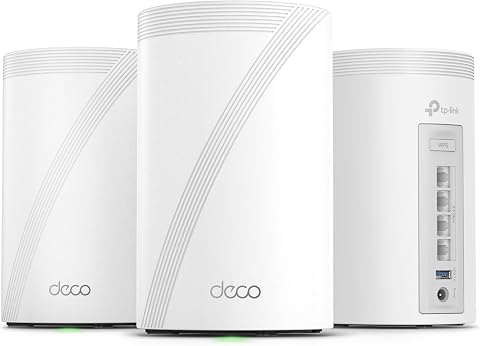 TP-Link Deco 7 Pro BE10000 Tri-Band Wi-Fi 7 Whole-Home Mesh System, 3-PackView on Amazon →
- 3
 Amazon eero 6+ Wi-Fi 6 Mesh System, 3-PackView on Amazon →
- 4
 NETGEAR Orbi 370 Series WiFi 7 Mesh System for Home (RBE373) – Wireless Route…View on Amazon →
- 5
 TP-Link Deco 7 BE5000 Dual-Band Wi-Fi 7 Mesh SystemView on Amazon →
- 6
 TP-Link Deco XE75 AXE5400 Tri-Band Wi-Fi 6E Mesh System, 3-PackView on Amazon →
- 7
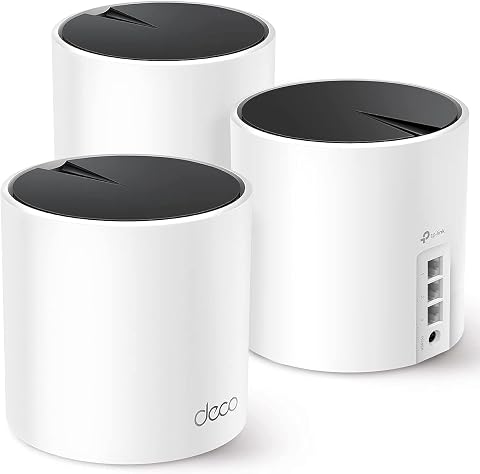 TP-Link Deco X55 AX3000 Wi-Fi 6 Mesh System, 3-PackView on Amazon →
- 8
 TP-Link Deco S4 AC1900 Mesh Wi-Fi System, 3-PackView on Amazon →
- 9
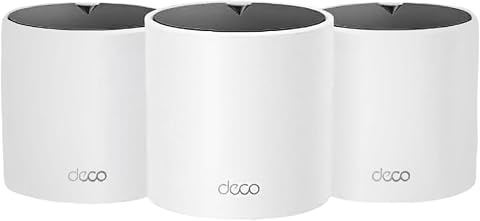 TP-Link Deco X15 AX1500 Dual-Band Wi-Fi 6 Mesh System, 3-PackView on Amazon →
- 10
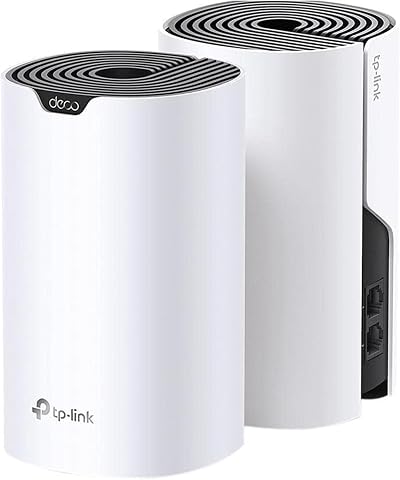 TP-Link Deco S4 Whole Home Mesh WiFi System (2-Pack)View on Amazon →
Match the System to Your Home
A mesh kit can address weak wireless coverage by using multiple nodes, but the guide warns that buying a newer or more expensive standard does not, by itself, solve every connection problem. A satellite placed too far from the main unit may have a weak link, while a slow broadband plan remains a limit regardless of the router’s advertised capabilities.
That makes the guide useful as a set of selection tradeoffs, rather than a promise that one model will work best everywhere. Households with compatible devices and high-capacity broadband may value newer Wi-Fi or an extra band. Others may get more practical value from a simpler kit, better node placement or Ethernet links between nodes.
Popular right now

Shark AV2501AE AI Robot Vacuum with XL HEPA Self-Empty Base

KitchenAid Artisan 5-Qt Tilt-Head Stand Mixer – Dried Rose (KSM150PS)

Dyson V8 Cyclone Cordless Vacuum
As an affiliate, we earn on qualifying purchases.
How the Guide Ranks Mesh Kits
The source says its ranking gives more weight to balanced everyday capability than to the newest Wi-Fi standard alone. In that approach, the X55’s Wi-Fi 6 support and three-node configuration make it the broad-use pick; the XE75 and Deco 7 Pro offer tri-band designs, while the Orbi 770 targets buyers looking for a more capable Wi-Fi 7 setup.
The guide also includes lower-cost or less demanding choices. It describes the Deco S4 two-pack as a possible fit for smaller homes with basic needs and the Eero 6+ as an option for buyers who prefer guided setup. Its general advice is to consider the devices already in use, the floor plan and whether Ethernet backhaul is possible before paying for added wireless capacity.
“The Deco X55 is the most balanced starting point.”
— ThorstenMeyerAI.com
Coverage and Testing Limits
The supplied material does not provide independent lab results, measured throughput, price comparisons or a dated availability check for the 10 systems. It also does not explain in detail how each model performed against the others. The rankings should therefore be read as recommendations based on listed features and intended use, not as proof that a particular kit will deliver a given speed or eliminate dead zones.
Real results remain dependent on a home’s construction, interference, broadband plan, compatible devices and node placement. The source does not state how the three additional models—Asus ZenWiFi XT9, Google Nest Wifi Pro and Linksys Velop Pro 7—rank relative to its more fully discussed picks.
Check Prices and Home Layout
Before buying, shoppers should confirm each system’s current price, specifications and availability, since the guide does not provide a dated retail check. They should map the rooms that need coverage, identify devices that need Ethernet, and check whether the main unit and satellites have suitable ports.
Buyers can then compare dual-band, tri-band and Wi-Fi 7 options against their actual devices and internet service. Where possible, planning wired backhaul and sensible node locations may address weak links more effectively than choosing a system solely for a higher headline standard.
Key Questions
Which system does the guide recommend as the balanced starting point?
ThorstenMeyerAI.com ranks the TP-Link Deco X55 first, citing its Wi-Fi 6 platform and three-node kit. This is the guide’s editorial recommendation, not an independently documented test result.
When might a tri-band mesh system be useful?
The guide points to models such as the Deco XE75 and Deco 7 Pro for households where wireless backhaul capacity may matter. Whether an extra band helps depends on placement, network conditions and whether nodes can use Ethernet backhaul.
Does Wi-Fi 7 guarantee better coverage?
No. The source says newer standards do not automatically fix poor node placement, difficult home layouts or a slow internet plan. Compatible devices and a suitable broadband connection also affect the benefit.
Is a three-node kit always the better choice?
No. The guide says a Deco S4 two-pack may suit a smaller home, while larger or divided layouts may need additional nodes or wired backhaul. The right number depends on the floor plan and where the weak areas are.
Source: ThorstenMeyerAI.com