

🔍 Read the full analysis: What Are The 9 Biggest AI Trends For 2026? on ThorstenMeyerAI.com

Get school and study supplies delivered free — and shop member deals
- Fast, free delivery on millions of items
- Access to Prime Big Deal Days deals on October 6–7
- Prime Video, Amazon Music and more included
TL;DR
This article outlines the nine most significant AI trends expected in 2026, based on industry insights and expert forecasts. It discusses confirmed developments and ongoing uncertainties, emphasizing their impact on technology and society.
Experts and industry analysts forecast nine major AI trends for 2026, reflecting rapid technological progress and shifting industry priorities. For a detailed overview, see the original analysis. These trends include advances in generative AI, increased industry regulation, and broader adoption of AI-driven automation. While some developments are already underway, others remain speculative, with ongoing debates about their implications for society and the economy.
The nine identified AI trends for 2026 include: the maturation of generative AI models, widespread deployment of AI in healthcare, increased industry regulation and ethical standards, the rise of autonomous systems, advancements in AI hardware, the expansion of AI in cybersecurity, the integration of AI with Internet of Things (IoT) devices, the growth of AI-powered personalization, and the development of explainable AI (XAI).
Many of these trends are confirmed by industry leaders and recent technological breakthroughs. For more insights, see the original analysis. For instance, generative AI models like GPT-4 and its successors have already demonstrated significant capabilities, with further improvements expected. Regulatory frameworks are also beginning to take shape globally, aiming to address ethical concerns and ensure responsible AI use. However, some trends, such as the full integration of autonomous systems in critical sectors, are still in early stages and face technical, ethical, and regulatory hurdles.
The 9 picks
- 1
 Dell 27 Monitor S2725QC 4K UHD IPS with 120Hz Refresh Rate and FreeSync PremiumView on Amazon →
 - 2
 Samsung 32-Inch ViewFinity S7 (S71H) 4K UHD IPS HDR10 High-Resolution MonitorView on Amazon →
 - 3
 Dell 27 Monitor S2725QS 4K UHD IPS, 120Hz, FreeSync PremiumView on Amazon →
 - 4
 LG 27US500-W Ultrafine Monitor 27-Inch 4K UHD HDR10 IPS Borderless DisplayView on Amazon →
 - 5
 Acer Nitro 27-inch 4K UHD IPS Gaming Monitor VG270K V4View on Amazon →
 - 6
 Samsung 27" ViewFinity S7 (S70H) High-Resolution MonitorView on Amazon →
 - 7
 ASUS VY27UQ 27-Inch 4K UHD IPS Monitor with HDMI, DisplayPort, SpeakersView on Amazon →
 - 8
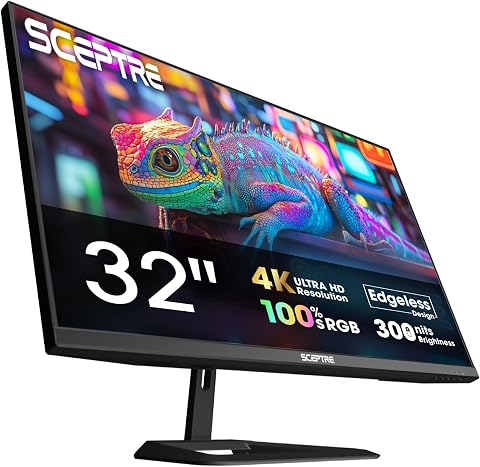 Sceptre 32-inch 4K UHD Monitor with 70Hz Refresh Rate, Built-in Speakers, and…View on Amazon →
 - 9
 Samsung 27" Odyssey G5 (G51F) Series QHD Gaming MonitorView on Amazon →
Impacts of 2026’s Major AI Trends on Society and Industry
The forecasted AI trends for 2026 are poised to reshape multiple sectors, including healthcare, finance, and transportation. The maturation of generative AI will enhance creativity and productivity but also raises questions about misinformation and intellectual property. Increased regulation aims to mitigate risks associated with AI misuse, but the pace of policy development may lag behind technological advances, creating potential gaps in oversight. Autonomous systems and AI-driven automation could boost efficiency but threaten job displacement in some industries. Understanding these developments helps stakeholders prepare for the societal, economic, and ethical challenges ahead.
Background and Recent Developments in AI Leading to 2026 Predictions
Over the past few years, AI has transitioned from experimental technology to a core component of many industries. Breakthroughs in natural language processing, computer vision, and reinforcement learning have driven rapid progress. The release of powerful models like GPT-4 and advances in AI hardware have accelerated deployment across sectors. Governments and organizations are increasingly focusing on establishing ethical standards and regulatory frameworks, reflecting concerns about AI safety and societal impact. These developments set the stage for the key trends expected to dominate 2026.
While some trends, such as AI in healthcare and autonomous vehicles, are already emerging, others—like widespread regulation and advanced autonomous systems—are still evolving. Experts emphasize that the pace of innovation and policy response will be critical in shaping the actual landscape of AI in 2026.
Uncertainties Surrounding AI Development and Adoption in 2026
While experts agree on many trends, uncertainties remain regarding the pace of technological breakthroughs, regulatory responses, and societal acceptance. The development of fully autonomous systems capable of handling critical infrastructure is still in experimental stages and faces technical and ethical challenges. Additionally, the potential for AI to exacerbate inequalities or enable malicious activities remains a concern, with debates ongoing about how to balance innovation with safety. The actual impact of these trends will depend heavily on policy decisions, technological breakthroughs, and societal adaptation.
Next Steps and Key Milestones in AI Progress Toward 2026
In the coming months, focus will be on the development of regulatory frameworks, with governments and industry groups drafting standards for AI safety and ethics. Technological advancements in generative AI and autonomous systems are expected to continue, with new models and prototypes emerging regularly. Monitoring these developments and engaging in policy discussions will be crucial for stakeholders. By 2025, more concrete evidence of AI’s societal impact will be available, shaping the trajectory of the trends forecasted for 2026.
Key Questions
What are the most confirmed AI trends for 2026?
The most confirmed trends include the maturation of generative AI, increased adoption of AI in healthcare, and ongoing efforts to develop regulatory standards for responsible AI use.
How might AI regulation evolve by 2026?
Regulation is expected to become more comprehensive and globally coordinated, focusing on safety, ethics, and transparency, though the exact scope and effectiveness remain uncertain.
Will AI automation threaten jobs in 2026?
AI-driven automation could displace some jobs, especially in routine or manual sectors, but may also create new opportunities in AI development, maintenance, and oversight.
What ethical challenges are associated with these AI trends?
Key ethical challenges include managing misinformation, ensuring privacy, preventing bias, and avoiding misuse of autonomous systems or generative models.
Source: ThorstenMeyerAI.com
Halloween Picks
halloween
As an affiliate, we earn on qualifying purchases.