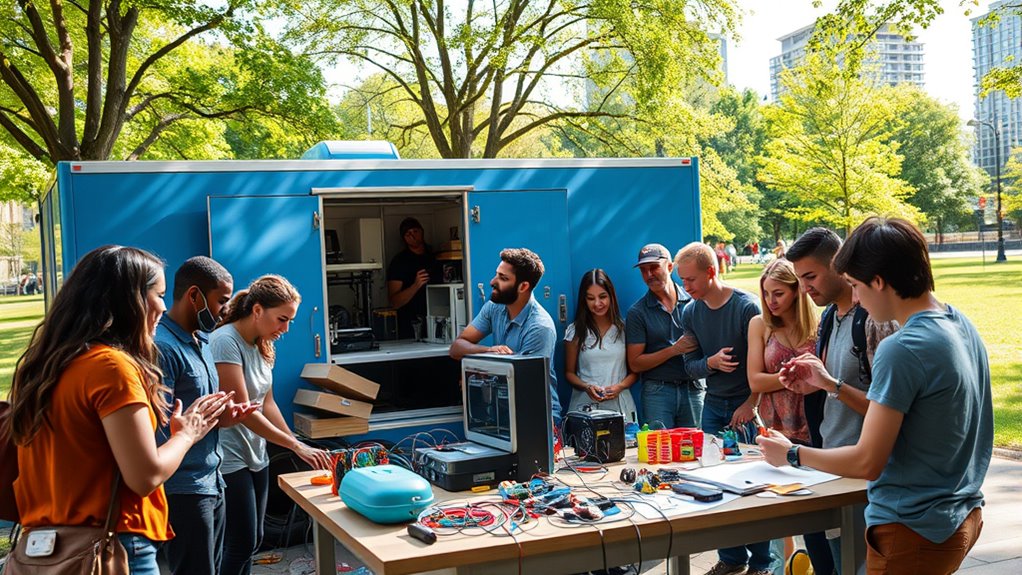

Micro-workshops are your go-to portable maker labs that make hands-on learning accessible for everyone. They break down barriers to creativity, allowing you to engage in various projects alongside friends, neighbors, and newcomers. You can experiment with woodworking, sewing, or electronics without needing expert skills—just bring your desire to learn. These workshops foster collaboration and community spirit, fueling innovative ideas. Keep exploring to see how micro-workshops can transform your creativity and community engagement.

Prime made for students and young adults
- Fast, free delivery for dorm and study essentials
- Prime Video and Amazon Music included
- Member-only deals
Key Takeaways
- Micro-workshops provide accessible hands-on learning experiences, fostering creativity and innovation regardless of participants’ backgrounds or skill levels.
- They break down barriers of traditional maker spaces by offering necessary tools and materials in diverse community settings.
- Collaborative learning is encouraged, allowing participants to share skills, exchange knowledge, and generate innovative solutions through teamwork.
- These workshops create inclusive environments, attracting a mix of seasoned makers, hobbyists, and beginners to promote diverse ideas and experiences.
- By democratizing innovation, micro-workshops contribute to a culture of collaboration, skill development, and community engagement in creative projects.

As you explore the world of creativity and innovation, micro-workshops—portable maker labs—offer an exciting opportunity to engage hands-on with tools and materials in various settings. These workshops enable you to plunge into projects that spark your imagination while fostering a sense of community and collaborative learning. You can easily gather with friends, neighbors, or even strangers who share your passion for making and creating. Imagine the thrill of brainstorming ideas and working together to bring them to life, all while learning from one another in a supportive environment.
Micro-workshops ignite creativity and collaboration, inviting everyone to explore, create, and learn together in a supportive environment.
One of the most appealing aspects of micro-workshops is their focus on resource accessibility. Often, traditional maker spaces can be limited by location or availability of equipment. Micro-workshops break down these barriers, making it possible for anyone to access necessary tools and materials, regardless of their background or experience level. You don’t need to be an expert to get involved; you just need a desire to learn and create. Whether you’re crafting with wood, sewing fabric, or experimenting with electronics, you’ll find that these workshops provide the resources you need to experiment and innovate. Additionally, just like the art of Italian espresso enhances home life, micro-workshops elevate the creative experience through collaboration.
In a micro-workshop, the atmosphere encourages collaborative learning. You can share skills you already possess while absorbing new techniques from others. This exchange of knowledge not only enhances your own abilities but also builds a sense of camaraderie among participants. As you all work together, you might find that the most innovative solutions often come from the merging of different perspectives. By collaborating, you can tackle challenges more effectively and inspire one another to push the boundaries of your creativity.
The flexibility of micro-workshops means they can pop up in schools, community centers, or even local parks, reaching a diverse audience. This accessibility creates an inclusive environment where everyone has the chance to experiment and innovate. You might find yourself surrounded by seasoned makers, enthusiastic hobbyists, or complete beginners—all enthusiastic to share what they know. This melting pot of ideas and experiences fuels creativity and fosters a vibrant community.
Ultimately, micro-workshops democratize innovation by making hands-on learning available to everyone. As you engage in these creative endeavors, you’re not just honing your skills; you’re also contributing to a culture that values collaboration and resource accessibility. So, plunge into the world of micro-workshops, and let your creativity flourish!
As an affiliate, we earn on qualifying purchases.
Frequently Asked Questions
How Do I Start My Own Micro-Workshop?
To start your own micro-workshop, begin by identifying a space where you can gather people. Engage your community by hosting brainstorming sessions to understand their needs and interests. Encourage resource sharing among participants to foster collaboration and creativity. Promote your workshops through social media and local events to attract a diverse group. Finally, gather feedback to improve future sessions and keep the momentum going. Your workshop can become a valuable local hub!
What Tools Are Essential for a Portable Maker Lab?
For your portable maker lab, focus on essential tools like a multi-tool, portable drill, soldering iron, and basic hand tools. When it comes to tool selection, prioritize versatility and durability. Don’t forget about storage solutions; use sturdy, lightweight containers to keep everything organized and easily accessible. A well-organized setup will save you time and hassle, allowing you to concentrate on your projects without searching for tools.
Can Micro-Workshops Be Used for Educational Purposes?
Absolutely, micro-workshops can be powerful for educational purposes. In fact, studies show that hands-on learning increases retention rates by up to 75%. By engaging students in practical activities, you foster creativity and critical thinking. Plus, these workshops promote community engagement, allowing participants to collaborate and share knowledge. You’ll find that when learners actively participate, they’re more likely to grasp complex concepts and feel connected to their peers, enhancing the overall educational experience.
What Is the Cost of Setting up a Micro-Workshop?
Setting up a micro-workshop can range from a few hundred to several thousand dollars, depending on your goals. For effective budget planning, prioritize essential tools and materials. You’ll need to take into account equipment sourcing, which can include buying new items or sourcing used ones to save costs. Factor in space rental if necessary. By evaluating your needs and exploring cost-effective options, you can create a functional micro-workshop within your budget.
How Can I Promote My Micro-Workshop to Attract Participants?
To attract participants to your micro-workshop, blend social media promotion with community partnerships. While online platforms spark excitement, local collaborations forge genuine connections. Share engaging content on social media to showcase your workshop’s unique benefits, but don’t forget to reach out to nearby organizations for support. Together, you can create buzz and draw in diverse participants. By combining digital outreach and grassroots efforts, you’ll foster a thriving community around your workshop.
electronics beginner project kit
As an affiliate, we earn on qualifying purchases.
As an affiliate, we earn on qualifying purchases.
Conclusion
Micro-workshops are like seeds scattered across a vast field, each one holding the potential to grow into something remarkable. As you embrace these portable maker labs, you’re not just tinkering with tools; you’re nurturing innovation and creativity in your community. By bringing resources to your doorstep, you’re planting ideas that can flourish and inspire change. So grab your toolkit and let your imagination take root—together, you can cultivate a garden of possibilities that benefits everyone.
As an affiliate, we earn on qualifying purchases.
As an affiliate, we earn on qualifying purchases.
Fall Picks
fall essentials
As an affiliate, we earn on qualifying purchases.