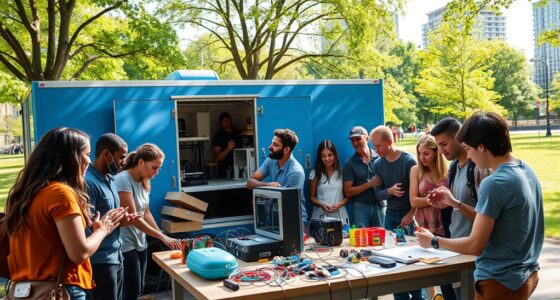
Open-source hardware lets you design, modify, and share physical devices freely, breaking down borders in engineering. It promotes collaboration, enabling you to contribute to or start projects that use open tools and accessible components. This approach fosters innovation, cost savings, and transparency, making technology more inclusive worldwide. By embracing open hardware, you help empower communities and solve global challenges. Keep exploring to see how open-source principles are shaping engineering without borders.
Key Takeaways
- Open-source hardware enables the design and sharing of affordable, customizable engineering solutions for underserved communities and global development projects.
- It fosters collaboration among engineers, researchers, and volunteers to create sustainable, locally adaptable technological tools.
- Open designs allow for easy modification, repair, and enhancement, supporting engineering efforts in resource-limited regions.
- The community-driven approach accelerates innovation, knowledge transfer, and capacity building in engineering for development.
- Open-source hardware promotes ethical, inclusive, and sustainable engineering practices aligned with the principles of Engineering Without Borders.
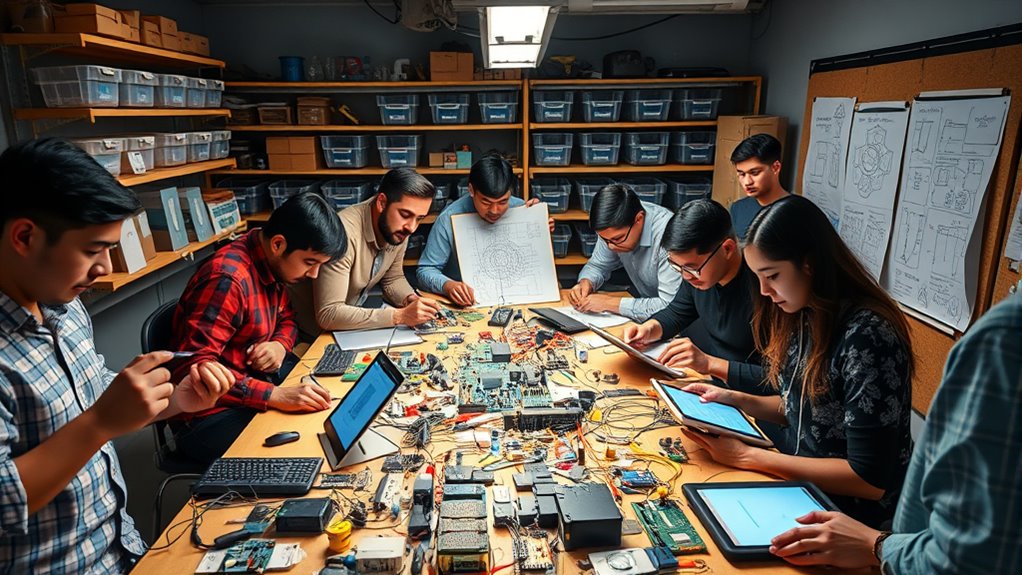
Open-source hardware is transforming the way people design and build physical products by making designs publicly available for anyone to study, modify, and share. When you access open-source hardware designs, you’re given the freedom to explore how things work, make adjustments to suit your needs, and distribute your improvements. This approach covers all types of tangible artifacts, from electronic circuits and mechanical parts to construction materials. The designs often utilize open tools and standard processes, ensuring that you don’t need proprietary software or specialized techniques to participate. Ideally, open-source hardware relies on readily available components, making it easier for you to source parts and build projects locally, reducing dependency on proprietary suppliers. Open-source hardware designs are governed by specific licensing principles that ensure the freedom to use, modify, and distribute the designs legally and ethically.
Open-source hardware enables anyone to access, modify, and share designs using open tools and readily available components.
By promoting collaboration, open-source hardware creates a community where knowledge flows freely among developers, hobbyists, and professionals alike. You can contribute to existing projects or start your own, knowing that your work can be built upon by others worldwide. Examples include electronics like printed circuit board (PCB) designs, popular platforms like Arduino for prototyping, and non-electronic hardware such as textiles, construction tools, and biomaterials. Scientific equipment designed as open hardware enables researchers to access affordable tools, while companies like Sparkfun, Adafruit, and Seeed provide extensive open-source electronics to support your projects. Open hardware also encourages standardization across different designs and applications, fostering compatibility and interoperability within the community.
One of the most compelling benefits of open-source hardware is the freedom to modify and personalize designs. If you want a device tailored to your specific application, you can adapt existing designs or create new ones. This flexibility often results in cost savings since you can use openly available designs and readily accessible components. Open-source hardware also fosters innovation by inviting community involvement, leading to new ideas and improvements that might not emerge within proprietary systems. Transparency is another key advantage; you can see exactly how a device works, which builds trust and allows you to troubleshoot or enhance it more effectively.
Thanks to its global accessibility, open-source hardware bridges geographical barriers, enabling anyone with internet access to participate. This democratization of design supports applications across automation, robotics, medical devices, and education. For instance, you can develop affordable medical equipment, craft educational kits to teach electronics, or contribute to sustainable practices through reusable and adaptable hardware designs. Communities like OSHWA oversee the principles and standards, ensuring that open hardware remains accessible and consistent. Platforms and forums foster collaboration, turning individual makers into a worldwide movement.
Despite its many advantages, open-source hardware faces challenges, such as charting patent issues and maintaining quality control across diverse manufacturers. Ensuring compliance with safety standards can also be difficult, especially as supply chains become complex. Nonetheless, the potential for innovation, affordability, and inclusive participation makes open-source hardware a powerful tool for engineering without borders, empowering you to create, share, and improve physical products on a global scale.
Frequently Asked Questions
How Does Open-Source Hardware Ensure Quality and Reliability?
You guarantee quality and reliability in hardware by using open documentation, which allows peer review and continuous improvement. Engaging with the community helps identify issues quickly. Implement transparent testing and utilize open-source tools for automation. Standardize components and manufacturing processes to maintain consistency. Keep detailed, accessible documentation, and incorporate feedback mechanisms. Regular design reviews and automated testing further help you catch problems early, boosting overall hardware quality.
What Licensing Models Govern Open-Source Hardware Projects?
Think of licensing models as the backbone of open-source hardware, guiding how ideas flow and grow. You can choose permissive licenses like Solderpad or CERN OHL, which act like open gates for sharing and collaboration. Or opt for copyleft licenses, which act like guardians, ensuring modifications stay open. Your choice shapes project compatibility, community engagement, and how easily your designs can branch out and thrive in the global ecosystem.
How Can Developing Countries Access Open-Source Hardware Designs?
You can access open-source hardware designs by exploring online platforms like GitHub and dedicated repositories that host shared projects. Use your internet connection to download files, participate in community forums for support, and collaborate with others worldwide. Language translation tools can help overcome language barriers. Engaging in local workshops and building digital literacy further enables you to modify and implement these designs effectively in your community.
What Are Common Challenges Faced by Open-Source Hardware Communities?
You face several common challenges in open-source hardware communities. Decentralized development can cause inconsistencies, while collaboration barriers like geographic and cultural differences hinder progress. Maintaining documentation and managing resources strain volunteer efforts. Quality and security issues, along with scalability and interoperability concerns, also pose significant hurdles. Additionally, securing funding and overcoming infrastructure limitations can slow growth, making it tough to sustain and expand projects effectively.
How Is Intellectual Property Managed in Open-Source Hardware Initiatives?
Did you know that over 60% of open-source hardware projects use licenses like CERN-OHL to manage IP? You’re responsible for ensuring your contributions retain IP rights while granting broad usage rights. You must carefully choose licenses—copyleft or permissive—to balance openness and protection. Maintaining records, complying with attribution, and documenting changes are essential. You’ll also need to analyze license compatibility when combining open-source and proprietary components to avoid infringement.
Conclusion
Open-source hardware is like a vast, shared garden where innovation blossoms freely. By embracing open collaboration, you become a gardener tending to ideas that can grow beyond borders, nurturing solutions that benefit everyone. When you contribute and share, you’re planting seeds of progress that can flourish worldwide. Together, we cultivate a landscape of engineering without borders—where creativity knows no limits and everyone has the chance to harvest the fruits of innovation.